
Backpacking Colchuck Lake: A Camping Guide to the Enchantments' Most Iconic Alpine Lake
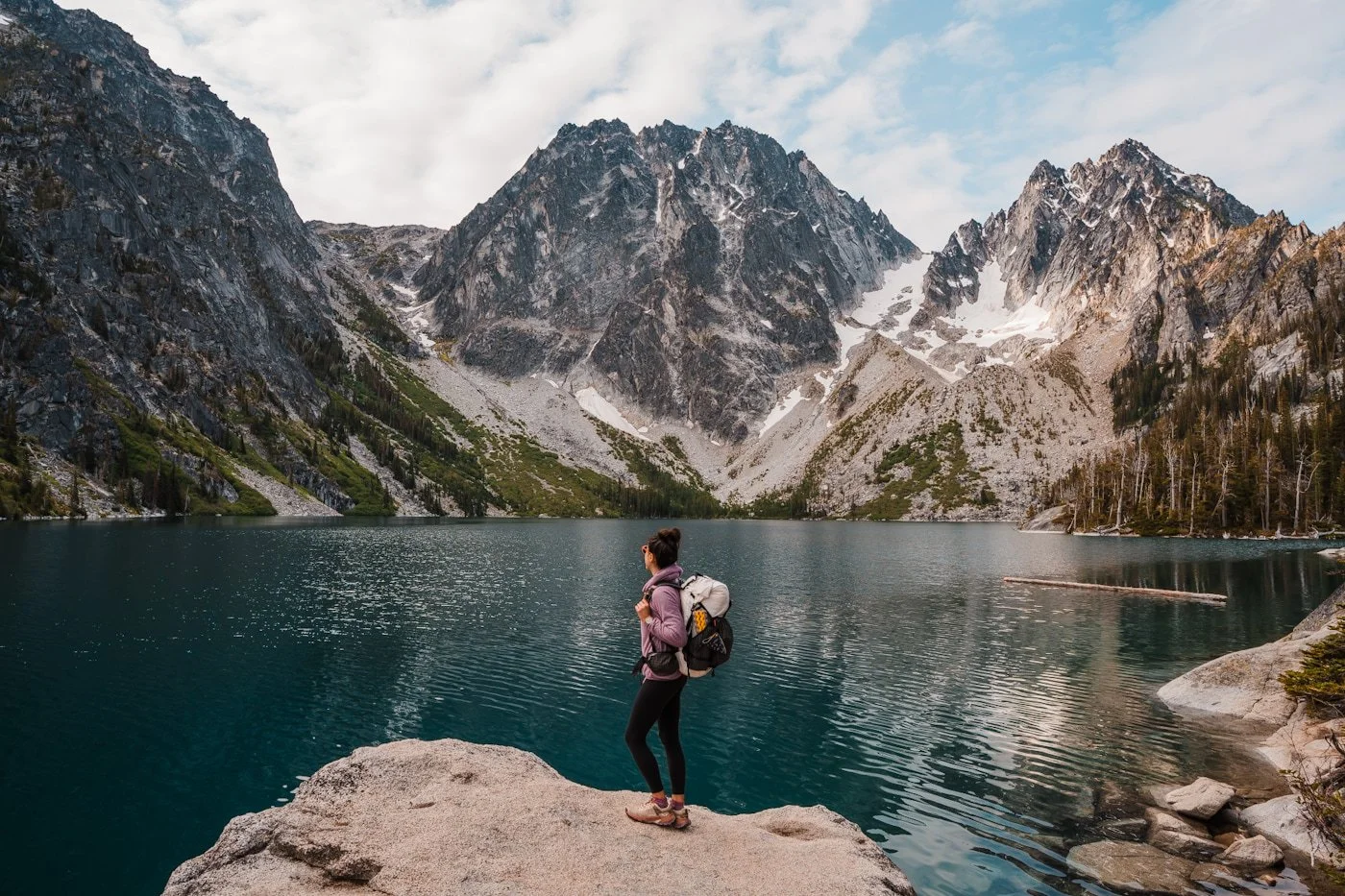
A Backpacking Trip to the Enchantments With Stunning Views & Better Permit Odds than the Core
Backpacking to Colchuck Lake in the Enchantments absolutely needs to be on your backpacking bucket list. It is a stunning alpine lake in its own right, and is a little easier to get a permit than the Core Enchantments. If you already secured your overnight permit, congrats, you will love it here, and if not, this guide will help you not only with trip planning and packing for your trip, but also the permit process.
We just got back from backpacking into Colchuck Lake (via a daily lottery permit the day before our trip), and it was such an amazing time, which is saying something considering how many times we've camped in the Core. Colchuck has the same bright turquoise water as some of the lakes in the Core with some of the most dramatic mountain views (of Dragontail and Colchuck Peak), and honestly, the same feeling of awe you get hiking into the Core.
Trust us, you will absolutely love backpacking here. Now we just want to make sure you have all the information you need to do so responsibly and safely.
→ If you’re just looking to day hike to Colchuck, or have a Core permit, check out all of our guides on the Enchantments.
Why Trust this Guide?
We're Washington locals who call Leavenworth and this area our home base, and we’re both hike and climb leaders for The Mountaineers, along with having multiple Core Enchantments backpacking trips, summits of peaks in the area, and a full thru-hike in a day under our belts. We've also hiked to Colchuck Lake countless times over the past 12+ years, and on our most recent trip, we backpacked in and camped at the lake itself, so this guide reflects what it's actually like to spend the night there.
→ If you're planning your backpacking trip, make sure to also check out our full guide on Backpacking the Enchantments with a deeper dive into the permit lottery and permit zones. We also have a packing guide specifically for backpacking in the Enchantments.
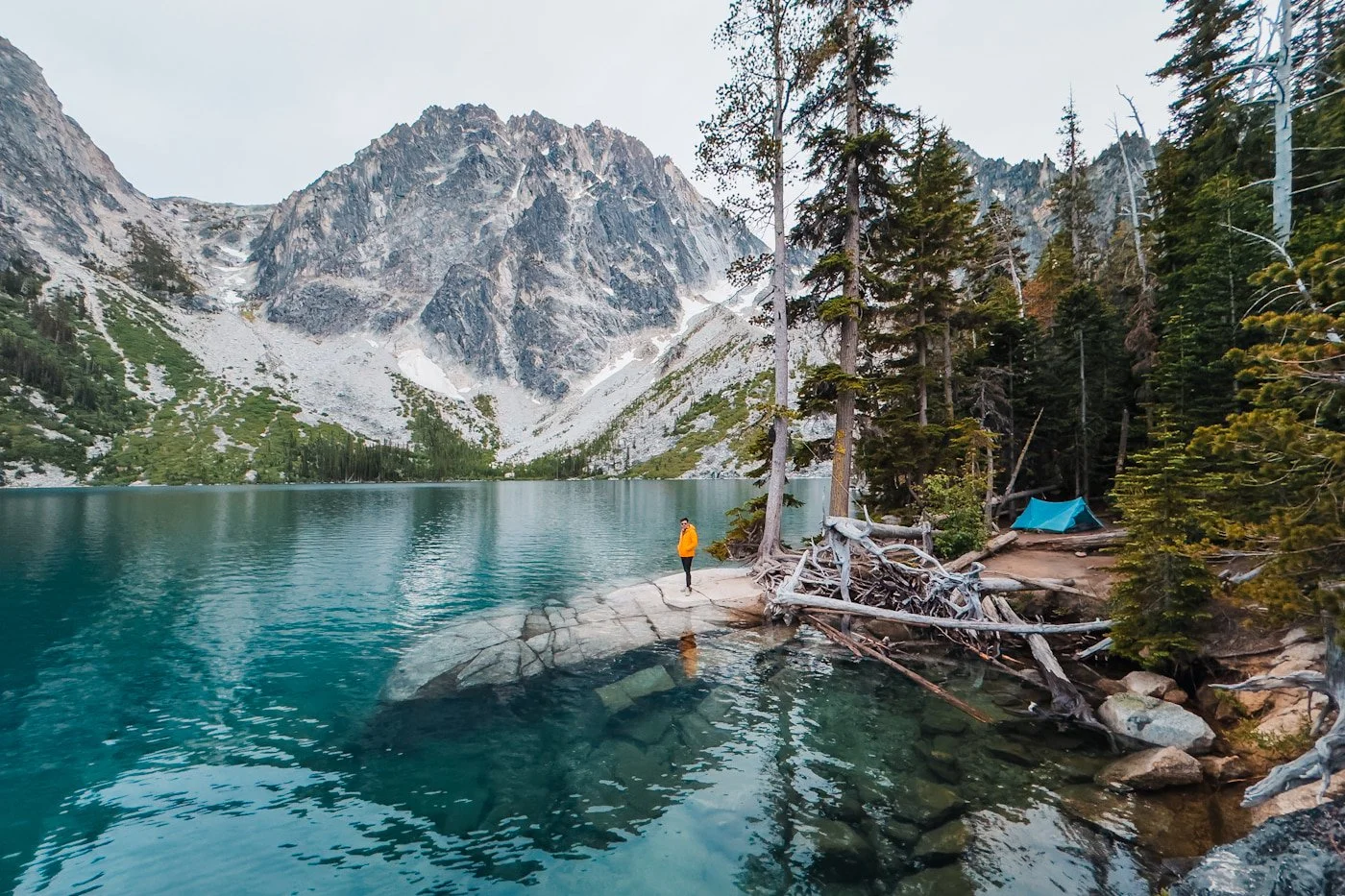
Our campsite at Colchuck Lake in late June, 2026
Quick Facts: Backpacking to Colchuck Lake
Distance
~7.6 mi / 12 km round trip
Elevation Gain
~2,154 ft / 657 m
Difficulty
Moderate to Difficult
Recommended Duration
1–2 nights
Overnight Permit
Required (advance lottery, daily lottery, or cancellation)
Parking Pass
Northwest Forest Pass or America the Beautiful
Vehicle Access
All vehicles; watch for potholes
Dogs
No, prohibited in Enchantments permit area
Cell Service
Minimal to none
Popularity
Very popular
Optional Add-On: Day-Hiking Aasgard Pass & the Core
From your Colchuck campsite, expect roughly 4–6 miles round trip and ~2,200 ft of additional gain and loss to climb Aasgard Pass and explore the Core with a daypack. Plan for 8–10+ hours round trip depending on how far into the Core you go.
Affiliate Disclaimer: This blog post contains affiliate links, meaning we receive a small commission on every purchase made with our links at no additional cost to you. Sometimes there is even a discount code for our readers which we specify next to the links.
Table of Contents
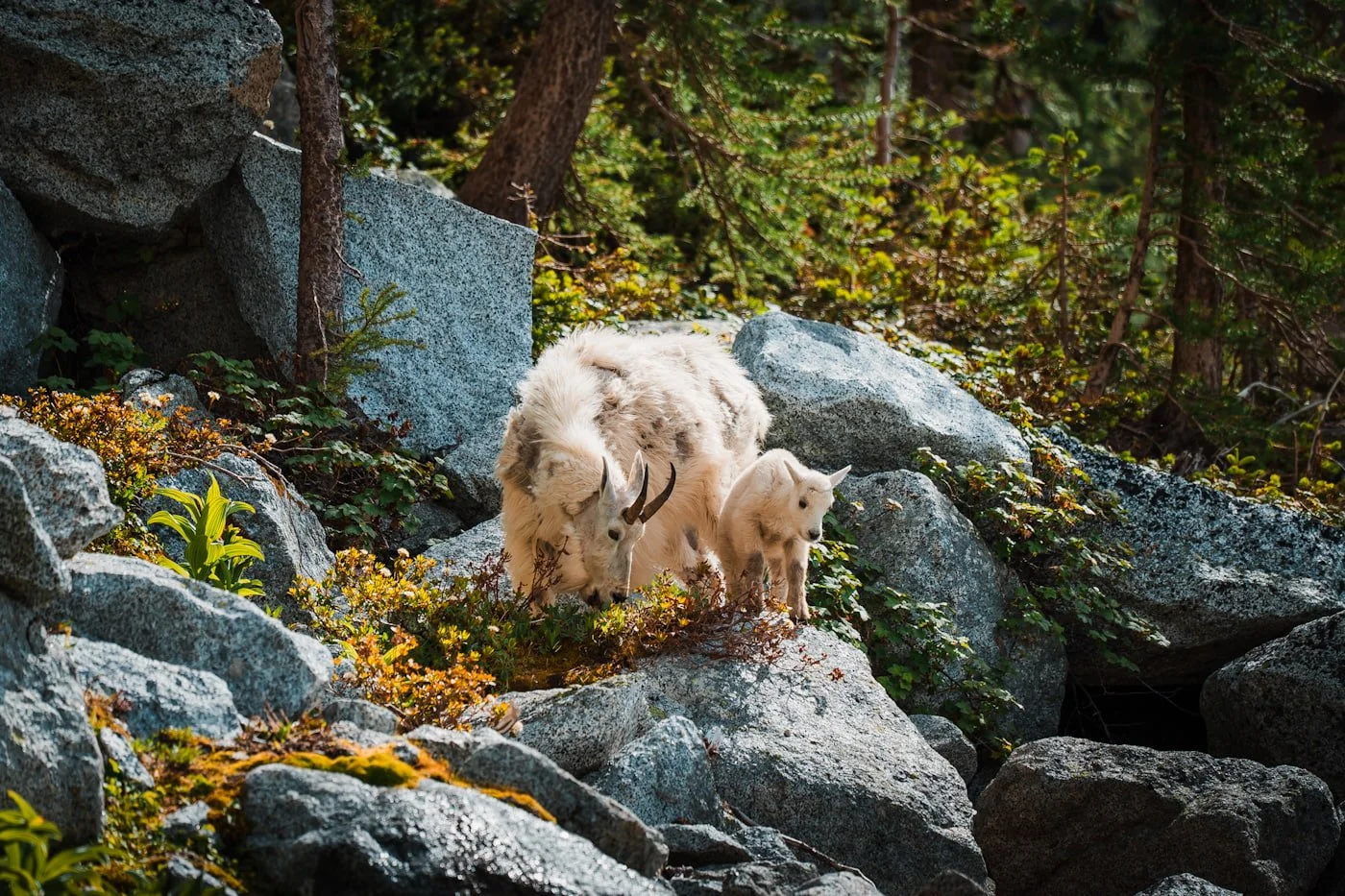
Mountain goats along Aasgard Pass
Why You Should Want to Backpack Colchuck Lake (Instead of Day Hiking or Going for a Core Permit)
In all honesty, I for one (Skye) always joked about why anyone would go for a Colchuck Zone permit when they could just go into the Core, but I have completely changed my mind on that after finally choosing to backpack to Colchuck and absolutely loving it. Yes, the Core is amazing, but Colchuck is a stunning place to camp and it was such a wonderful experience for us, a much shorter hike in, and a more relaxed trip.
If you've read our Enchantments Backpacking Guide, you already know Aasgard Pass is rough even with a day pack. Add 20-35+ pounds of overnight gear and it turns into a genuinely grueling climb, one that plenty of backpackers (us included) would rather skip altogether. Camping at Colchuck Lake gets you the full alpine lake experience with a fraction of the suffering it takes to haul gear into the Core.
That doesn't mean you have to give up on seeing the Core, though. From a Colchuck campsite, you can drop your overnight pack and day-hike up and over Aasgard Pass with just a daypack, getting up into the Core's lakes and peaks without carrying full weight up the pass. It's not necessarily easier overall, since you will have to both ascend and descend the pass in the same day (hiking both up and back down to camp), but climbing Aasgard with less weight is a much more fun and easier experience.
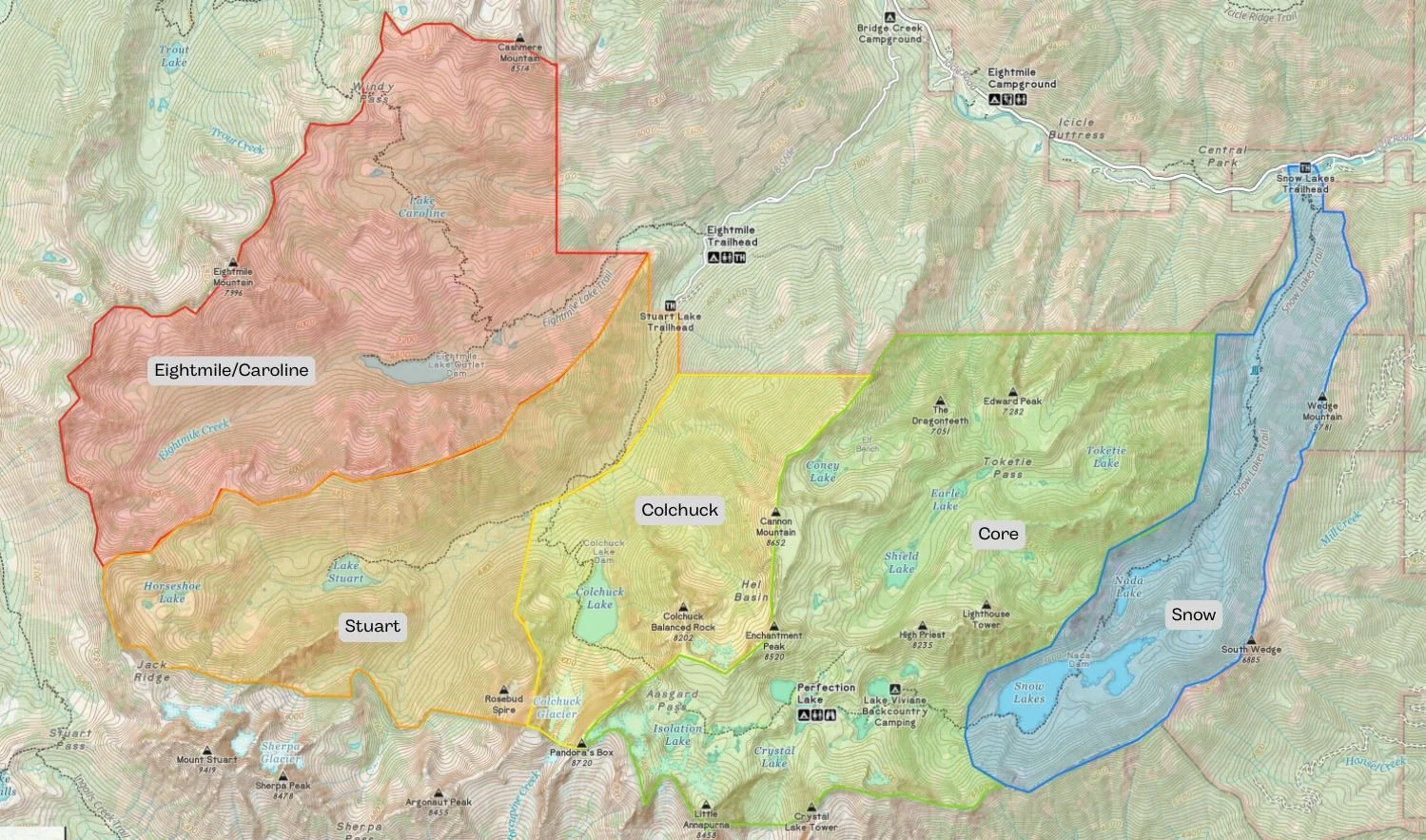
Overview map of the Enchantments permit zones
Getting a Colchuck Zone Overnight Permit
The Enchantments Permit Area is divided into five zones: Core, Colchuck, Snow Lakes, Stuart, and Eightmile/Caroline. Colchuck Lake sits just below the Core, connected by Aasgard Pass, which is exactly why a Colchuck permit gets you both a stunning alpine lake to camp at, and the option to day-hike into the Core itself.
A Colchuck Zone permit isn't quite as hard to get as a Core permit, but it is still very competitive and you will need to plan ahead to be able to camp here. There are a few different paths to winning a permit, and your odds (and timeline) look different depending on which route you take. Below we dive into all the different ways to get an overnight camping permit for Colchuck Lake.
→ For the full advance lottery process, application strategy, and a breakdown of all five Enchantments permit zones, see our Ultimate Guide to Backpacking the Enchantments.
The Advanced Enchantments Lottery (February)
A Colchuck Zone permit goes through the same advance lottery as every other Enchantments zone. Applications open February 15 and close March 1, with results announced via email around March 17. If you’re looking to get a permit ahead of backpacking season, there's no way around the lottery for an overnight stay in any of the five permit zones.
Colchuck Zone permits have roughly a slightly better success rate, compared to the Core. Still very competitive, you shouldn't count on winning your first or even second year applying, it’s a true lottery. We went seven years between winning a Core permit in 2018 and then again in 2025. Going for a Colchuck permit is meaningfully better odds for a trip that gets you the same iconic alpine lake and the option to day-hike into the Core anyway.
A Colchuck Zone permit lets you camp at designated sites near the lake for the night(s) on your permit. It doesn't let you camp anywhere else in the Enchantments permit area, but it does let you day-hike up Aasgard Pass into the Core Zone with just a daypack and return to your Colchuck campsite that night (more on that below).
The Daily Lottery: How We Got Our Permit for This Trip
If you miss out on the advance lottery, or are not ready to plan that far in advance, there is now a daily lottery that happens throughout the time when permits are required, and it’s worth understanding and trying to get a last minute permit this way. It worked for us and is actually how we scored the permit for this exact trip.
The daily lottery happens the day before your permit will start, so you are applying the day before you want to enter. The catch is that you have to be within a one-mile radius of the Leavenworth Ranger Station to even enter the daily lottery on Recreation.gov.
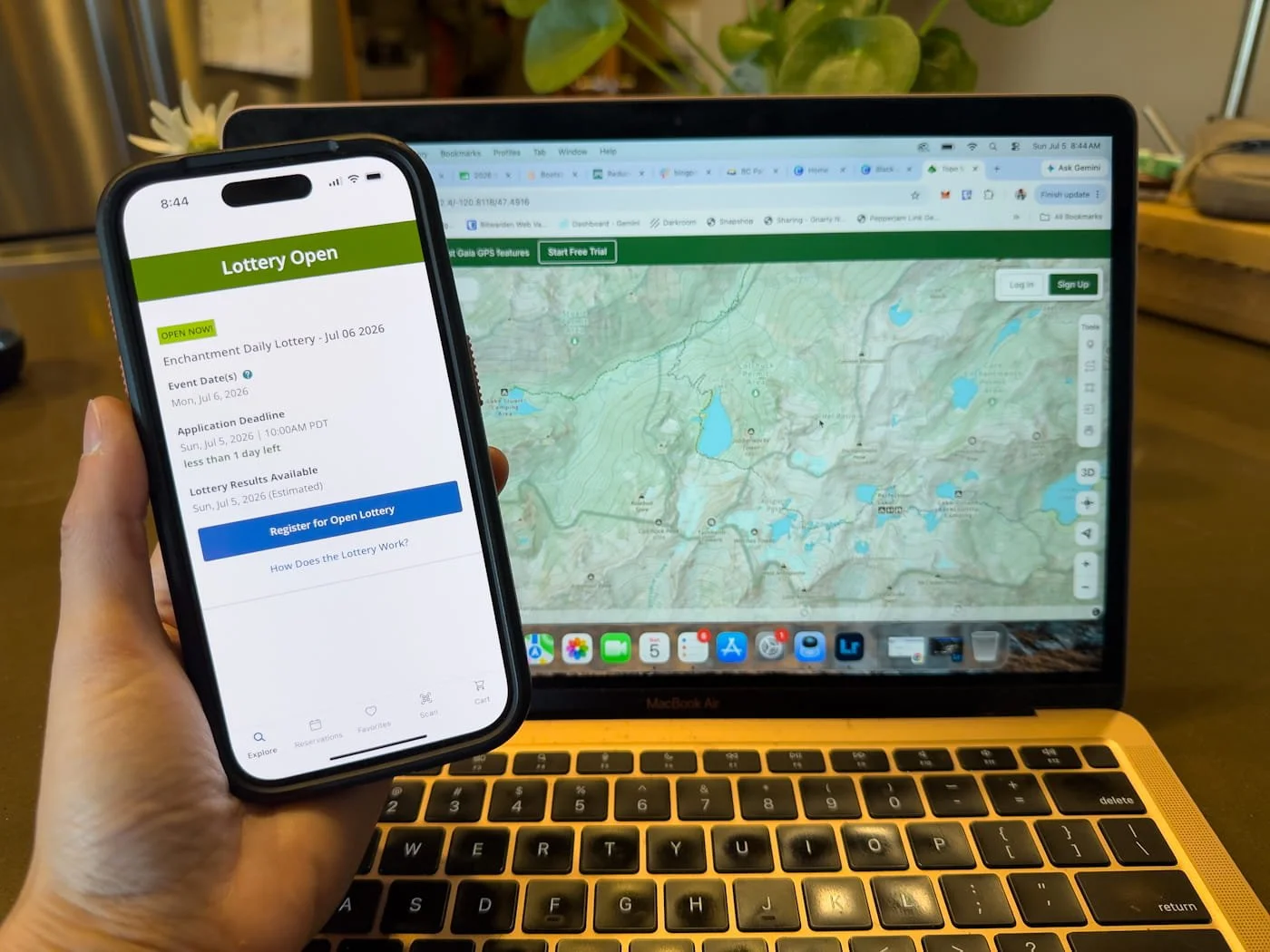
If you are in the Leavenworth area, here’s how to apply for the daily lottery, the day before your trip:
Open the Recreation.gov app on your phone (it has to be the app, not a browser, since it confirms your location) between 7:00 and 10:00 AM PST to apply for a permit for the next day. Select your number of entries (a max of two), zone, and group size, and pay the $6 reservation fee. Then watch for an email around 11:00 AM (the same day you applied) letting you know if you won.
If you win the daily lottery, you'll need to accept the permit in the app right away, choose your number of nights, and pay for your permit ($10 per person, per day).
After you are awarded your permit, download the permit and parking pass to your phone (or print them if you have access to a printer), then pack up and head in the next morning. No printer? You’re allowed to screenshot your permit and keep it on your phone, and write your parking pass info on paper to leave on your dashboard, you'll still need a Northwest Forest Pass or America the Beautiful Pass to park, even with an overnight parking pass.
Other Ways to Get a Colchuck Permit
Unclaimed permits (April 1st): Permits not confirmed after the advance lottery get released back into the system. Be ready on Recreation.gov right at 7:00 AM PST on April 1st to try for one of these, they go fast.
Cancellations throughout the season: Check Recreation.gov regularly. No set schedule, just luck and timing if someone cancels their permit.
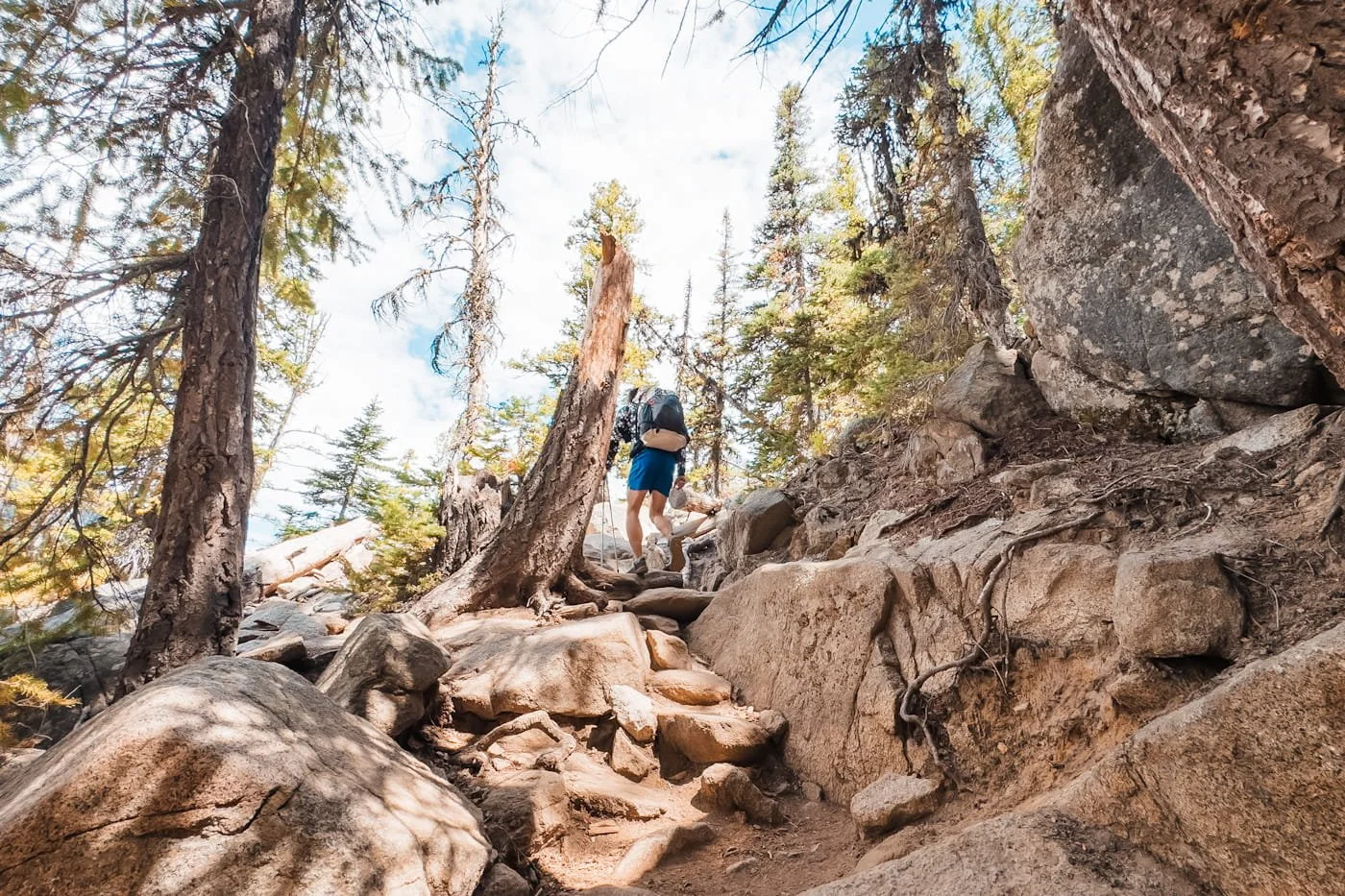
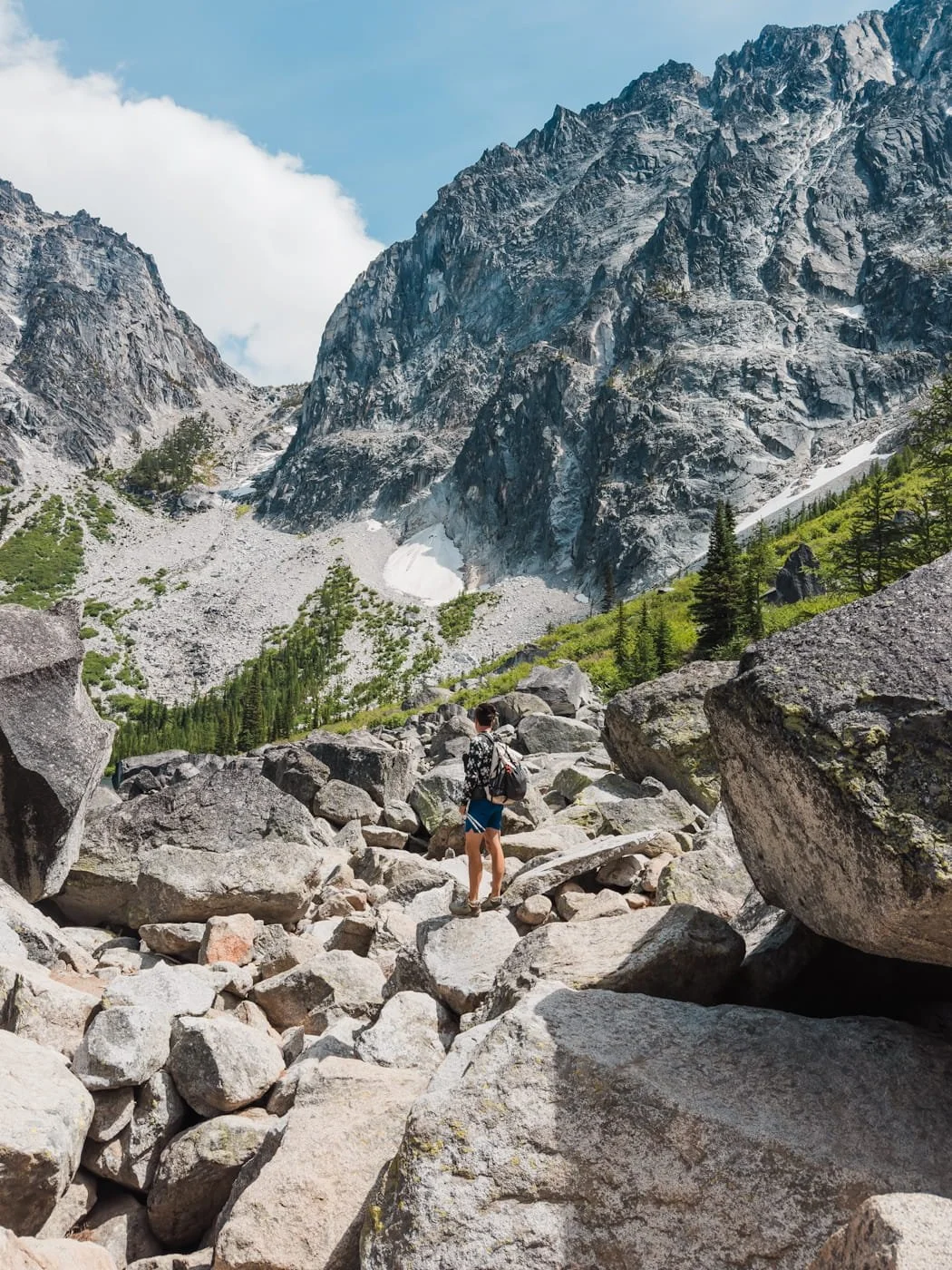
Hiking up the rocky section getting closer to the lake
The Hike to Colchuck Lake With an Overnight Pack
The trail to Colchuck Lake is rated at moderate, but don’t underestimate it with an overnight pack. We moved quickly carrying about 17-20 pound packs on our last trip, but we saw a lot of groups struggling with very large and very heavy looking packs. Try to cut down on weight and only pack the essentials, to make the hike in easier and a little more fun.
What to Prepare Yourself for When Backpacking this Trail:
Pace yourself differently: With 20-35+ pounds on your back instead of a light daypack, plan for noticeably more time on trail, especially through the steeper switchbacks after the Mountaineer Creek crossing. What takes a fit day hiker under two hours can easily stretch to three or more with full overnight gear. Give yourself plenty of time to get to camp. If you are worried about your group being on the slow side, start early so you have enough time to get to camp and find a campsite before it starts to get dark.
The boulder scramble near the lake gets trickier: The short rocky approach right before you reach Colchuck Lake requires some careful footing under the best conditions (it’s rocky and rooty, and easy to misstep). With an overnight pack throwing off your balance, take it slow here, especially if the rocks are wet or you're moving through it late in the day when you're already tired. We also always recommend trekking poles when backpacking to help with balance.
Refill water before the final push (if needed): The creek just after your final bridge crossing is your last easy water source before a long climb up to the lake. Top off there if needed, rather than waiting until you're at camp and exhausted.
Parking is different for permit holders: Unlike day hikers, overnight permit holders get designated spots at the Stuart Lake Trailhead. Display your overnight parking permit on your dashboard along with your parking pass, and don't park in a day-use spot if you can avoid it.
Time your arrival for campsite selection: Since established campsites at Colchuck Lake are first-come within your permitted zone (more on that below), an earlier start gives you a better shot at your pick of sites before the lake fills up for the night. There are enough sites, but some are much more scenic than others.
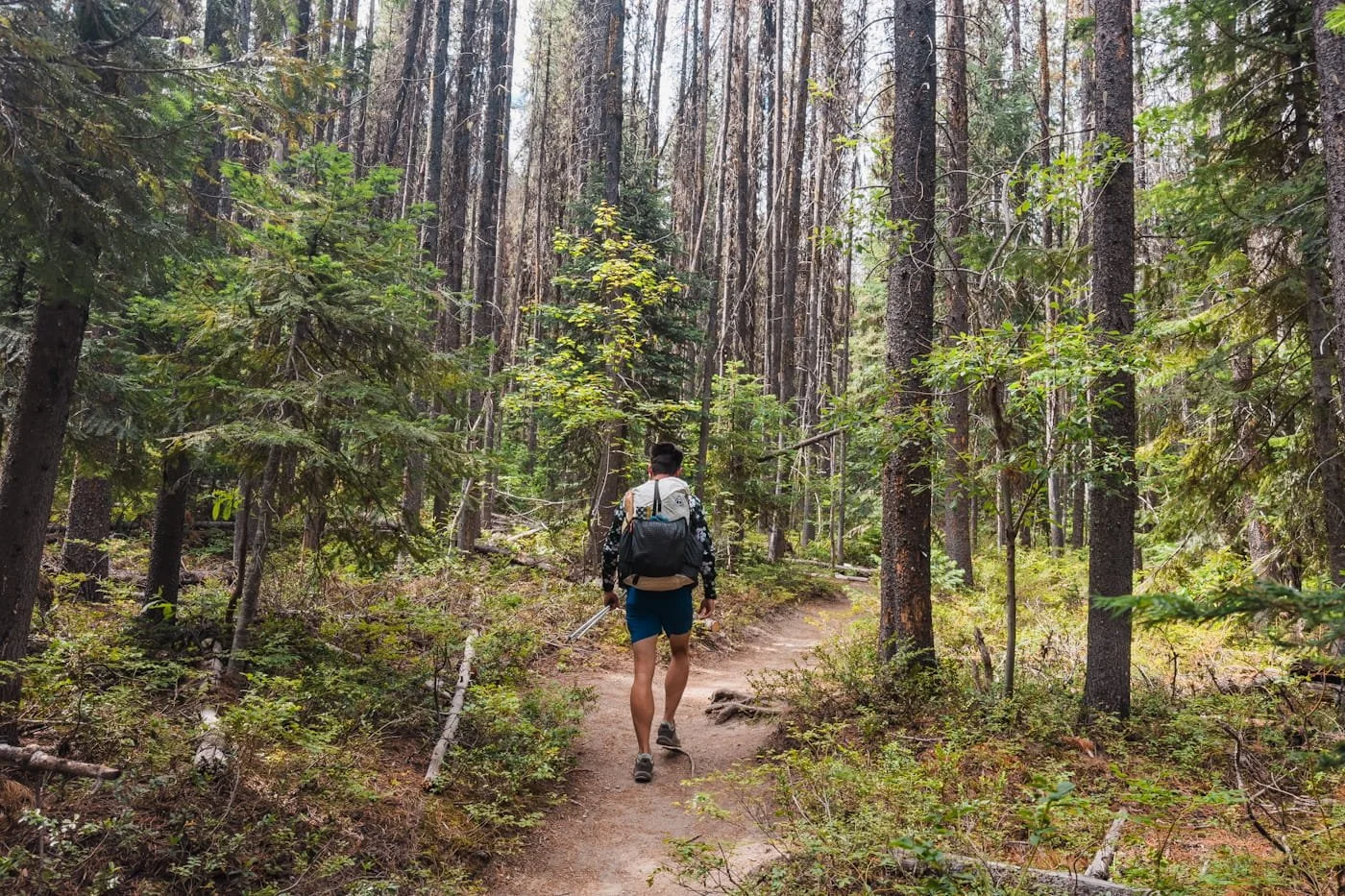
The first stretch of the Stuart Lake Trail before it starts to gain elevation
What to Expect Along the Trail
The trail to Colchuck Lake follows the same Stuart Lake Trail used by day hikers, splitting off toward the lake around the 2-mile mark. Round trip, the trail is about 7.6 miles (12 km) and 2,154 ft (657 m) of elevation gain. Below is information on each section of the trail, so you know what to expect if you haven’t day hiked it before.
Stuart Lake Trailhead to the Trail Junction (Mile 0–2)
From the Stuart Lake trailhead parking area, the trail starts out very easy, mostly flat, and walking through a shaded forest for the first mile. That eases you into the weight of a full pack before the trail starts really gaining elevation. You'll hit a footbridge crossing Mountaineer Creek around the one-mile mark, a great place to fill up on water if needed, and where many hikers will take a short break before starting the first significant elevation gain.
Past the creek crossing, the trail starts heading uphill with some rocky boulders to navigate. With overnight gear, this is where the extra weight starts to show, budget more time here than you would day hiking, and don't be surprised if your pace slows. Around the 2-mile mark, you'll hit a signed junction: go left for Colchuck Lake and over another bridge. Just past this crossing is the last real place to filter water. There are some smaller streams farther up but they can dry up later in summer.
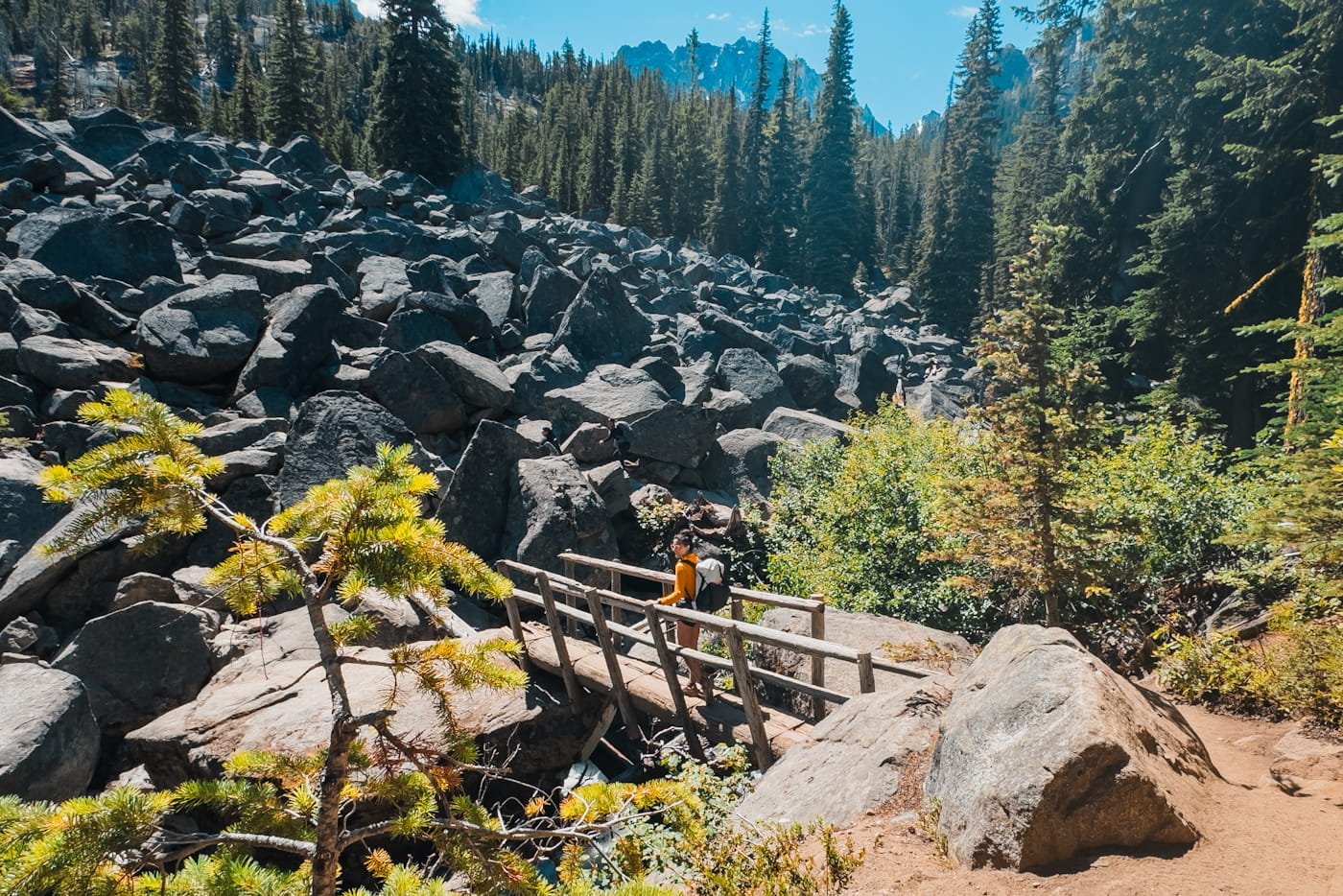
The creek crossing just after the trail junction
Trail Junction to Colchuck Lake (Mile 2–3.8)
The climb gets steeper past the junction, with rockier footing and a few short boulder stretches that demand more attention. This is the section where an overnight pack's extra weight and shifted center of gravity make more of a difference, take your time through the rocky spots rather than rushing, especially if you're tired or the rock is wet.
As the trees thin out, you'll catch your first glimpses of granite walls overhead. Right before the lake, there is an uphill section with a lot of tree roots, but once you’re past that, you’re at the lake.
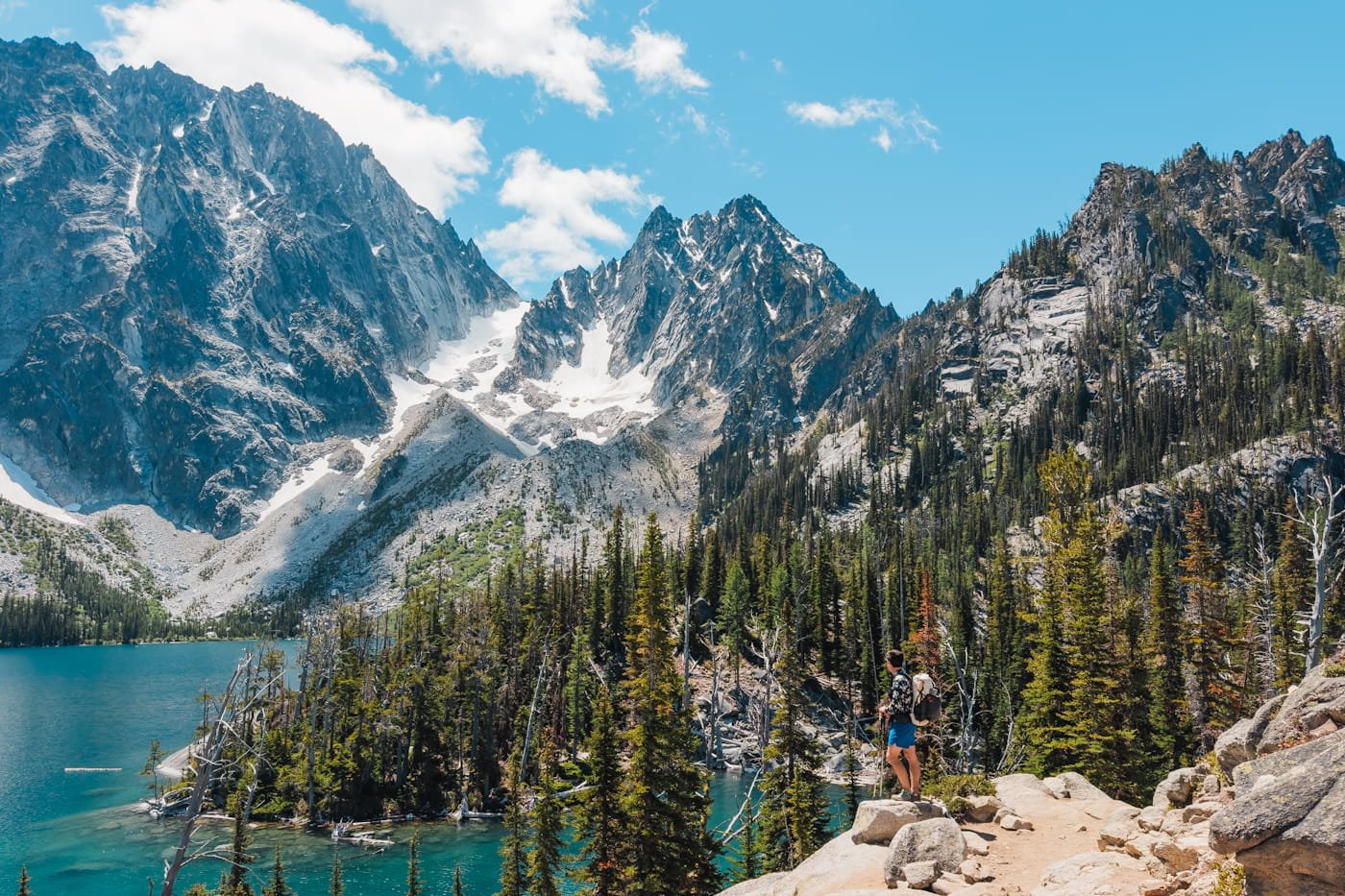
The viewpoint above Colchuck Lake, keep hiking from here to get to the campsites
The Final Stretch and Reaching Colchuck Lake
Once you're at the lake, the work shifts to finding a campsite. Established campsites are scattered around the shore and available first-come within the Colchuck Zone, so where you end up largely depends on how early you arrived to grab the first spots (more on site selection in the camping section below).
Once you find the site for your group, set up camp and if you are planning to leave your campsite to explore the lake or hike up Aasgard pass, make sure to secure all of your food in a hung bear bag or bear canister. Looking across the lake, you'll spot the boulder field and talus leading up to Aasgard Pass, your optional route into the Core if you decide to tackle it (see our dedicated section on that below).
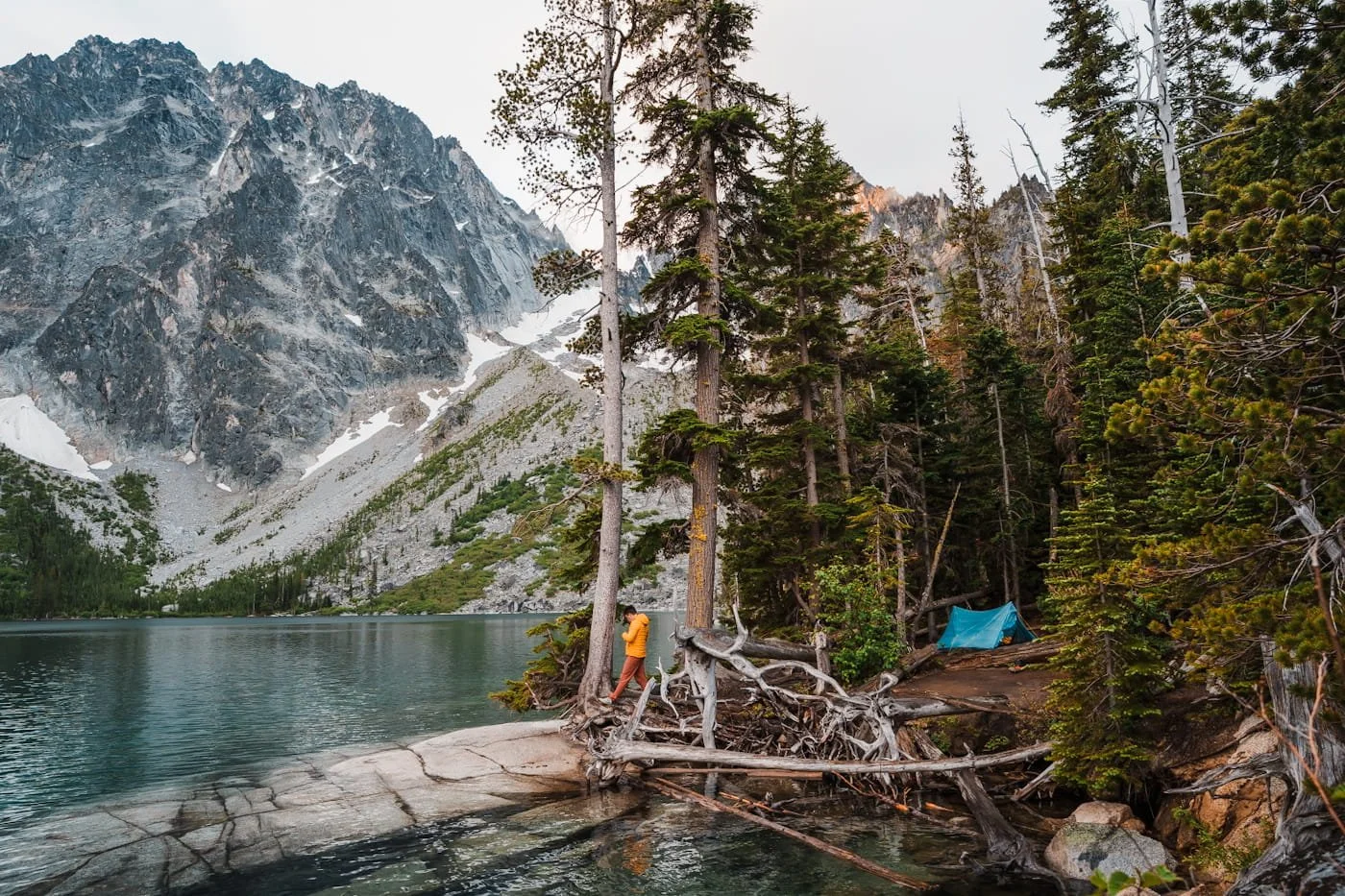
One of the lakeside campsites at Colchuck Lake, where we camped in June, 2026
Camping at Colchuck Lake
Camping at Colchuck Lake is absolutely amazing! All of the campsites are a little ways past the main day use areas and view points where day hikers will stop. Camping areas are all on dirt and usually a little ways off the main trail. Most of the sites are around Little Colchuck Lake, and between that and the boulder field you start to cross for Aasgard pass. Please only camp in a pre-established campsite.
Campsites are established and scattered around the lake rather than assigned to specific spots on your permit. It's first-come within the zone once you arrive. That makes timing your arrival genuinely important (see the hiking section above), especially on summer weekends when the best sites go early in the afternoon.
On our last trip, we marked all of the campsites and toilets on GaiaGPS, check out our Enchantments map with locations for them.
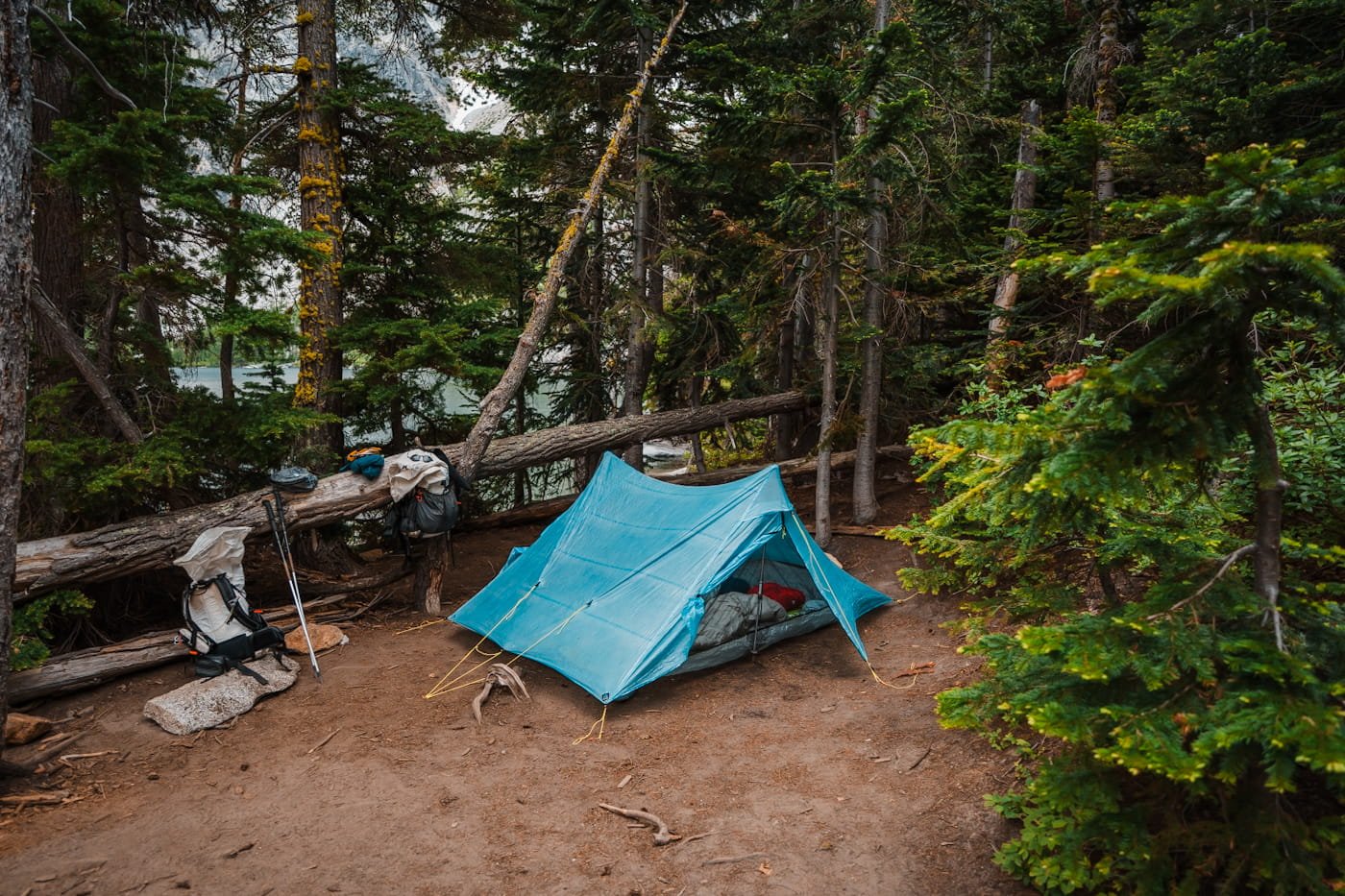
Our trekking pole tent while camping in a pre-established campsite on dirt
A Few Rules Specific to Camping at Colchuck Lake:
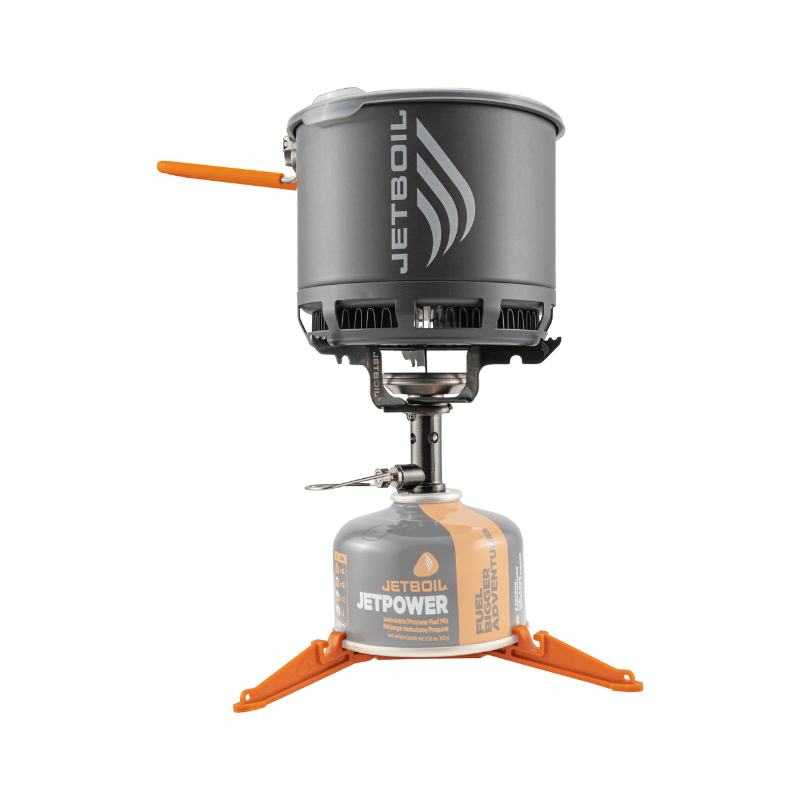
No campfires. Colchuck sits well above 5,000 feet and within half a mile of the lake, both of which put it under the Enchantments' no-campfire rule. Bring a reliable stove for cooking, liquid fuel and canister stoves are both allowed.
Food Storage: Hang food, toiletries, and any other scented items when away from camp, and keep food and camp waste where bears, mice, and other animals cannot reach. Do not feed wildlife or leave food waste for them to find.
Use the toilet instead of digging a cathole. There are three backcountry toilets in the Colchuck camping area: one when you first reach the lake which is always overflowing and trashed, a second just past Little Colchuck Lake, and a third right before you descend to the boulder field if heading to Aasgard Pass or Colchuck Peak. Use them or be ready to pack it out in a WAG bag if the toilets are full. All the backcountry toilets are marked on our GaiaGPS Enchantments Map.
No dogs, period. This applies across the entire Enchantments Permit Area.
Camp only in previously impacted sites. Don't set up on vegetation, and don't move rocks or build new fire rings or wind walls, Leave No Trace matters even more at a lake this heavily visited.
Using the Bathroom While Camping at Colchuck Lake
The toilets at Colchuck are often very overused and not swapped out regularly. So be ready for full toilets and you need to understand what to do if all three are in fact full when you arrive.
There are three backcountry toilets around the lake: one right when you arrive at the lake (which tends to be overflowing and trashed given how much day hike traffic it sees), a second just past Little Colchuck Lake, and a third before the boulder field if you're heading up toward Aasgard Pass or Colchuck Peak. All are signed on the main trail and pretty easy to find. We also marked them on our GaiaGPS Enchantments Map.
If you can't access a toilet, pack everything out. This is too high-use an area for digging a cathole, waste doesn't break down fast enough with this much traffic concentrated in one place, and catholes here do real damage. Bring a WAG bag and pack it out with you, don't leave it behind.
For urinating, still use a toilet if one's available. If not, pee on rocks rather than dirt or vegetation, your permit will actually specify this. Mountain goats are drawn to the salt in urine and will dig up soil or damage plants to get to it, rock surfaces don't hold onto that the same way.
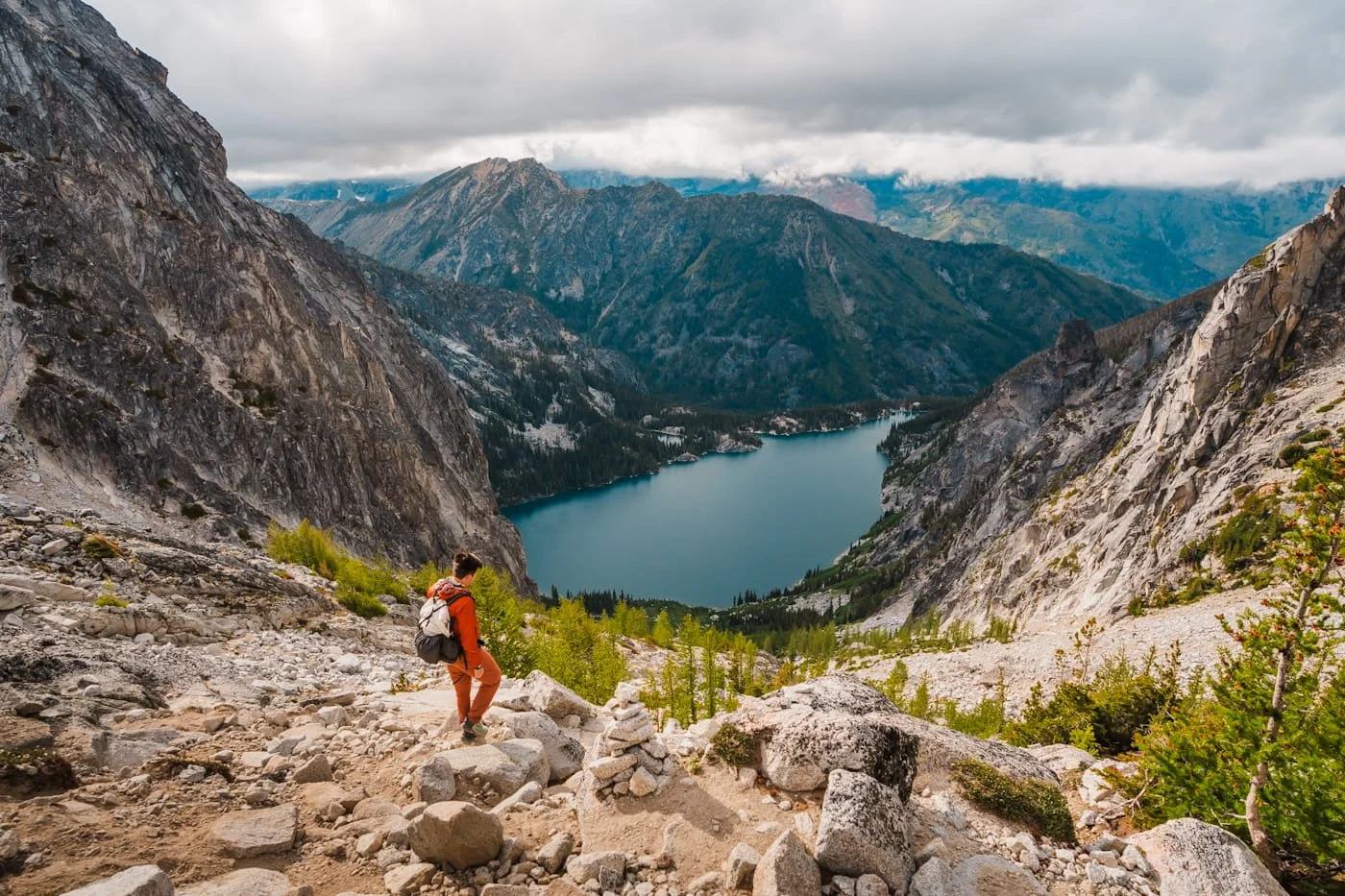
Garrett descending Aasgard Pass after day hiking to the Upper Core from camp
Day-Hiking Aasgard Pass and into the Core From Your Colchuck Campsite
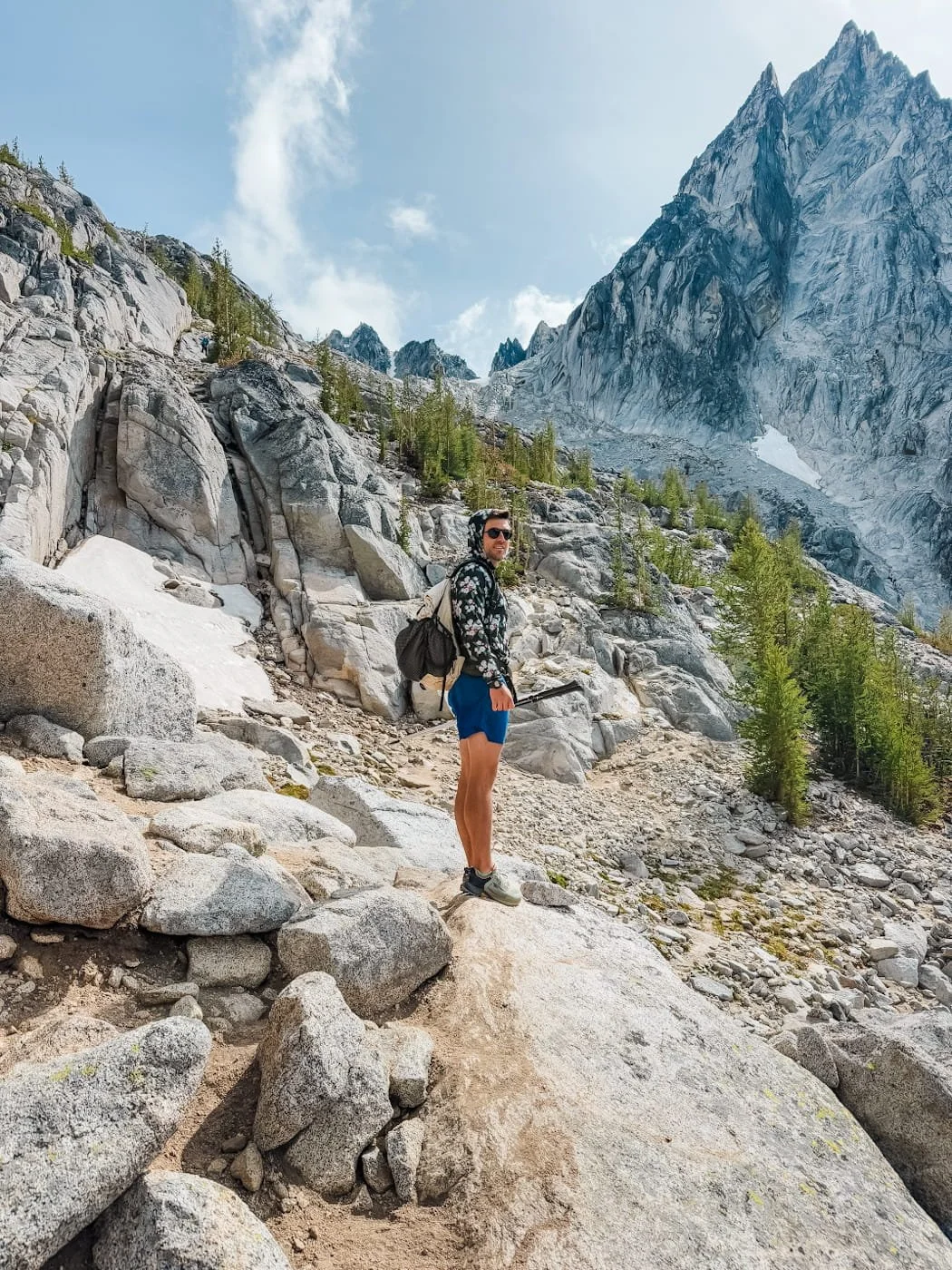
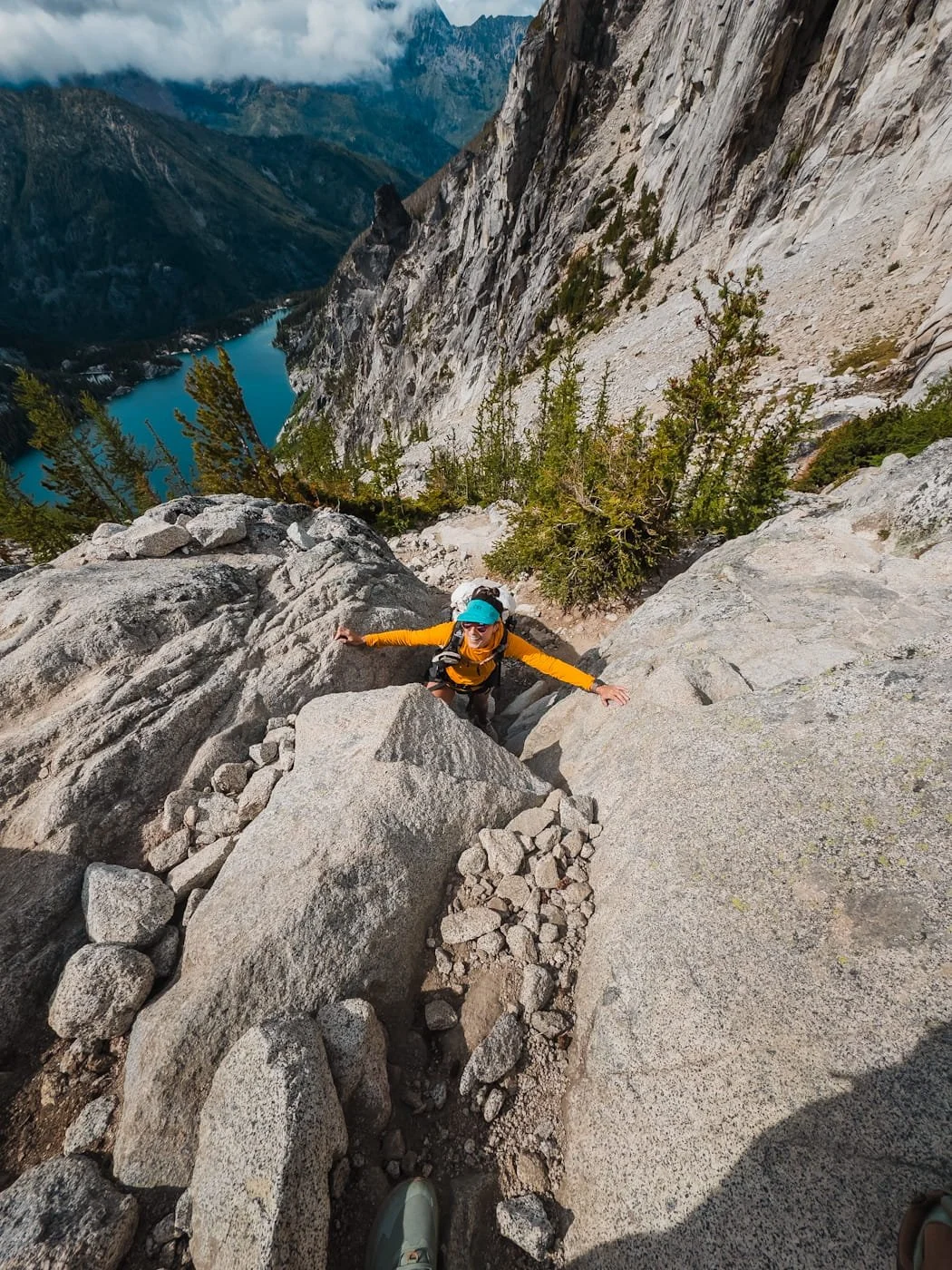
One of the best parts of a Colchuck permit is that you can still day hike up into the Core Enchantments. Drop your overnight gear at your campsite, but still bring a pack with what you need for a day hike, and you can climb Aasgard Pass into the Core, explore the Core, and be back at your tent by nightfall. Aasgard Pass gains 2,200 feet in less than a mile, hiking over boulder fields and loose talus.
Some backpackers will hike up the same day, but most will want to do this their second day, especially if you have more than one night. Hiking into the Core and getting to see the entire area is a full day, so plan for this on your second day. We only camped at Colchuck on our recent permit for one night, so hiked up Aasgard and into the Upper Core after setting up camp. We’ve hiked Aasgard many times so knew how much we would be able to fit in and the effort required. If you have not been into the Core before, give yourself a full day for this.
Going Up and Back Down Aasgard the Same Day Means:
You need enough daylight and energy to complete a much longer day than a typical Core overnight (expect 6-8+ hours round trip from camp, depending on how far into the Core you explore).
You'll be descending Aasgard Pass on tired legs at the end of the day, and descending is objectively more hazardous than ascending.
You'll want to turn around with a real time buffer. Don't push deeper into the Core than you can comfortably retrace before dark.
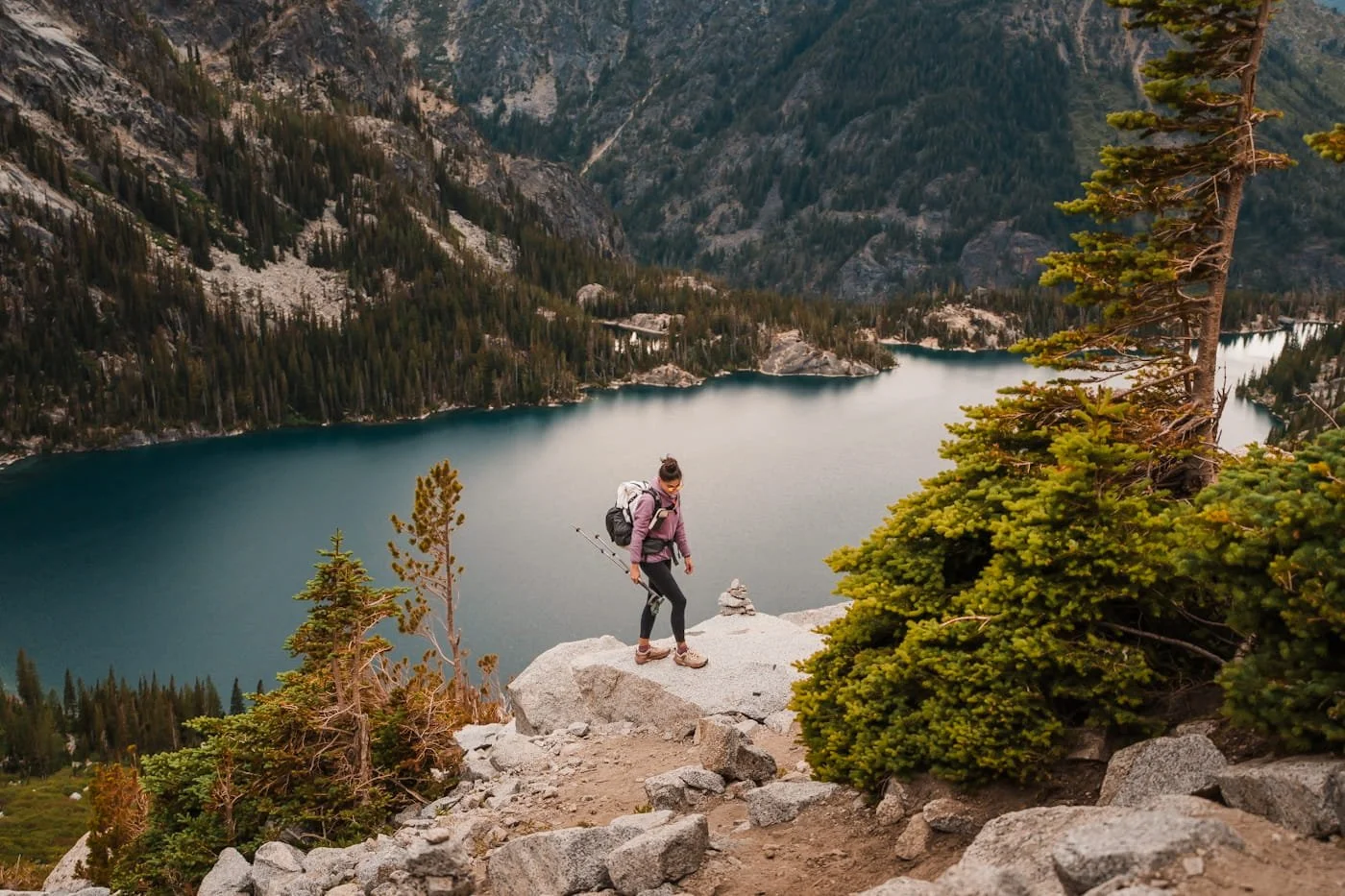
About halfway up Aasgard Pass
A Few Key Things to Know Before You Hike Aasgard Pass:
Parts of the route are marked with cairns, but there's no official trail, stay climbers left of the larch grove about halfway up to avoid steeper, impassable terrain.
Do not venture climbers right near the falls, early season snow can conceal a dangerous waterfall hole.
Start early. Reaching the base of Aasgard with plenty of daylight left gives you the buffer you'll need to get back down safely.
Bring trekking poles regardless of season. In early season (May–June), pack microspikes or crampons and an ice axe.
Is it worth it? If you're comfortable with steep, loose terrain and reasonably fit, yes, you get a real look at the Core's lakes and peaks without ever carrying full weight over the pass. If you're not confident on exposed descents, or you're not sure you'll have the legs for a 8+ hour day with a lot of elevation gain, it's completely fine to skip Aasgard altogether and just enjoy Colchuck Lake itself.
→ For the full technical breakdown of Aasgard Pass, including ascending vs. descending strategies for backpackers carrying full overnight gear over the pass, see our Ultimate Guide to Backpacking the Enchantments.
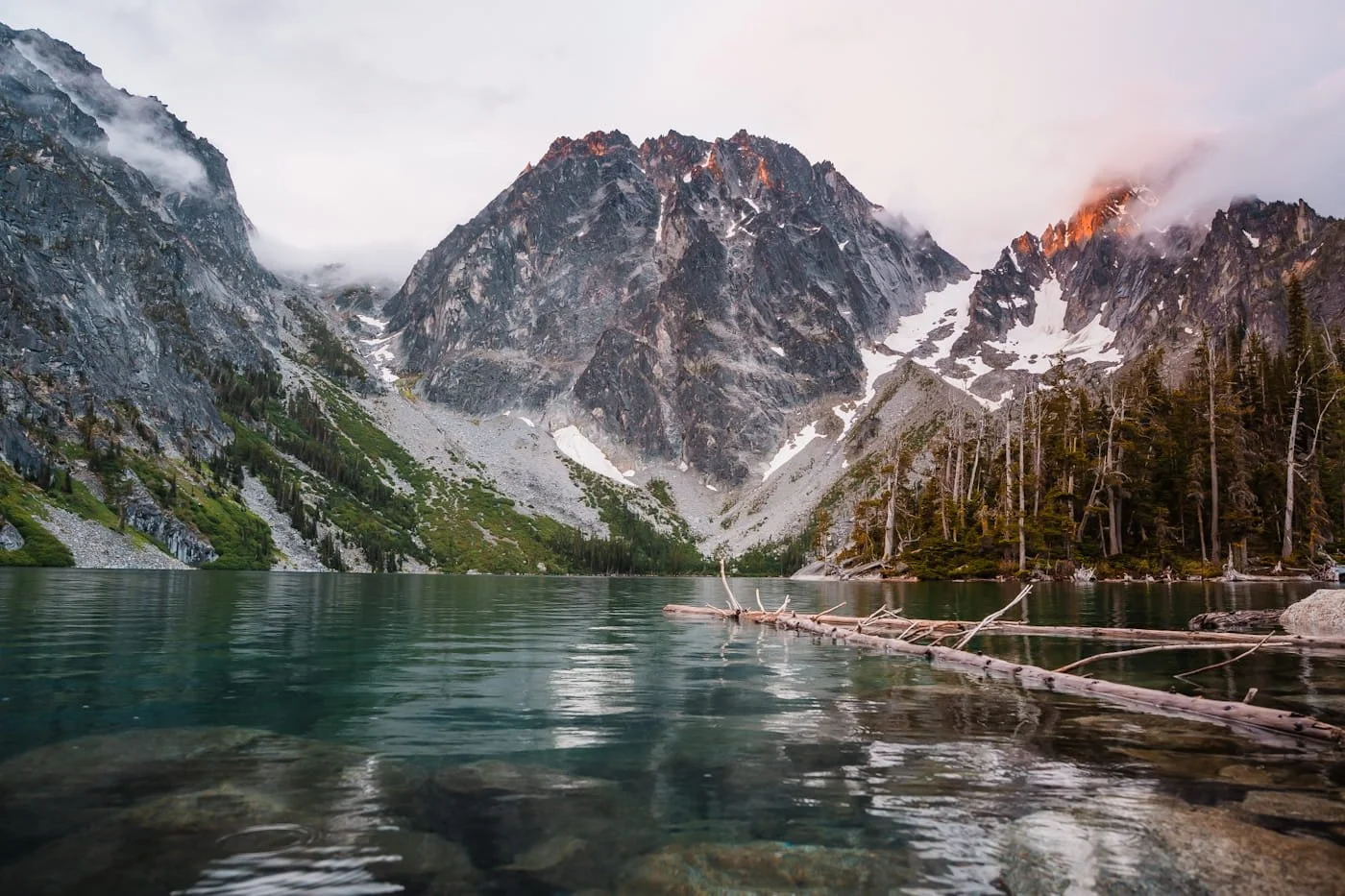
A moody sunrise at Colchuck Lake
Sample Itineraries for Backpacking Colchuck Lake
How you spend your time at Colchuck Lake depends on the number of nights on your permit, your fitness level, and how badly you want to visit the Core. Here are three ways to structure the trip, depending on what kind of experience you're looking for.
1-Night Stay at Colchuck Lake
The simplest version, and a great choice if you just want the alpine lake experience without pushing yourself too hard. Hike in, set up camp, and spend the rest of the day (and the next morning before you head out) relaxing lakeside, exploring the shoreline, and taking in the views of Dragontail and Colchuck Peak. This itinerary works well if you're newer to backpacking, traveling with kids, or simply want a low-key trip.
Day 1: Hike in (~3.8 miles, ~2,154 ft gain), set up camp, relax at the lake
Day 2: Wake up at the lake, pack up and hike out (~3.8 miles, ~2,154 ft loss)
I will note though, that we only camped at Colchuck for one night and did hike up Aasgard into the Upper Core only, in the same day. But we are very fast hikers and have done Aasgard numerous times, so knew how long it would take us. We don’t recommend this option if you have not been up the pass before, but it is doable for a fit group with a lot of hiking experience. See below for that itinerary.
Total trip: ~7.6 miles round trip, ~2,154 ft of elevation gain/loss.
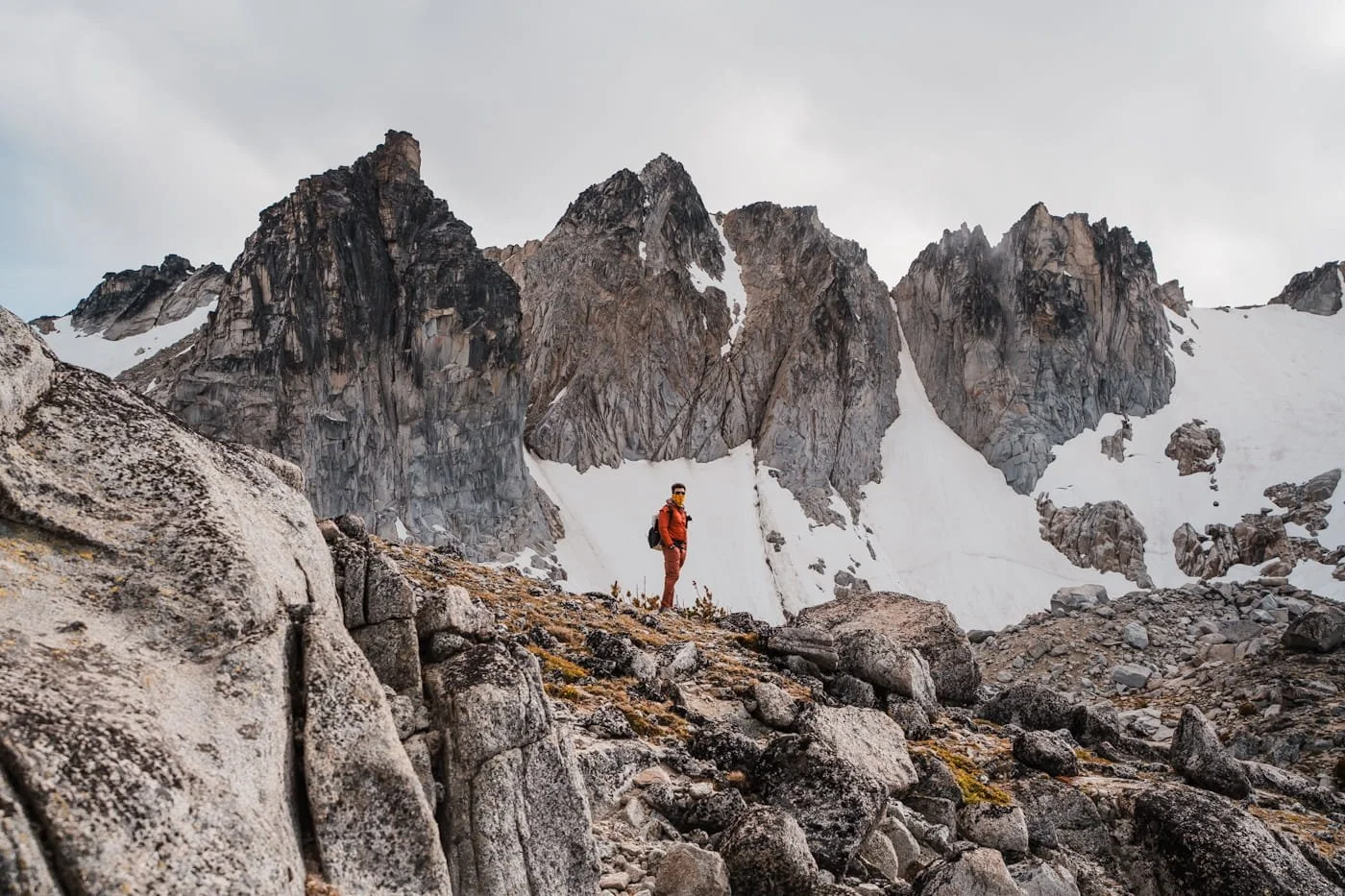
The top of Aasgard Pass, entering into the Upper Core Enchantments
1-Night Stay at Colchuck Lake + Aasgard & Core Enchantments Day Trip
If you are a very strong hiker and excel at long mileage days and elevation gain, you can still spend a night at Colchuck and tackle Aasgard Pass. It makes for a very long first (or second) day, but it’s what we did and it worked well for us. We have camped in the Core though so were fine making a quick trip up. If you have not been to the Core before, this may feel a little too rushed.
Day 1: Hike in early (~3.8 miles, ~2,154 ft gain), set up camp. Then day-hike up and over Aasgard Pass into the Core with a daypack (roughly 1.5 miles from camp to Aasgard Pass with ~2,200 ft gain), explore the core (4.4 miles round trip 839 loss/gain to Sprite Lake), return to camp back down Aasgard Pass
Day 2: Watch the sunrise at camp, pack up and hike out (~3.8 miles, ~2,154 ft loss)
Total trip: ~10.6-15 miles, ~6,500-6,700 ft of cumulative elevation gain/loss (varies based on how far into the Core you explore on Day 1).
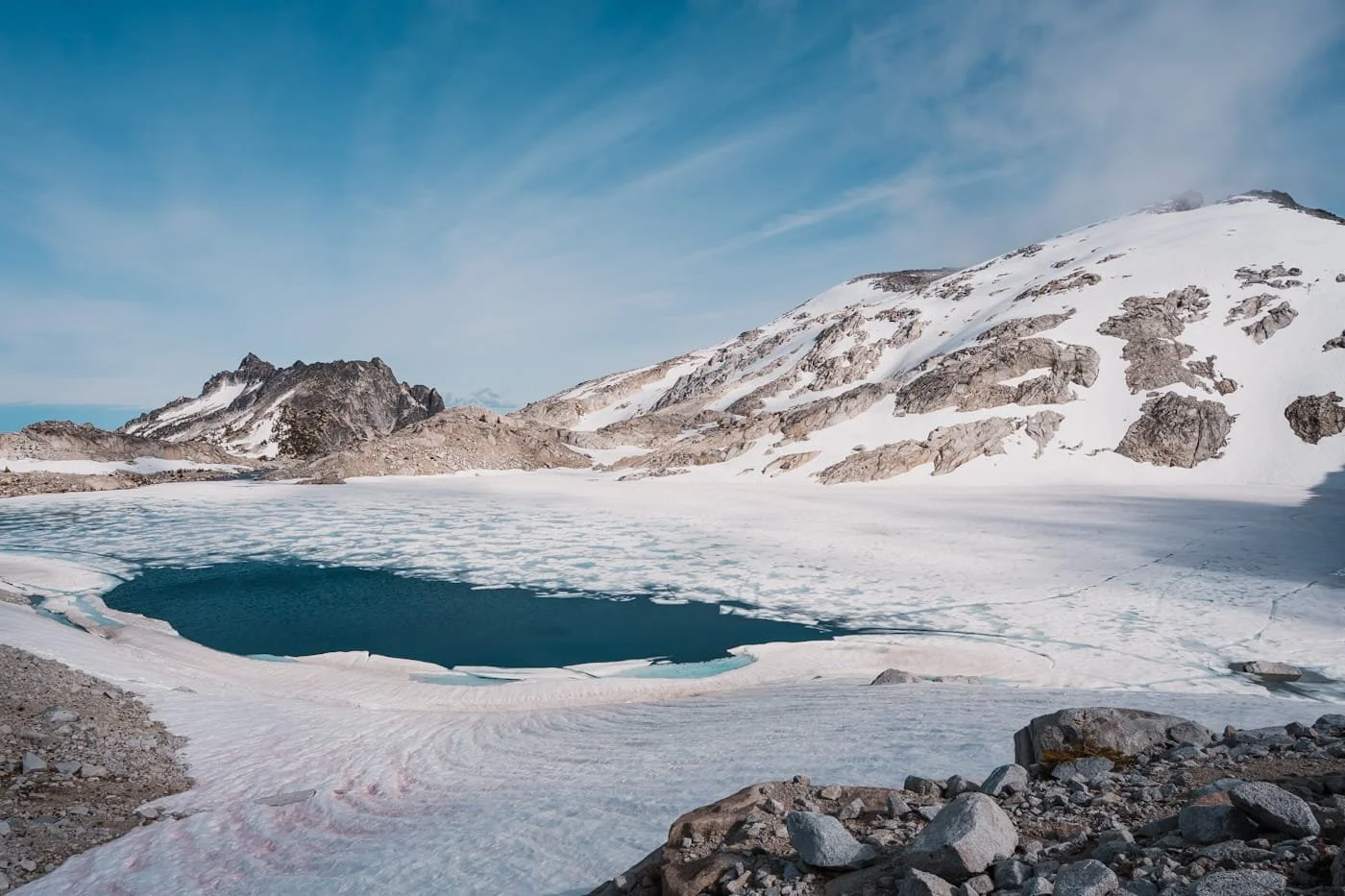
The Upper Core with snow in late June, 2026
2-Night Stay at Colchuck Lake + Aasgard Day Trip
The most popular way to experience both Colchuck and a taste of the Core in a single overnight permit. If you have time for two nights at Colchuck, this is the main itinerary we recommend. It is still ambitious but is a great way to still get into the Core.
Day 1: Hike in (~3.8 miles, ~2,154 ft gain), set up camp and hang out at the lake
Day 2: Wake up for sunrise either at the lake or while heading up Aasgard, day-hike up Aasgard Pass into the Core Enchantments for the full day (roughly 3-6 miles round trip, ~2,200+ ft gain and loss depending on how far you hike into the Core)
Day 3: Wake up when you want, pack up and hike out (~3.8 miles, ~2,154 ft loss)
Total trip: ~7.6 miles (~2,154 ft gain/loss) without Aasgard, or ~10.6-15 miles (~6,500-6,700 ft cumulative gain/loss) if you add the Aasgard day-hike into the Core.
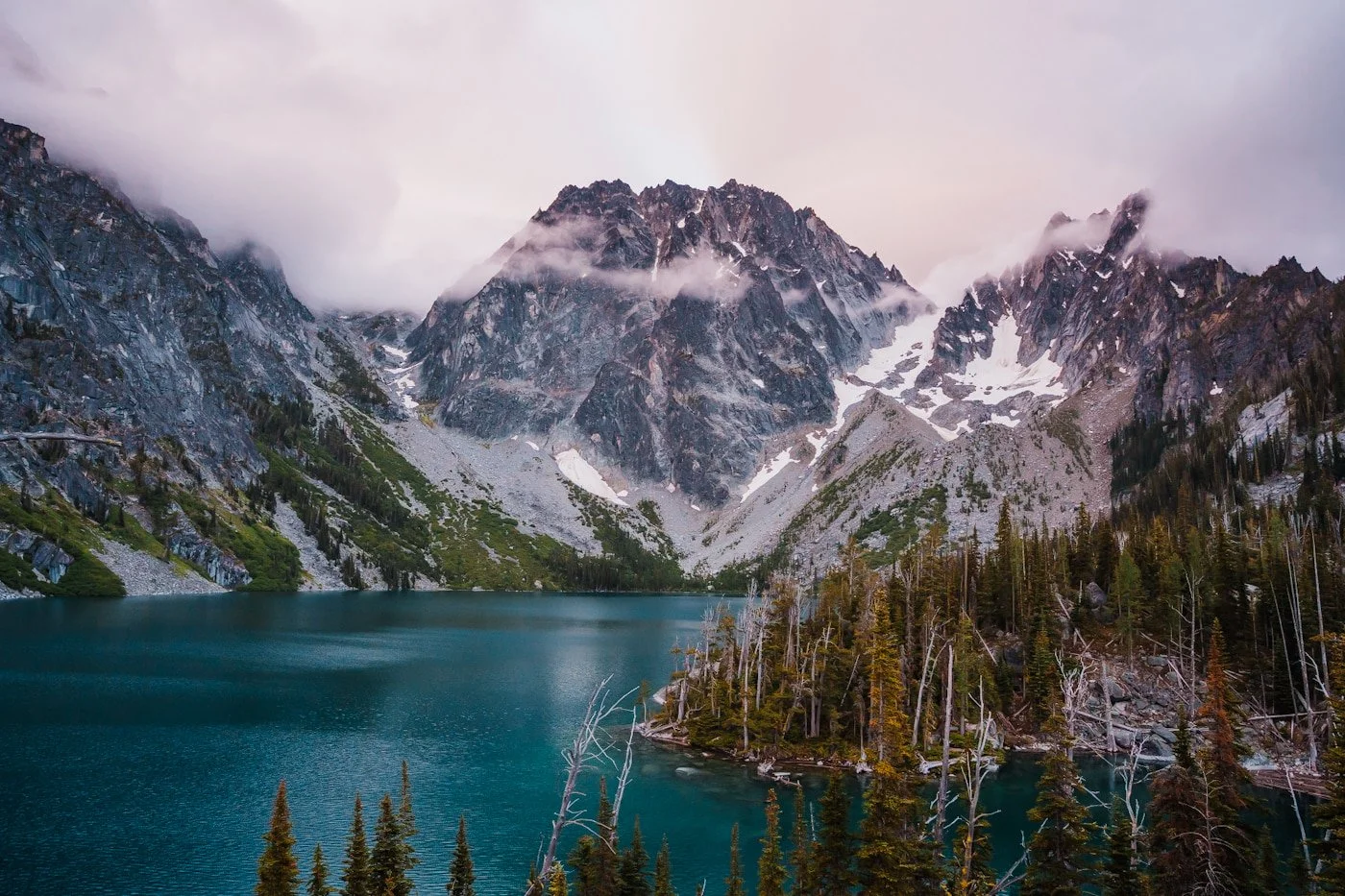
The Best Time to Backpack Colchuck Lake
The season you choose dramatically affects your experience backpacking to Colchuck Lake, not just the trail and lake, but overnight temps at camp and conditions on Aasgard Pass if you're planning a Core day trip.
The table below covers what to expect each season so you can plan accordingly.
Seasonality for Backpacking in the Enchantments
| Season | Conditions | Recommended Gear | Recommendation |
|---|---|---|---|
| Early Season Mid-May – Early June Advanced |
|
|
For experienced backpackers with snow camping and travel experience only. Campsites may still be snow-covered, and the trail's boulder approach can be hazardous with snow or ice. Skip Aasgard Pass entirely this time of year unless you're equipped and experienced with steep snow travel, it's one of the more dangerous stretches in the Enchantments when snow-covered. |
| Peak Summer July – Mid-August All Skill Levels |
|
|
Ideal for most backpackers and first-time Colchuck campers. Aasgard Pass is at its most straightforward this time of year if you're planning a Core day trip. Arrive early to claim a campsite, popular spots fill by early afternoon on weekends. Monitor air quality during wildfire season. |
| Late Summer Late August – Mid-September All Skill Levels |
|
|
One of the best windows for backpacking Colchuck Lake. Reliable weather, comfortable camping temps, and the best conditions of the season for a day trip up and over Aasgard Pass into the Core. |
| Larch Season Top Pick Late September – Early October Intermediate |
|
|
Our personal favorite time to backpack Colchuck Lake. Golden larches surround the lake and line the lower stretch of Aasgard Pass, making even the climb toward the Core scenic. Pack for genuinely cold nights at camp, and check current conditions before attempting Aasgard, early snow isn't unusual. |
| Shoulder Season Mid-October – Late October Advanced |
|
|
Not recommended for most backpackers. Snow and ice on the boulder approach and campsites make for a genuinely cold, challenging trip. |
Additional Weather & Trail Resources to Check Before Your Trip
NOAA Point Forecast for the Colchuck Lake Area - Detailed hourly temperatures and conditions
USFS Enchantments Page - Official rules, regulations, and area updates
Washington Trails Association Colchuck Lake Trip Reports - Trail condition updates from the hiking community
Air Now Fire & Smoke Map - Air quality and wildfire closures
Sunrise/Sunset Times - Plan your start time around available daylight
GaiaGPS Enchantments Route - Our free GaiaGPS map layer with the route, parking, camping and bathrooms marked
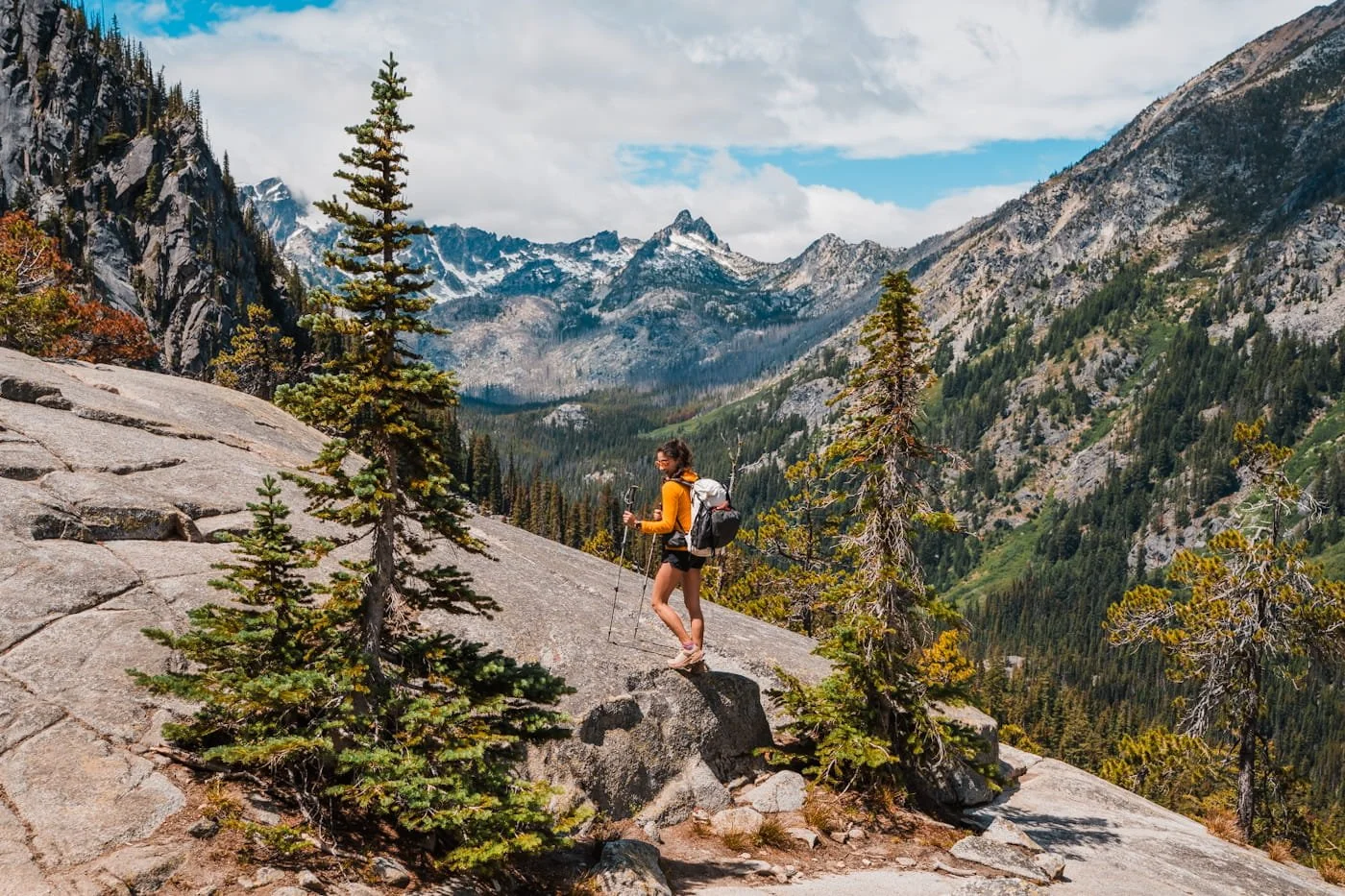
A viewpoint along the trail just before reaching Colchuck Lake
What to Pack for Backpacking Colchuck Lake
If you're backpacking to Colchuck Lake, your packing list looks almost identical to what we recommend for a full Enchantments backpacking trip, and that's intentional. Since most Colchuck backpackers still plan to day-hike Aasgard Pass from camp for a look into the Core, you'll want the same sleep system, layering strategy, and technical gear as anyone backpacking the Enchantments, you're just carrying it a shorter distance and camping at one lake instead of moving through multiple zones.
That said, packing for Colchuck Lake specifically comes with its own considerations. You're dealing with a shorter approach but real elevation gain, cold nights at altitude even in summer, and the option (not obligation) of a long, demanding day trip up Aasgard Pass if conditions and energy allow.
Whether you're packing for a relaxed one-night stay at the lake or gearing up for the full Colchuck-plus-Aasgard itinerary, getting your gear list right matters just as much here as it does for a Core Zone trip.
Every time we hike this trail we see backpackers with huge packs who look like they are really struggling. This does not have to be you. With the right packing list, lightweight gear, and not overpacking things you don’t actually need, you can keep your weight down and not have extra items dangling off your pack.
Below we’ve listed some of the most important backpacking items you will want for this trip, but make sure to check out our Enchantments packing list for a full packing list and all the gear we usually bring, but if you’re interested in lowering your base weight and going ultralight, we also have a gear guide focused on ultralight backpacking gear.
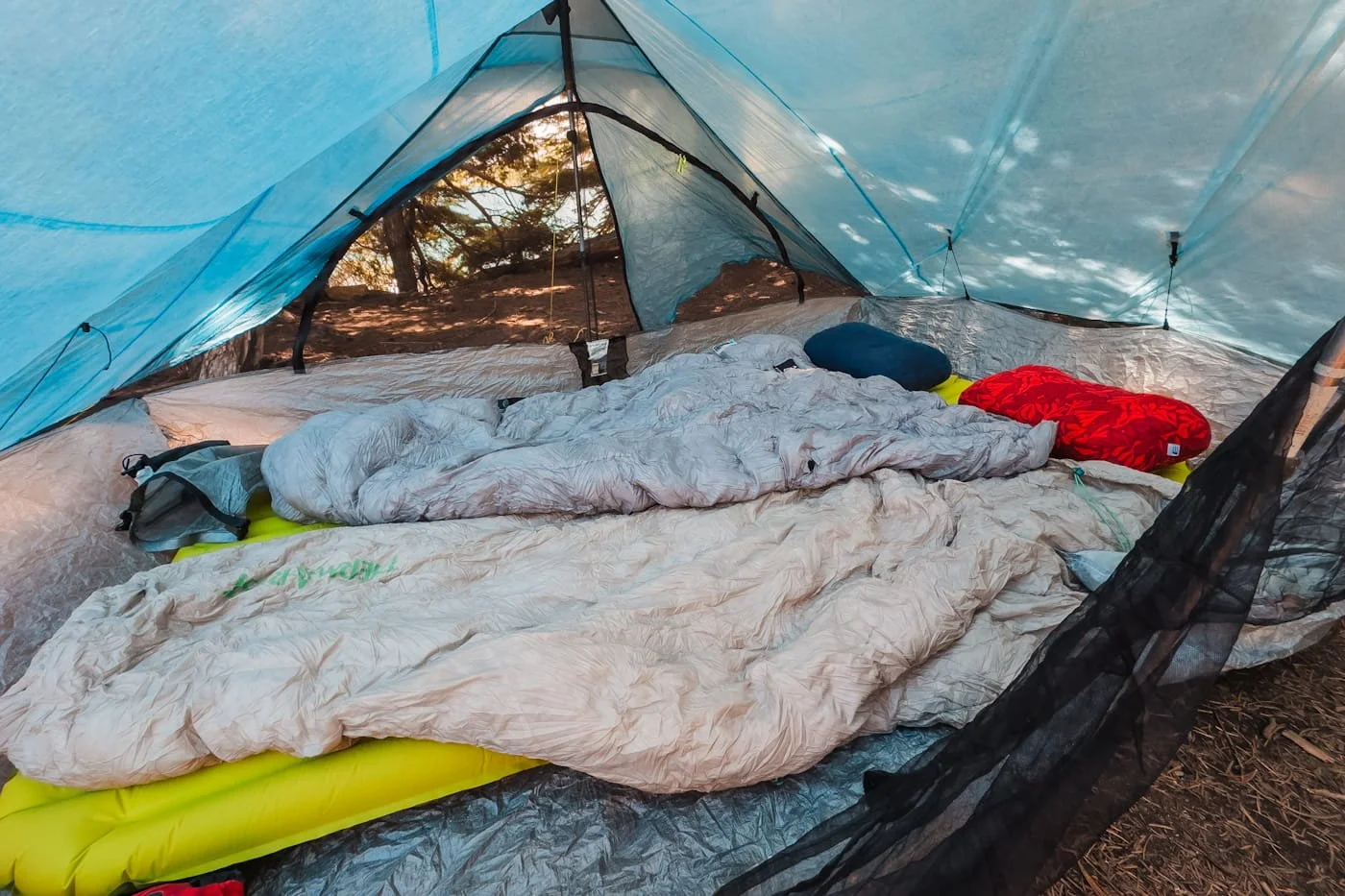
Our sleep set up in our tent at Colchuck
The Backpacking Big Three We Use and Recommend for Colchuck Lake
For every backpacking trip, you need your backpacking big three (or sometimes called big four), which includes your pack, tent, and full sleep system (sleeping bag or quilt, sleeping pad, and pillow). Below is what we packed for our backpacking trip to Colchuck Lake.
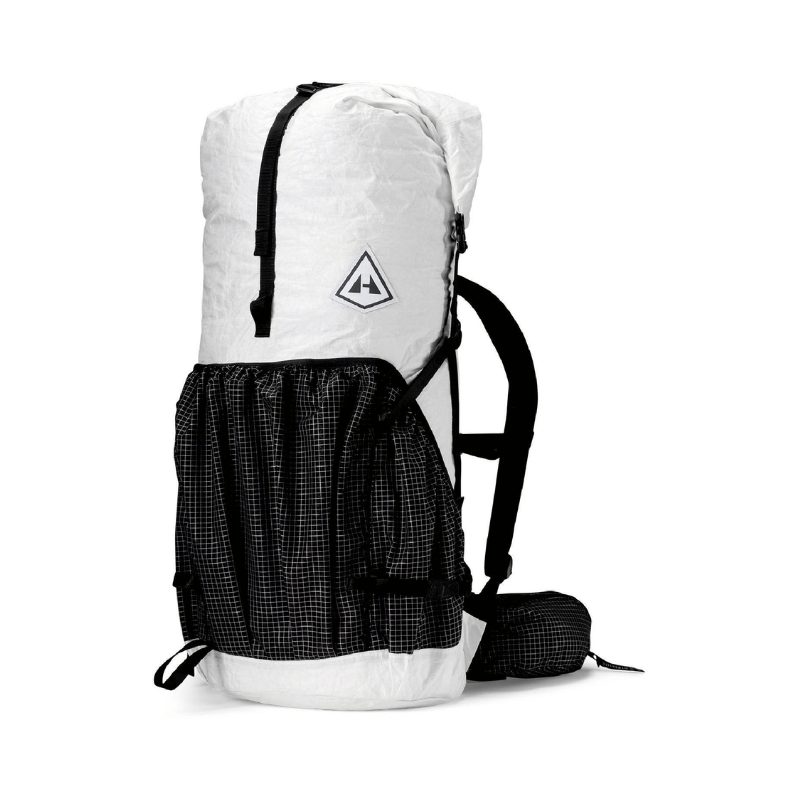
Backpack: A comfortable, lightweight pack in the 40-50L range is ideal for a 1-2 night trip. Our all-time favorite backpacking pack is the Hyperlite Mountain Gear Southwest 55L, we both brought ours on this trip and it was perfect in size and comfort. Plus, it’s a roll top, so you can make it a lot smaller when you have less gear. Ours were not at full capacity for this one night trip.
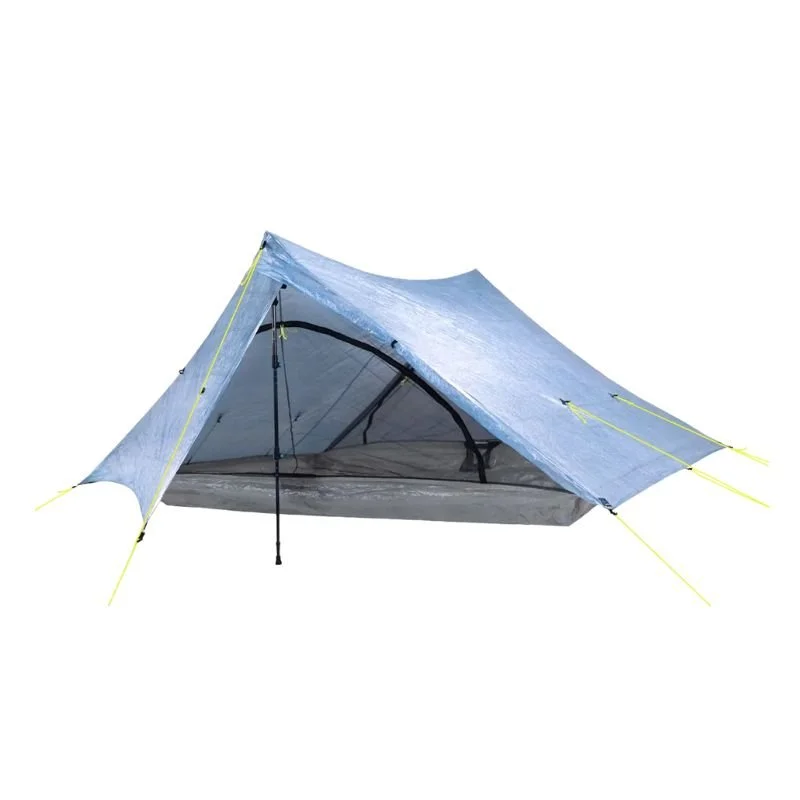
Tent/Shelter: We love light weight trekking pole tents for backpacking, they are spacious and very lightweight, think 1.5 pounds or less. Just make sure you have extendable trekking poles to pitch your tent with. On this trip we brought our Zpacks Triplex and it was perfect. It’s 1.5 lbs for a three person tent, which is spacious for two people.
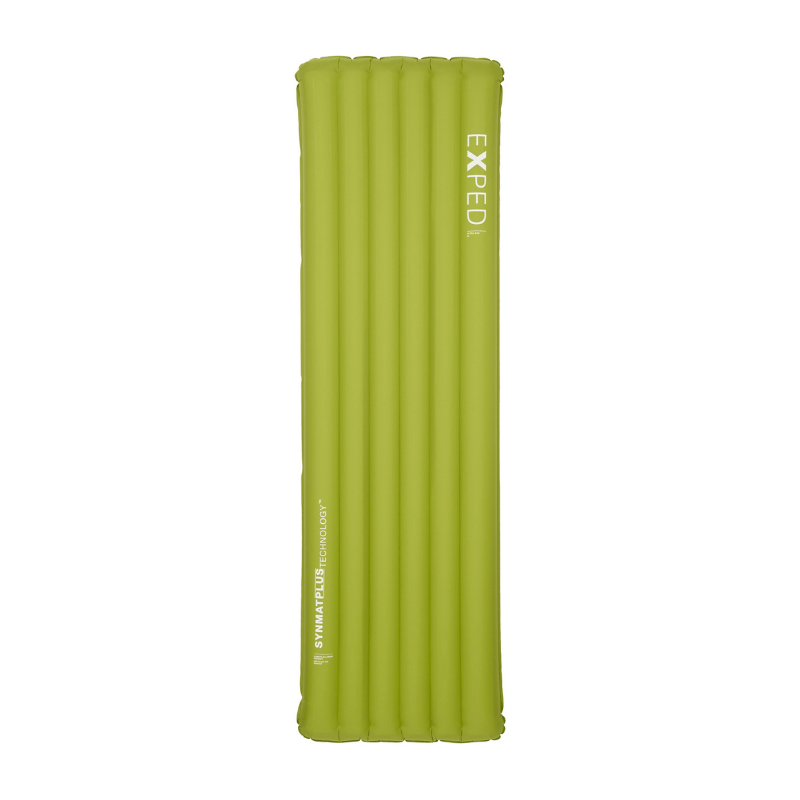
Sleeping Bag or Quilt & Sleeping Pad: We both use lightweight quilts instead of sleeping bags, and brought our 20-degree Hyperlitequilts on this trip. A good insulated sleeping pad like the Exped Ultra 6.5R is essential for comfort staying warm at night.
→ For a full packing list and everything you will need to camp at Colchuck Lake, head to our guide on what to pack for backpacking in the Enchantments.
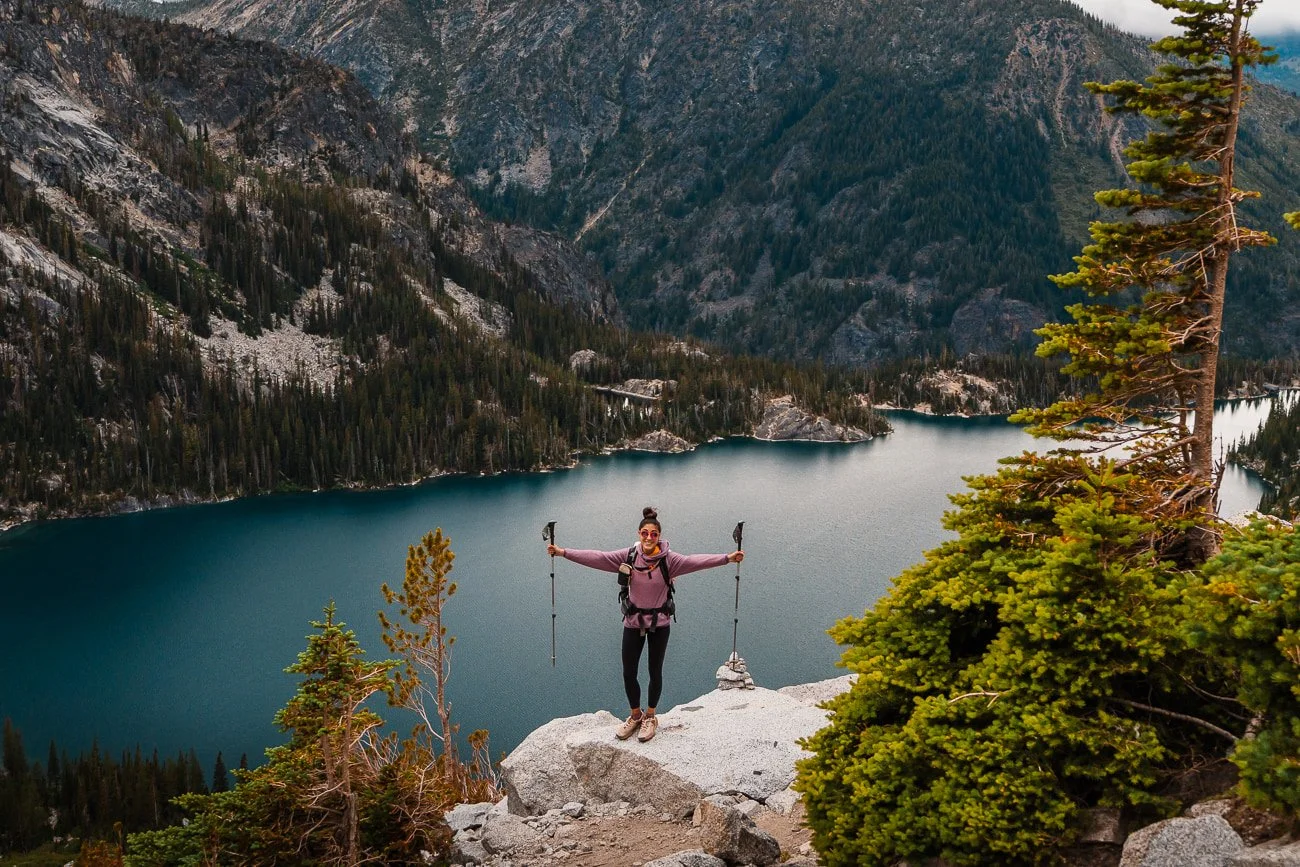
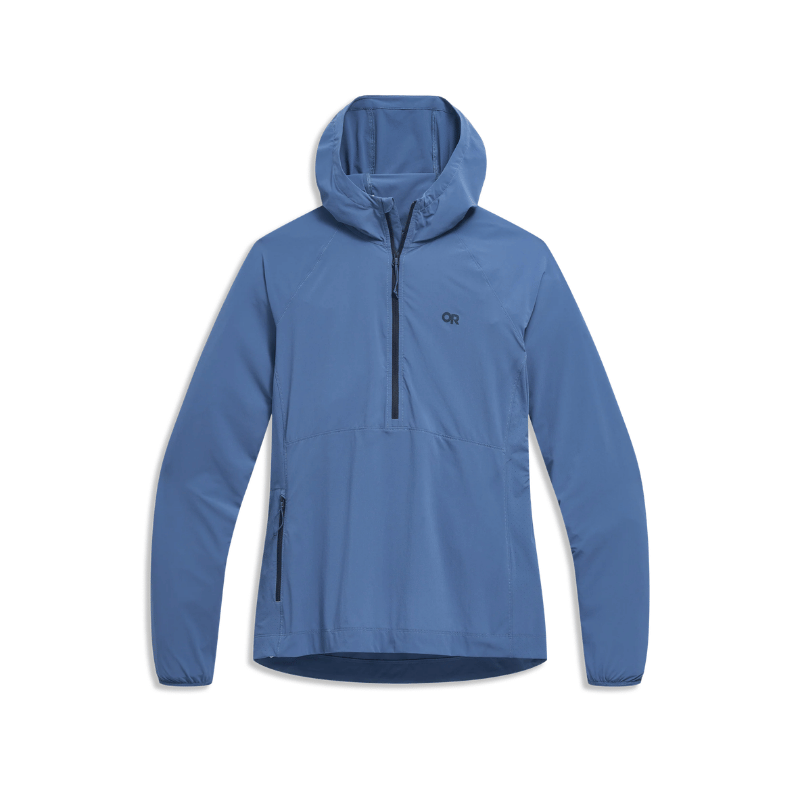
Wearing my SamBob Alpha fleece and leggings on the way down Aasgard in late June
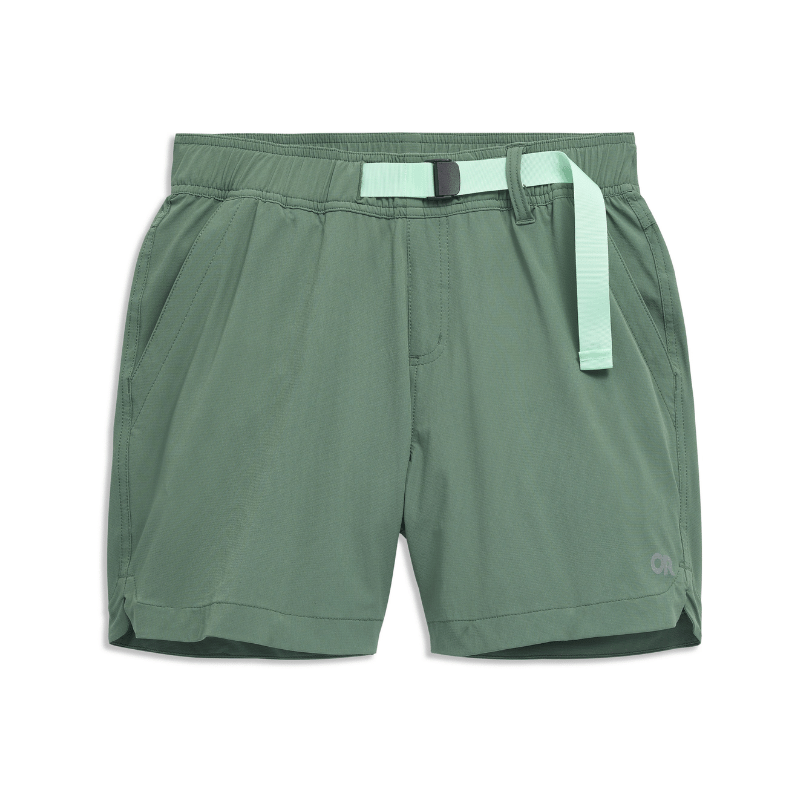
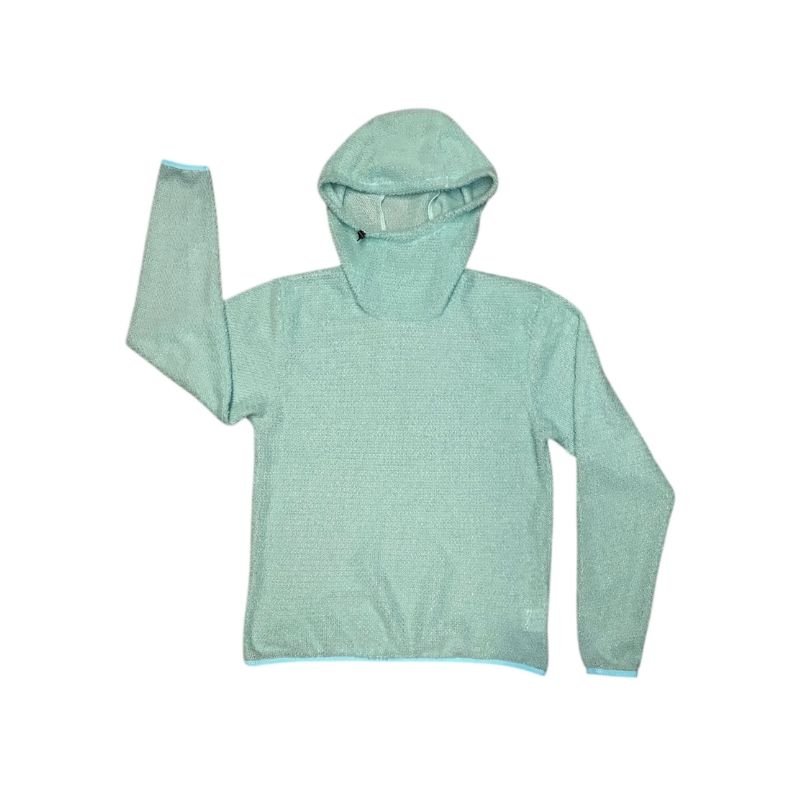
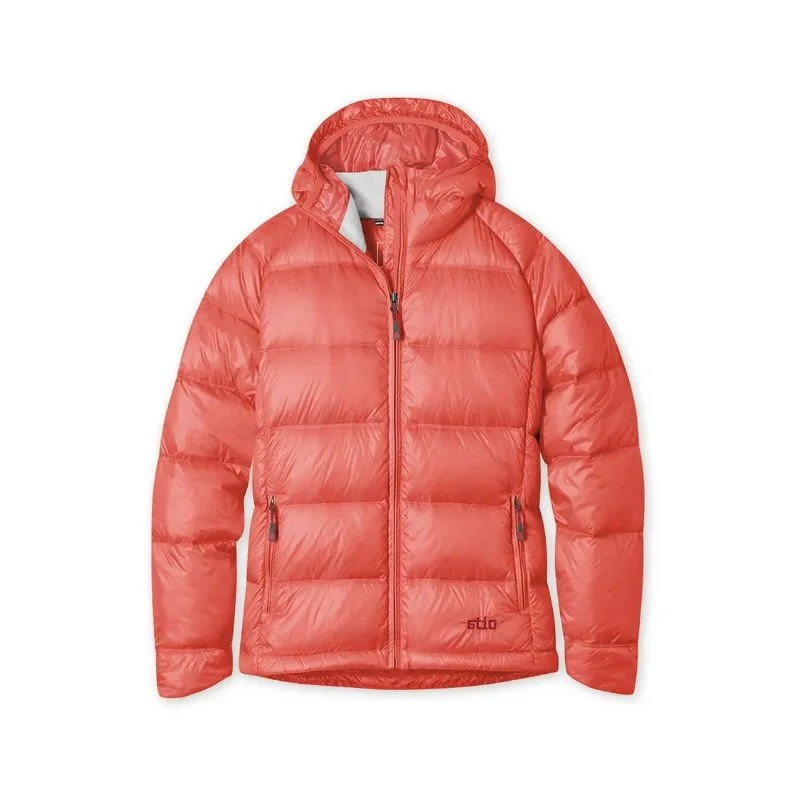
What to Wear for Backpacking Colchuck Lake
What you wear and pack clothing wise can make or break your trip. Weather is a huge consideration here, and even if it is hot during the day, temperatures can really dip at night and for early morning sunrise photo sessions. So, though you don’t want to overpack on clothing, you do want the basic layers to be comfortable both during the day while hiking, and at night at camp and in your tent.
We usually break up backpacking clothing into two categories, what to wear on the trail, and what you will want to have at camp. Just remember, you don’t need doubles of anything (besides maybe socks and underwear). After backpacking for years and really working on lowering our base weight, we both normally have one set of hiking clothes (a sun shirt and shorts), and then some basic layers for at camp. You do not need multiple tops, shorts, or fleeces for one to two nights.
More Gear Guides on Backpacking Clothing:
What to Wear for Hiking & Backpacking - A detailed guide that goes into all the types of clothing to bring, what to wear on trail, and what to pack.
Best Fleece Mid-Layers for Hiking & Backpacking- A gear review on all different types of fleece mid-layers, with information on type of fleece, use case, and weight.
The Best Sun Hoodies and Sun Shirts for Hiking, Backpacking, and Climbing- Over the years we have tested just about every sun hoodie on the market, and this is a deep dive into our favorites for specific activities.
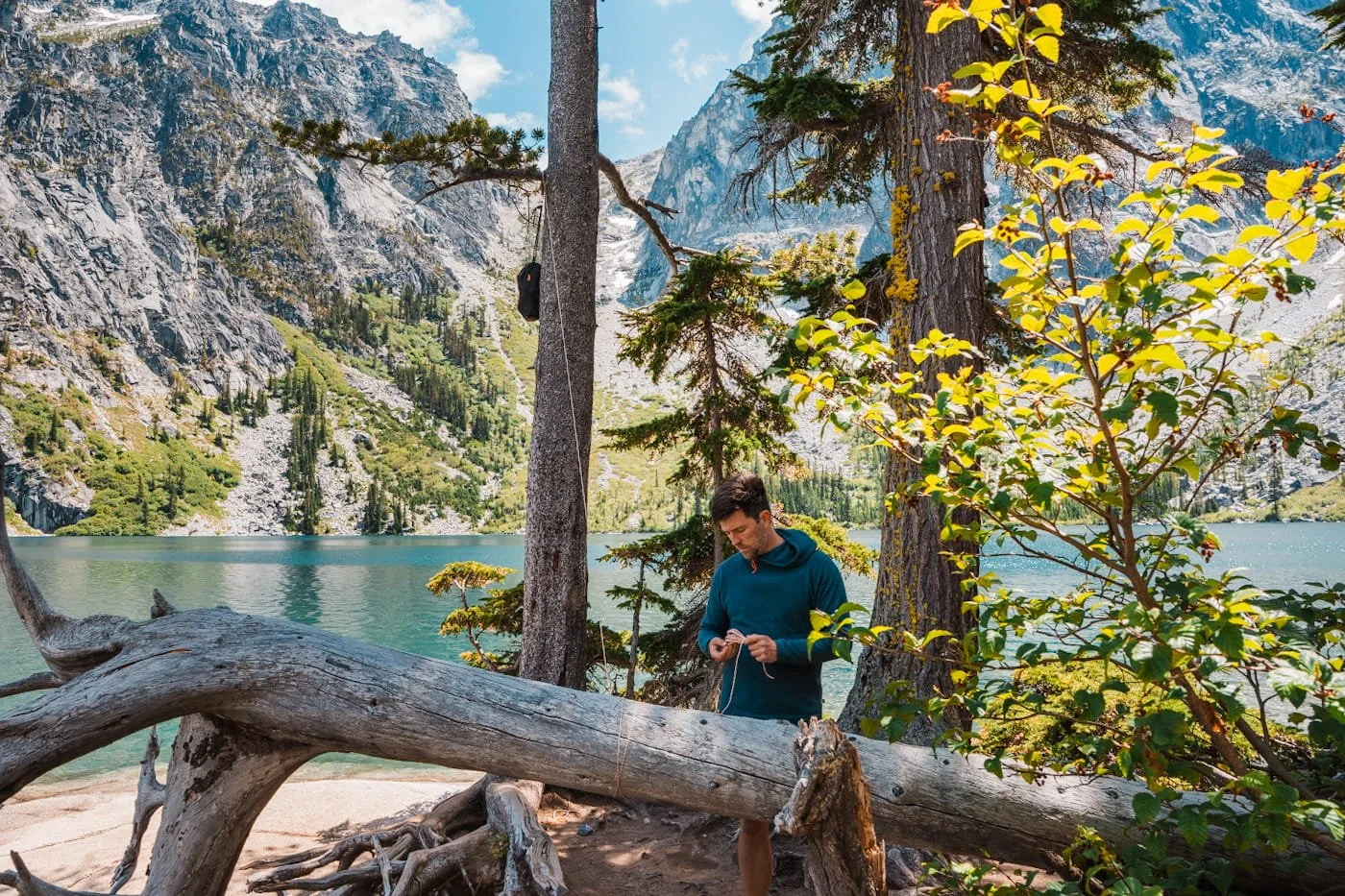
Garrett setting up our bear hang near our campsite. Note there are no formal areas setup for a completely bear-proof bear hang.
Leave No Trace at Colchuck Lake
Colchuck Lake sees some of the heaviest overnight traffic of any alpine lake in Washington, so it’s very important to be a responsible camper here. Camping brings a different kind of impact than day hiking: you need to camp in pre-established sites, food and waste management becomes a bigger deal, and a full night at the lake means more time to leave an impact. With ongoing USFS staffing cuts limiting ranger presence on the ground, it's on backpackers to make sure to practice Leave No Trace.
Here's How to Camp Responsibly at Colchuck Lake:
- Camp only in established sites. Never set up on vegetation or create a new site, even if an existing one is taken. Look for previously impacted, durable surfaces only.
- Store food properly. Hang food, toiletries, and other attractive items when in camp, and keep food and camp waste where bears, mice, and other animals cannot reach. Do not feed wildlife or leave food waste for them to find.
- No campfires. Fires are prohibited above 5,000 feet and within half a mile of any lake, which covers all of Colchuck. Bring a stove for cooking, and skip the temptation to build a fire ring.
- Pack out everything. All trash, food scraps, and toilet paper. A full night at camp generates more waste than a day trip, plan accordingly and pack it all out.
- Waste disposal. Use the designated toilet in the Colchuck camping area, and if the toilets are full, be prepared to pack out your waste in a WAG bag.
- Don't feed wildlife. Don't feed grey jays or chipmunks, goats or any other wildlife. Never leave food unattended.
- Be considerate of neighboring campers. Colchuck's established sites sit close together. Keep noise and light down after dark, and give other groups space and privacy.
- Drones are not permitted. This is a designated wilderness area, so drones are not allowed at any time.
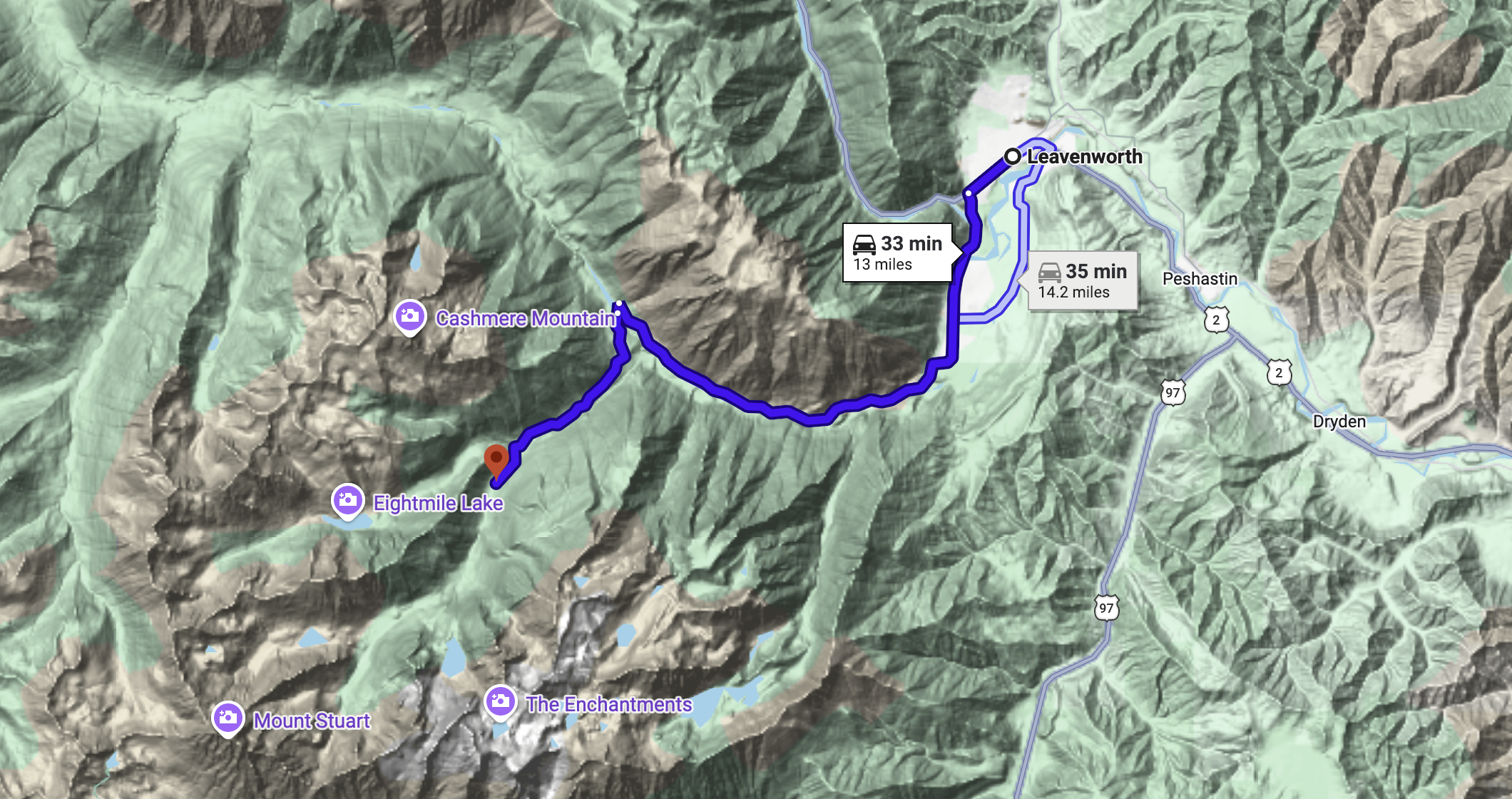
How to Get to Colchuck Lake & the Stuart Lake Trailhead
The Stuart Lake Trailhead is the starting point for the Colchuck Lake hike and is accessed via Icicle Creek Road southwest of Leavenworth. The forest road up to the trailhead is always very pot holed and bumpy, so take your time.
Driving to the Enchantments from Major Cities in Washington
| From | Distance | Drive Time | Route |
|---|---|---|---|
| Seattle, WA | ~150 miles | ~3.5 hrs |
I-5 → I-405 N → WA-522 E → US-2 East over Stevens Pass → Leavenworth → Icicle Creek Road Alt: I-90 over Snoqualmie Pass → WA-970 → WA-97 over Blewett Pass → US-2 W. Adds ~30 min but useful during Stevens Pass closures. |
| Bellevue / Eastside, WA | ~120 miles | ~3 hrs |
I-90 E or WA-520 E → US-2 East over Stevens Pass → Leavenworth → Icicle Creek Road |
| Wenatchee, WA | ~35 miles | ~1 hour |
US-2 West to Leavenworth → Icicle Creek Road |
| Spokane, WA | ~200 miles | ~3.5 - 4 hrs |
US-2 West or I-90 West → US-2 to Leavenworth → Icicle Creek Road US-2 is more direct and scenic through central Washington's high desert. |
From Downtown Leavenworth
Drive southwest on Icicle Creek Road
Continue approximately 8 miles on Icicle Creek Road
Turn left onto the steep gravel road to the Stuart Lake Trailhead (signed)
The parking area is at the end.
Google Map Directions from Downtown Leavenworth
→ Road Conditions: Icicle Creek Road is paved and well-maintained. The final spur road to the trailhead is steep, unpaved gravel. All standard vehicles can make it up.
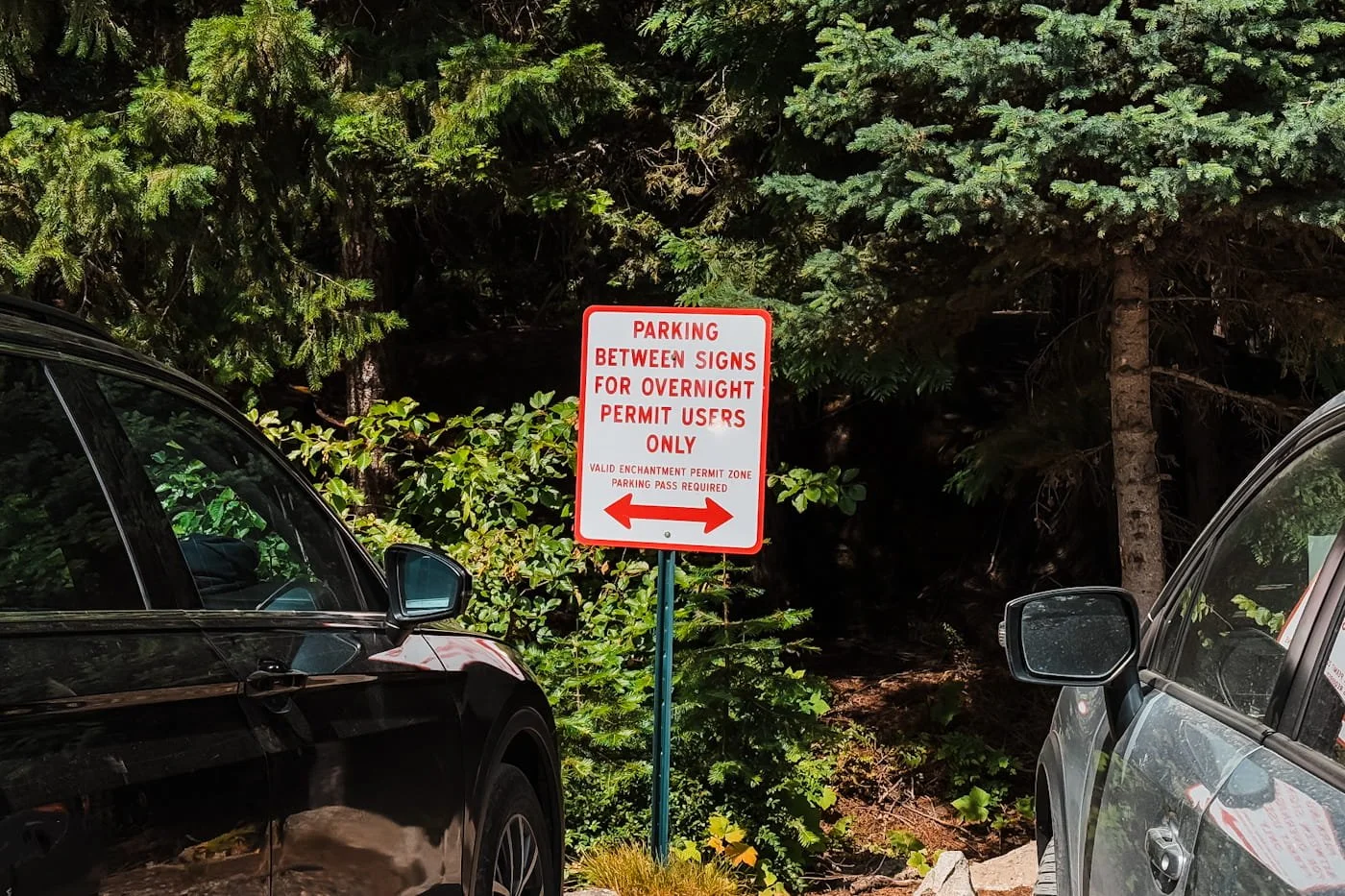
Where you will park as an overnight permit holder, look for these signs
A Few Things to Note on the Trailhead & Parking:
Overnight permit holders get designated parking. Unlike day-use parking, your Overnight Visitor Parking Pass (free with your permit) allows you to park in overnight-designated spots. Display it clearly on your dashboard alongside your parking pass.
You'll still need a parking pass. A Northwest Forest Pass or America the Beautiful Pass is required regardless of your overnight permit, keep one on hand for the dash if you don't already have it built into your permit paperwork.
The road closes seasonally. Forest Road 7601 typically closes to vehicles in winter (roughly November through May) to protect the roadbed, this lines up closely with when the Enchantments overnight permit season is closed anyway.
Arrive early if you can. Parking is limited (around 20-30 spots) and fills quickly, especially on summer and larch season weekends. An early start also gives you a better shot at claiming a good campsite once you reach the lake.
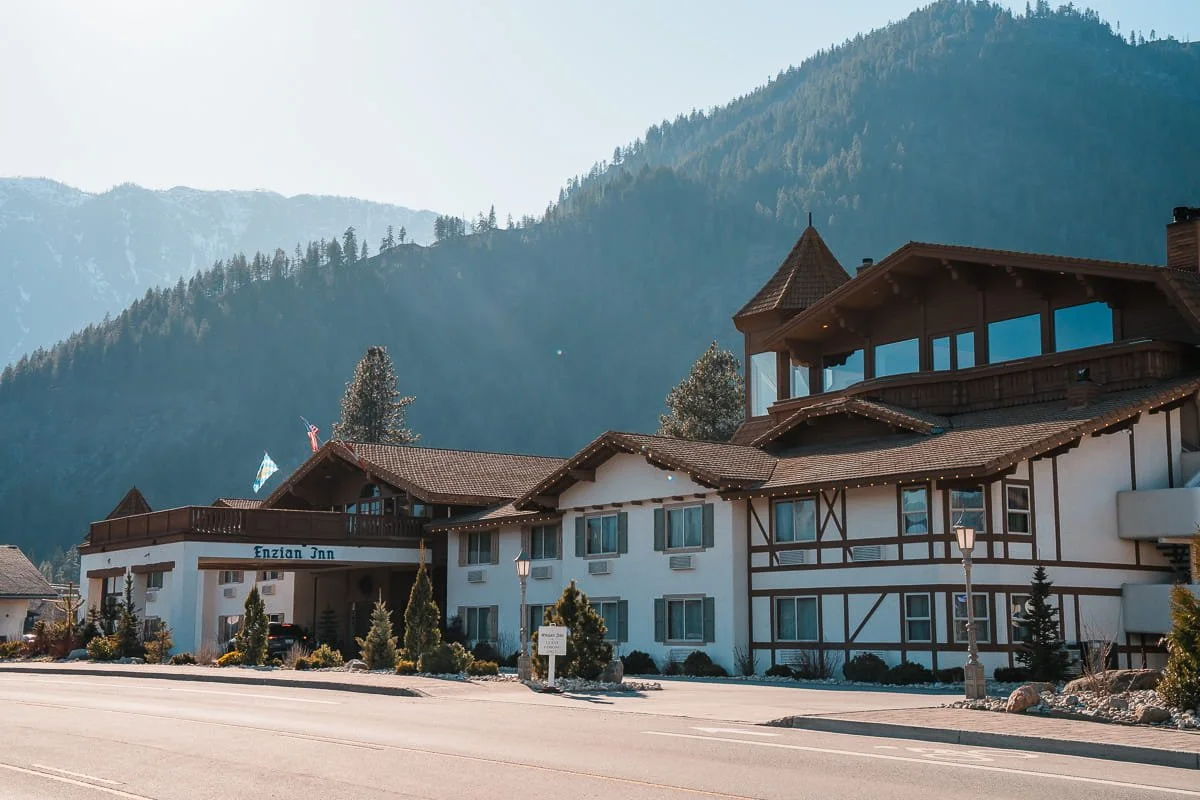
Our favorite hotel in Leavenworth, the Enzian Inn
Where to Stay Before or After Your Colchuck Lake Permit
Leavenworth, Washington, is the closest town to the trailhead and worth a visit on its own. It has great restaurants, gear shops, breweries, and a wide range of lodging options. See our complete Leavenworth Lodging Guide for in-depth hotel and camping recommendations in the area.
FAQ: Backpacking Colchuck Lake
Can I backpack to just Colchuck Lake without going into the Core?
Yes. A Colchuck Zone permit lets you camp at the lake for the night(s) on your permit, and heading into the Core is entirely optional. Plenty of backpackers camp at Colchuck purely for the lake itself and never touch Aasgard Pass.
How hard is it to get a Colchuck Zone permit?
Colchuck Zone permits have roughly an 8-10% success rate in the advance lottery, better odds than the Core Zone's under-3% rate, but still competitive. Beyond the advance lottery, you can also try the daily walk-up lottery, unclaimed permits released April 1, or cancellations throughout the season.
Can I day-hike Aasgard Pass and the Core from a Colchuck campsite?
Yes. Drop your overnight gear at camp, pack a daypack, and you can climb Aasgard Pass and explore the Core in a single long day, then return to your Colchuck campsite that night. It's a genuinely demanding day (expect 8-10+ hours round trip), but it's a popular way to see both zones on one permit.
Is backpacking Colchuck Lake worth it if I can't get a Core permit?
Absolutely. Colchuck Lake has the same dramatic granite peaks and turquoise water that make the Core famous, and better permit odds to boot. Whether or not you add an Aasgard day trip, camping at Colchuck stands on its own as one of the best overnight trips in the Enchantments.
How many nights should I spend at Colchuck Lake?
One to two nights is a good amount of time. One night is enough for a relaxed lake experience or a single Aasgard day trip if you're up early and moving efficiently. Two nights gives you breathing room, a weather buffer, a less rushed Aasgard attempt, or simply more time to enjoy camp.
Can I camp at Colchuck Lake without a permit?
No. Overnight camping anywhere in the Enchantments Permit Area, including Colchuck, requires an overnight permit between May 15 and October 31. Day hiking doesn't require an overnight permit, but you'll still need a free self-issued day-use permit at the trailhead.
How difficult is backpacking to Colchuck Lake compared to backpacking into the Core Enchantments?
Backpacking to Colchuck Lake means carrying a full overnight pack up the same ~3.8-mile, ~2,154-foot approach used by the Core, but stopping at the lake instead of continuing over Aasgard Pass. Backpacking into the Core means carrying that same full pack up and over Aasgard's brutal 2,200 feet of gain in under a mile, a significantly harder climb. Colchuck is the more approachable option if you want the alpine lake experience without that added difficulty.
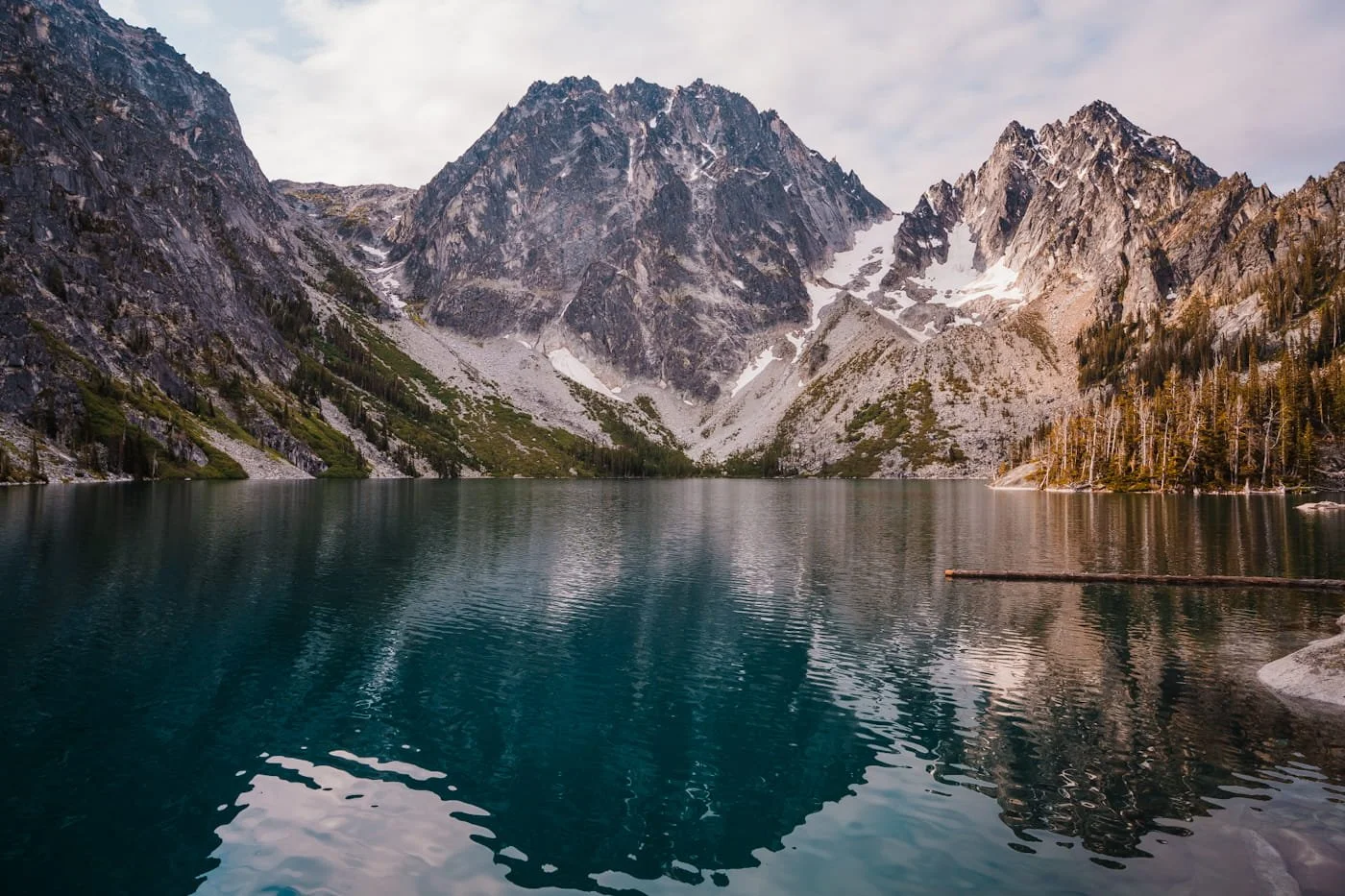
Final Thoughts on Backpacking Colchuck Lake
After many Core backpacking permits, we were so happy to finally camp at Colchuck this summer. It is such a beautiful place to camp and honestly worth trying to get a permit for. We were always only interested in the Core Enchantments, but getting to spend the night at Colchuck was a wonderful experience and made the day hike up Aasgard Pass so much easier.
If you are hesitant on the full Enchantments thru hike, or just love the views at Colchuck, this is an amazing backpacking trip to add to your list. We loved camping here and know you will too!
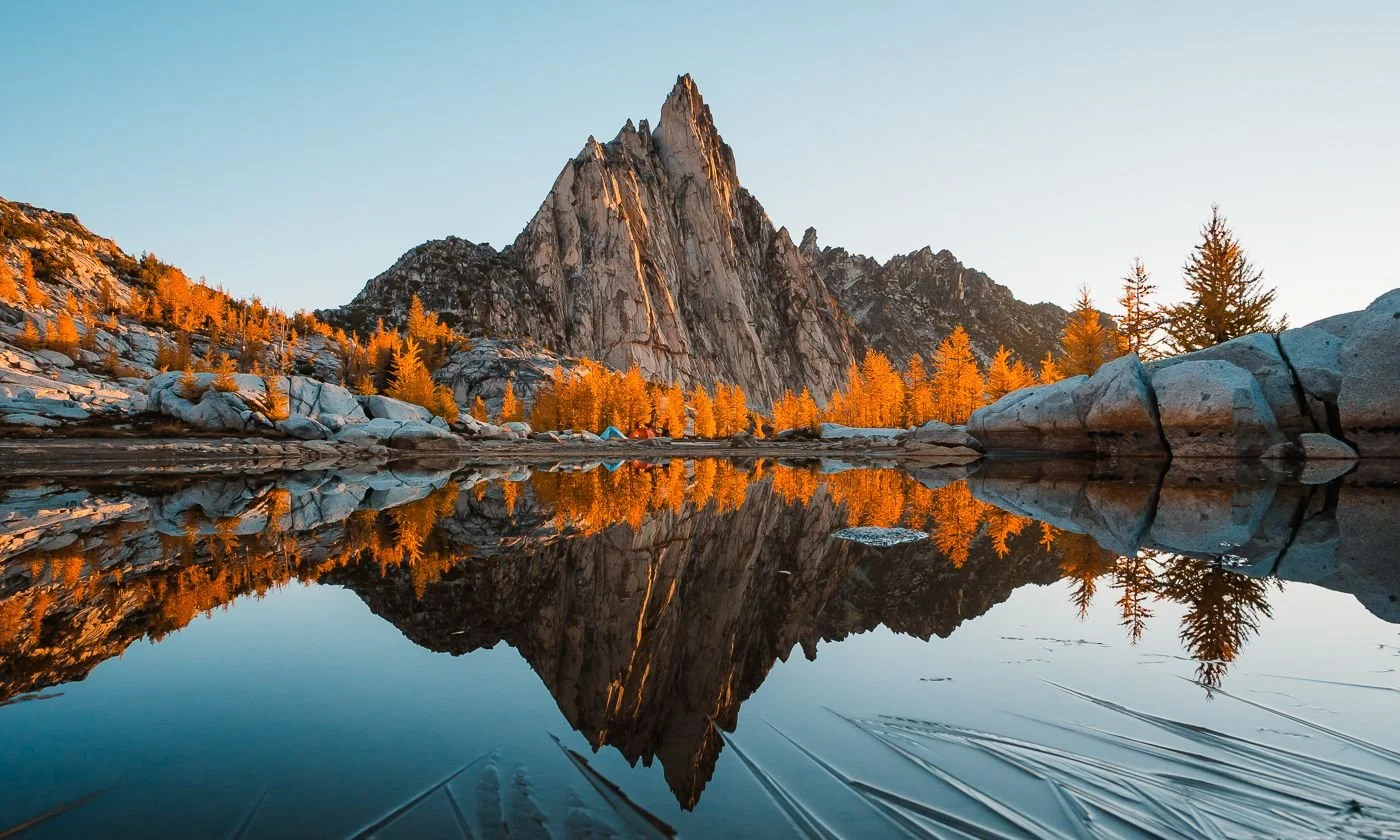
Read On: More Enchantments & Leavenworth Guides
Enchantments Guides & What to Pack
Visiting Leavenworth & Extending Your Trip
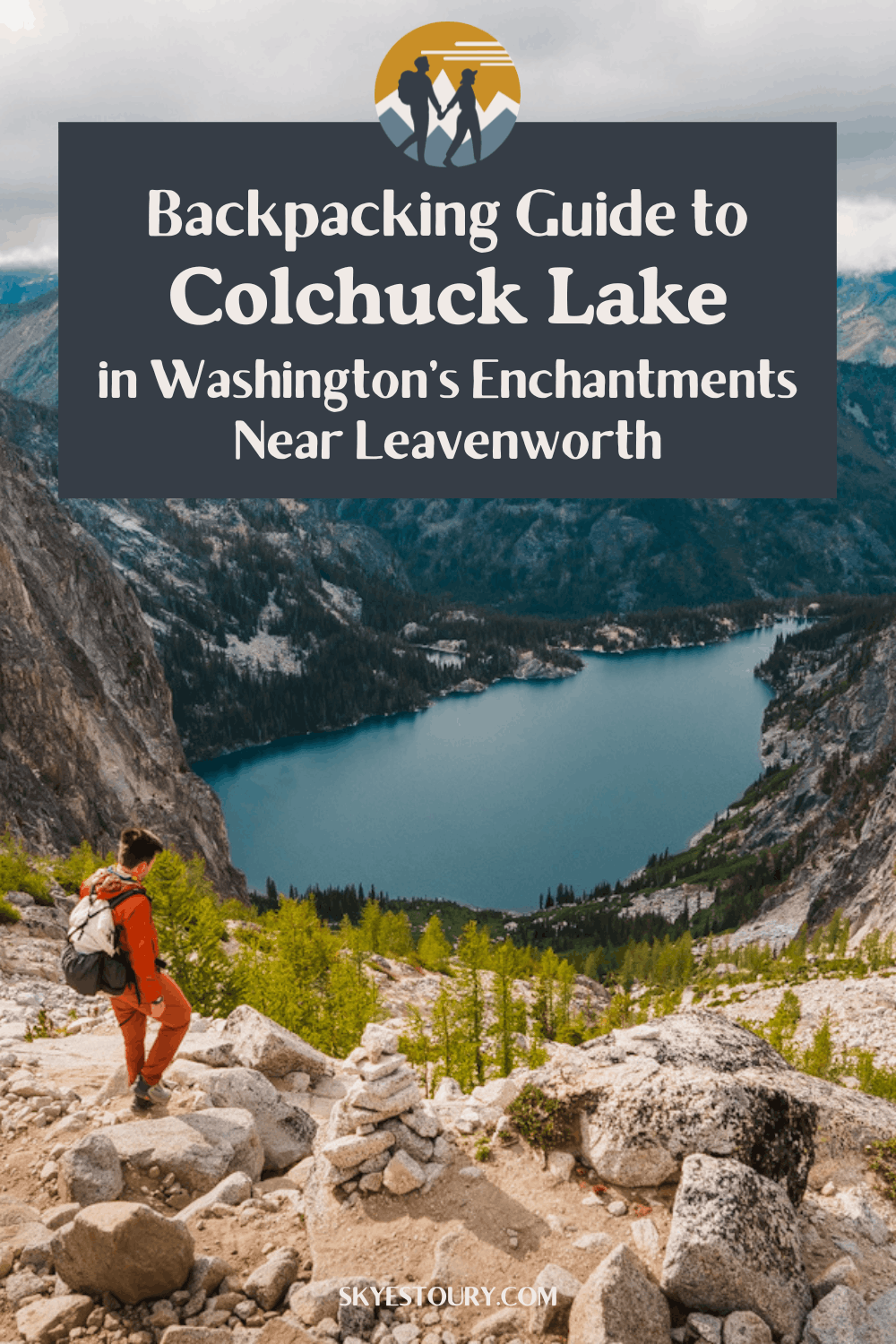
Liked this Post? Pin it & Save it for Later
9 Best Hikes Near Leavenworth, Washington
Lake Stuart Day Hike Guide: A Quieter Enchantments Trail in Leavenworth, WA
This image is copyrighted and owned by Skye Stoury Photography and skyestoury.com, if you would like to licence any images on this site, please email us at hello@skyestoury.com