
Backpacking Buckskin Gulch and Paria Canyon: A Comprehensive Guide to the World’s Longest Slot Canyon
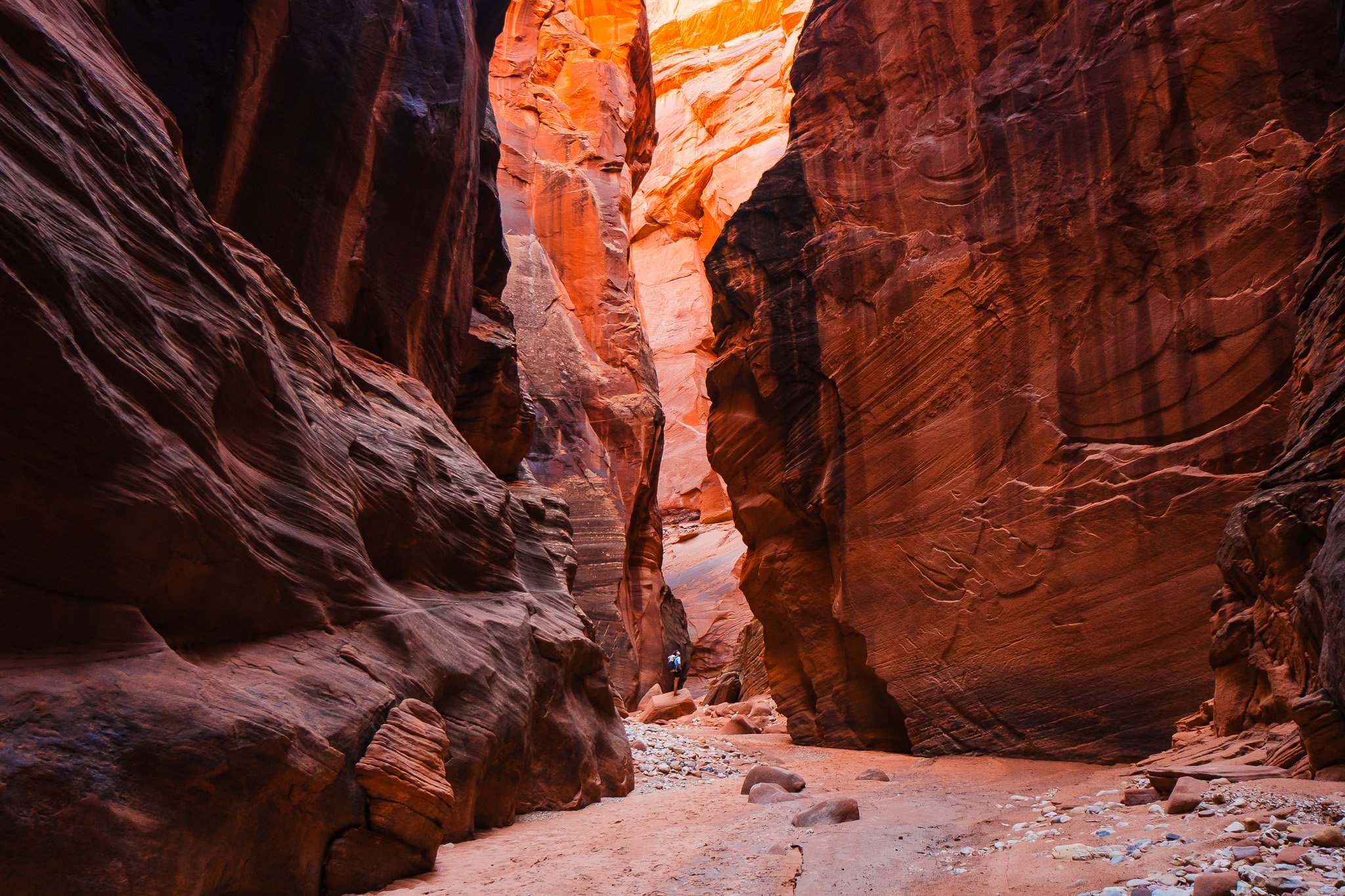
A detailed trail guide for navigating deep narrows, permitting and the most dramatic slot canyon in the Southwest
We first heard about Buckskin Gulch and Paria Canyon while spending a few months in southern Utah, and Garrett managed to snag a pair of last-minute permits. Even though this isn’t a technical canyoneering route, the idea of backpacking deep into a Utah slot canyon felt especially exciting. But as we started planning, we realized there wasn’t much solid information out there, so this guide is the resource we wish we had, whether you’re hiking Buckskin Gulch, the full Paria Canyon backpacking route, or a mix of both, we hope this guide helps in your trip planning process.
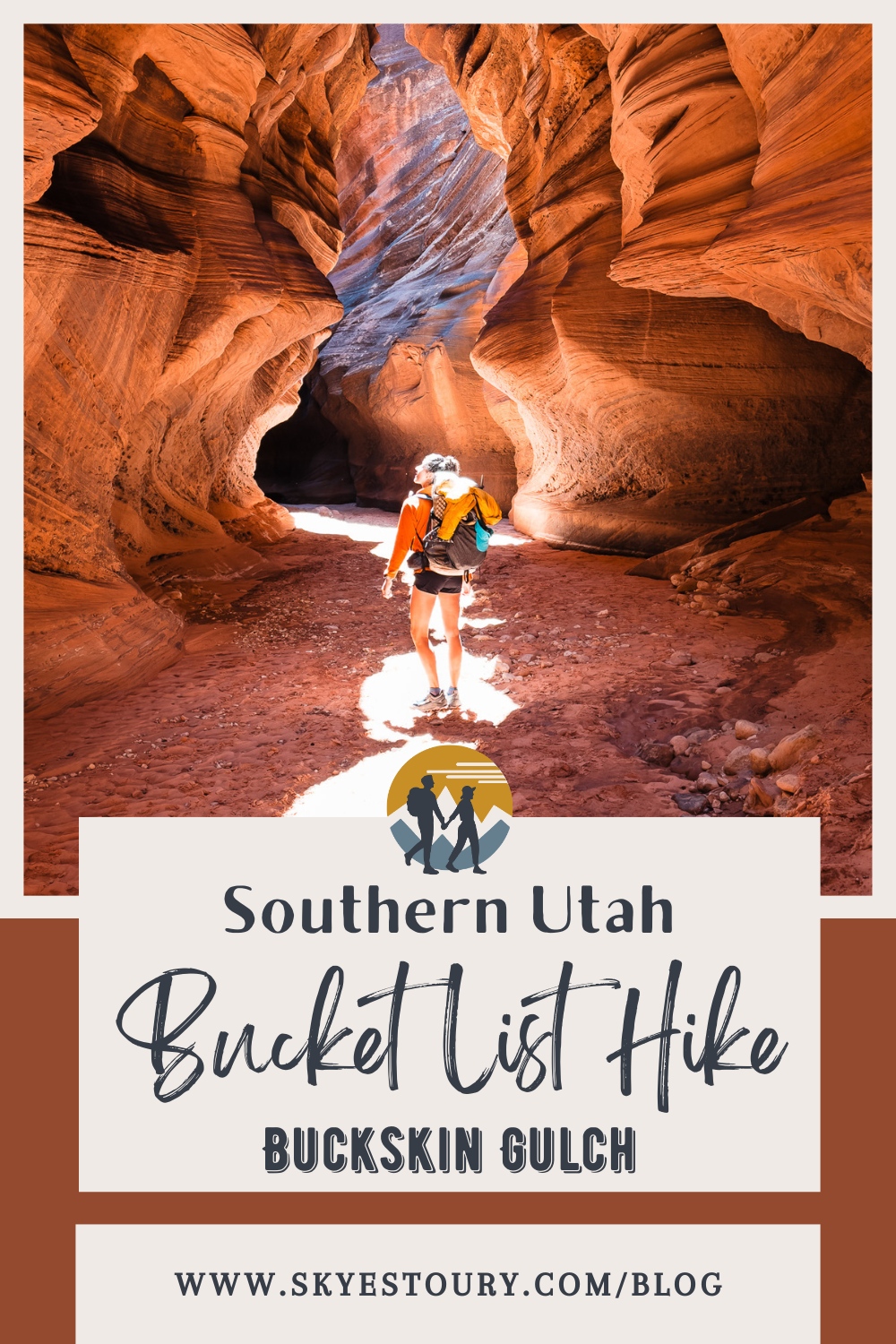
Buckskin Gulch, known as the longest slot canyon in the world, cuts through sculpted sandstone on the Utah–Arizona border and offers twisting narrows, seasonal water, and true backcountry solitude. It’s a bucket-list backpacking trip for anyone interested in backpacking in Utah, exploring Southwest slot canyons, or tackling one of the most dramatic canyon hikes in the U.S. From Buckskin Gulch day hikes to multi-day treks through Paria Canyon to Lee’s Ferry, this guide covers everything you need to plan your trip, get permits, packing lists, and key safety considerations.
Disclaimer: This blog post contains affiliate links, meaning I receive a small commission of every purchase made with my links at no additional cost to you. Sometimes there is even a discount code for my readers which I specify next to the links.
Table of Contents
Where Buckskin Gulch and Paria Canyon Are Located
Buckskin Gulch and Paria Canyon sit on the Utah–Arizona border within the Vermilion Cliffs National Monument, surrounded by some of the most dramatic slot canyons in the Southwest. The area is easily accessed from Kanab, Utah, and Page, Arizona, making either area a prime base for exploring this remote stretch of desert canyon country.
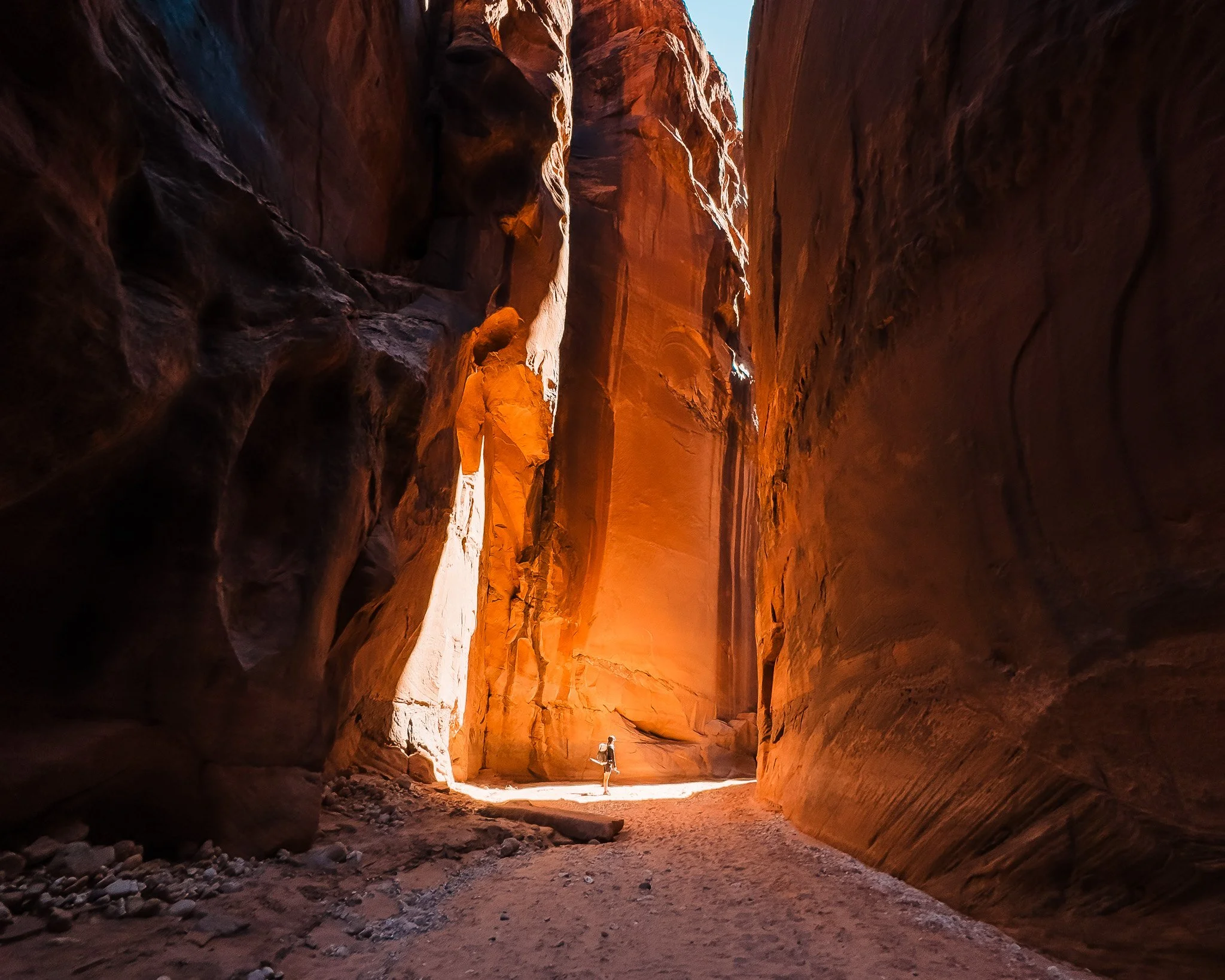
Backpacking Buckskin Gulch and Paria Canyon
Backpacking Buckskin Gulch and Paria Canyon is an incredible experience, but it’s also one of the most committing slot canyon backpacking trips in the Southwest. Before you start your route, it’s important to understand the unique challenges of traveling through such a remote desert canyon system, these risks can shape your itinerary, your gear, and your overall safety.
Safety Risks to Consider in Buckskin Gulch & Paria Canyon
Flash Floods: This is a slot canyon, so water can rise very quickly in Buckskin Gulch and Paria Canyon. People have died in flash floods on this trip, so it is not to be taken lightly. Make sure you understand the risk. We use GaiaGPS with a downloaded track to navigate. Speak with rangers in detail about your dates and plan to monitor the flash flood risk. Even if there is not rain in the forecast on your route, rain at higher elevations can create a flash flood in the canyon and there are not many ways to escape.
Navigation Challenges: Although you basically follow the slot canyon and water ways, there is some degree of route finding along washed out and muddy pathways. Make sure to pay attention to your pace and millage along with weather changes. We use GaiaGPS with a downloaded track to navigate.
Difficult Footing: Expect water, sand, mud, quicksand, and some degree of scrambling with hand lines when you reach the boulder jam near the end of Buckskin Gulch.
Water Uncertainty: Water sources can be hard to come by; some springs may not be flowing, and water you can find may be silty or stagnant. A good filter is very important, as is planning out your water sources in advance based on advice from the rangers and current conditions.
Isolation: Fewer people means more solitude, but also means a quick rescue is not guaranteed. Permitting restricts access to 20 people per day across the entire Buckskin and Paria canyon system. You should have good communication plans, tell someone your itinerary, and carry essentials like a satellite messenger or PLB.
Seasonality: The best time to hike Buckskin Gulch is late spring (April–May) and fall (September–October) when temperatures are mild, water levels are usually manageable, and the risk of flash floods is lower than during rainy seasons.
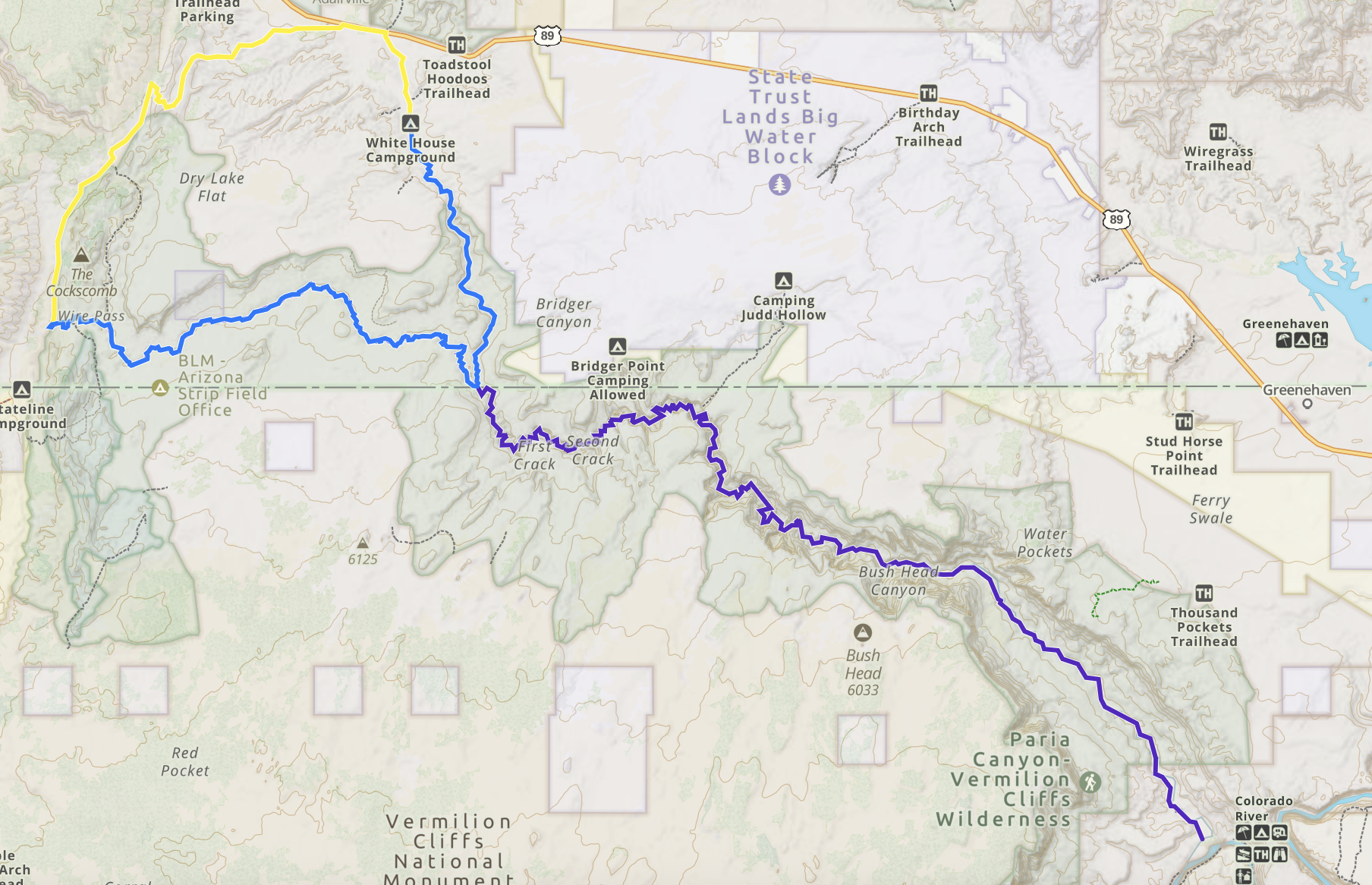
Overview of Buckskin Routes: Blue - Buckskin Gulch to White House TH | Purple - Buckskin Gulch/Paria Confluence to Lee’s Ferry | Yellow - Optional hitchhike and/or hike back to Wire Pass instead of car shuttle from White House
Buckskin Gulch Hiking Guide: Distance, Difficulty, and Trail Variations
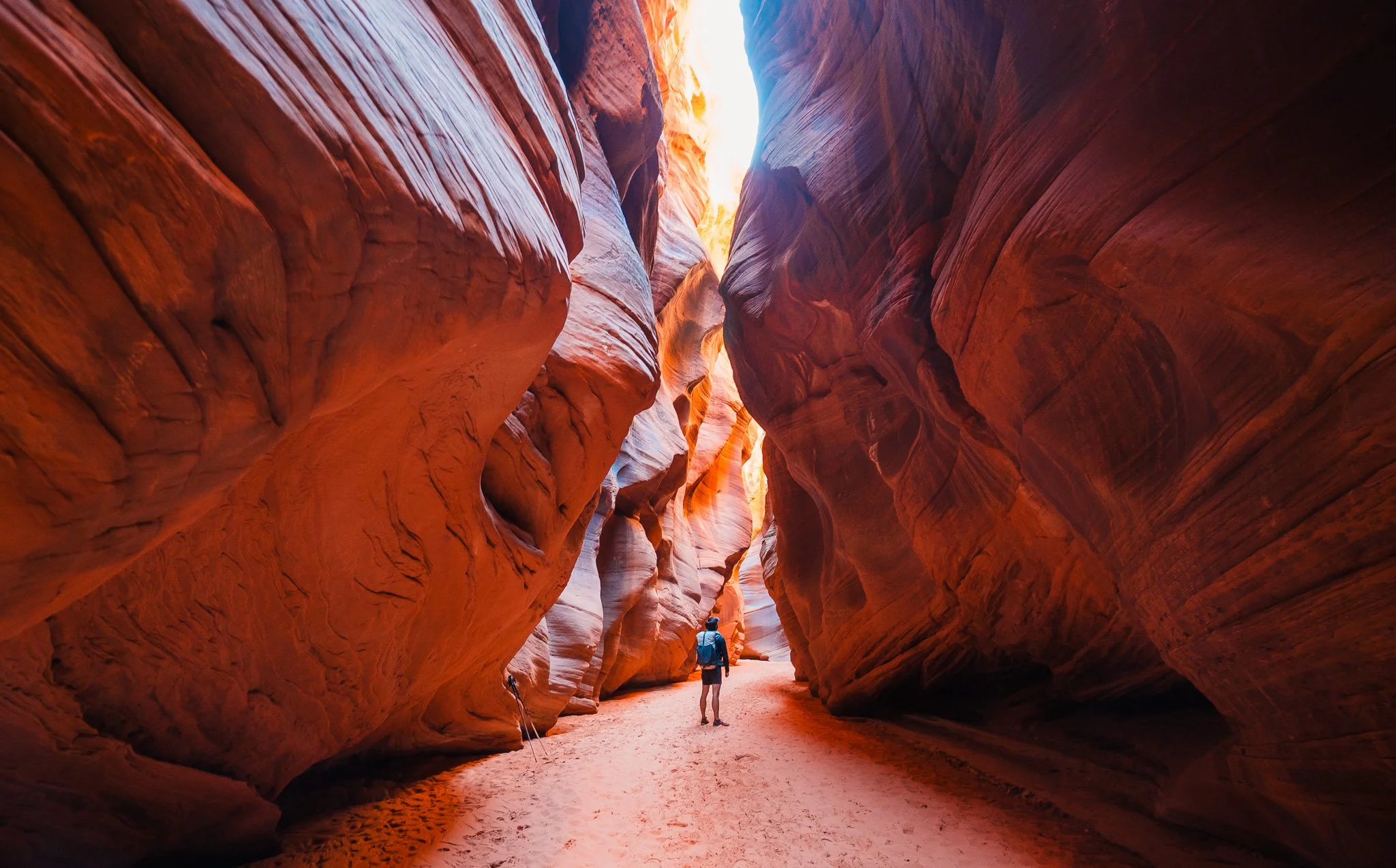
Wire Pass → Buckskin Gulch (out & back day hike)
If you want a taste of Buckskin Gulch without committing to a full Paria Canyon backpacking trip, the Wire Pass out-and-back is the easiest and most popular way to experience this Utah slot canyon in a single day. Starting at the Wire Pass Trailhead, the hike follows a short sandy wash into a stunning slot canyon with sculpted sandstone and narrow walls. After about 1.6 miles on trail from Wire Pass, you’ll reach a ladder and the junction with Buckskin Gulch, where the canyon suddenly turns into deeper, darker narrows.
From there, you can explore Buckskin Gulch as far as you like. Most day hikers go a mile or two before turning around. The route is flexible, family-friendly, and perfect if you want a Southwest slot canyon experience without the commitment of a multi-day thru-hike. Just be sure to check flash flood conditions and carry plenty of water.
Day Hike Trail Details
Trailhead: Wire Pass Trailhead
Difficulty: Easy to moderate day hike. Some short ladder climbing and sections of walking in sand.
Total Distance: 3.5 to 10 miles (4.8km-16km) depending on how far you want to go.
Elevation Change: 30 to 100 feet (9m-30m) of gain on the way out, depending on distance.
Duration: 2-8 hours depending on how far you hike in.
Use Permit: $6 day-use permit per person/per dog issued at the Wire Pass Trailhead.
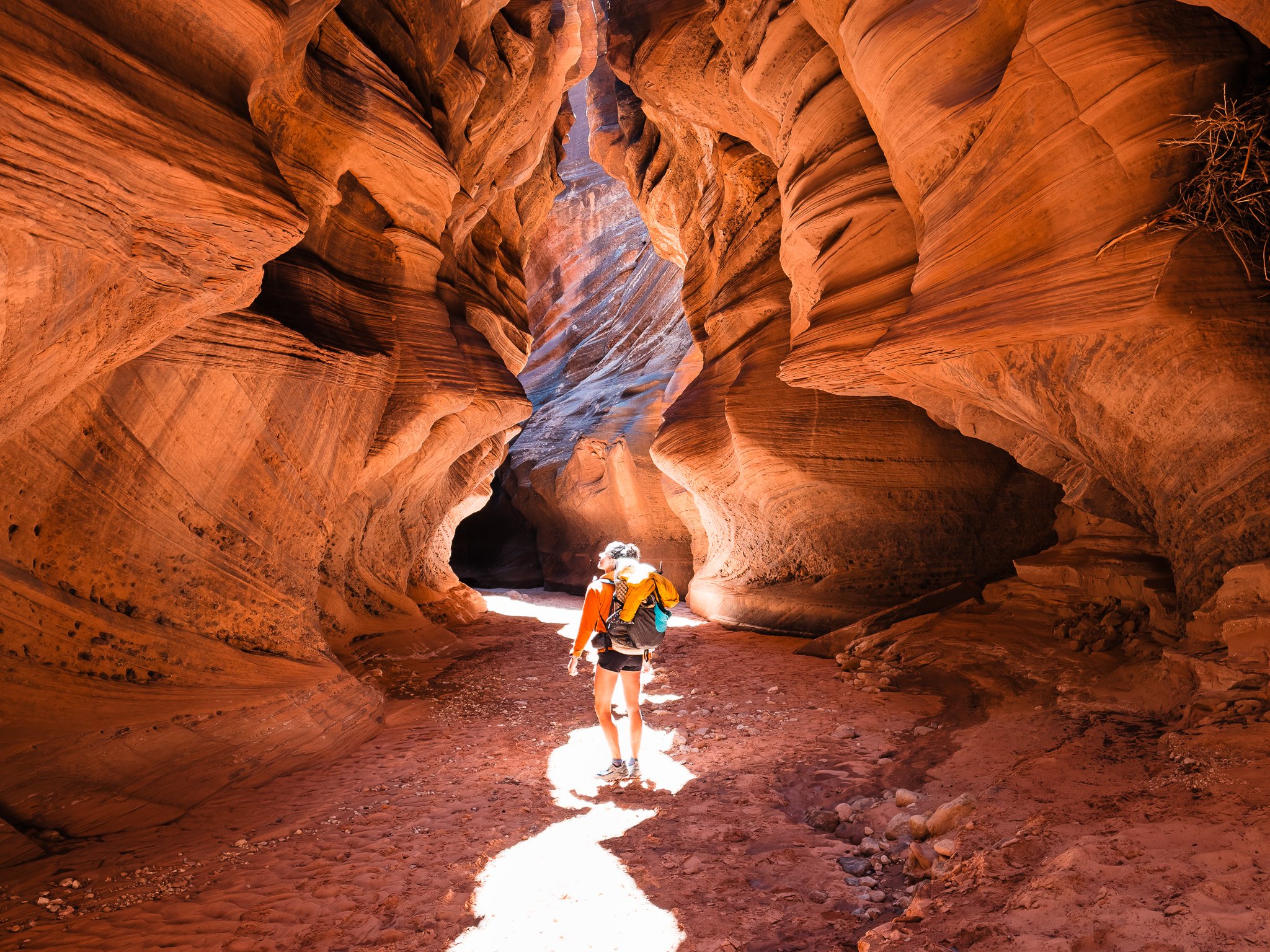
Wire Pass → White House Trailhead (car shuttle or loop)
For hikers looking for a longer, more immersive Buckskin Gulch experience without committing to a full Paria Canyon backpacking trip to Lee’s Ferry, the Wire Pass to White House route is a perfect middle-ground. This point-to-point backpacking route follows the best sections of Buckskin Gulch before opening into the towering, sculpted walls of Paria Canyon, offering a full-spectrum Southwest slot canyon experience.
Most people hike it one-way using a car shuttle, starting at Wire Pass Trailhead and finishing at White House. This is the route we followed, though with only our van we combined hiking and hitchhiking back to Wire Pass. A car shuttle is far easier, but either way, the final stretch after exiting the canyon is hot, exposed, and water-scarce, so make sure to filter water before leaving the canyon.
While in the canyon, expect tight narrows, mud and standing water, and one technical down-climbing section that requires descending large boulders with a hand line. These hand lines are often damaged by seasonal flooding, so check with rangers on conditions and bring at least 30 feet of rope or webbing if needed. Once you reach the Paria River, the canyon widens and walking becomes easier, eventually leading to the White House Trailhead.
If you don’t have a second car, this route can be done as part of a long loop (like we did). You’ll need permits for one to two nights, and it’s best for experienced hikers comfortable with route-finding, long miles, and carrying extra water weight. Either way, this route delivers some of the most dramatic slot canyon scenery in Utah, making it a standout option for anyone looking for a one to two night backpacking adventure.
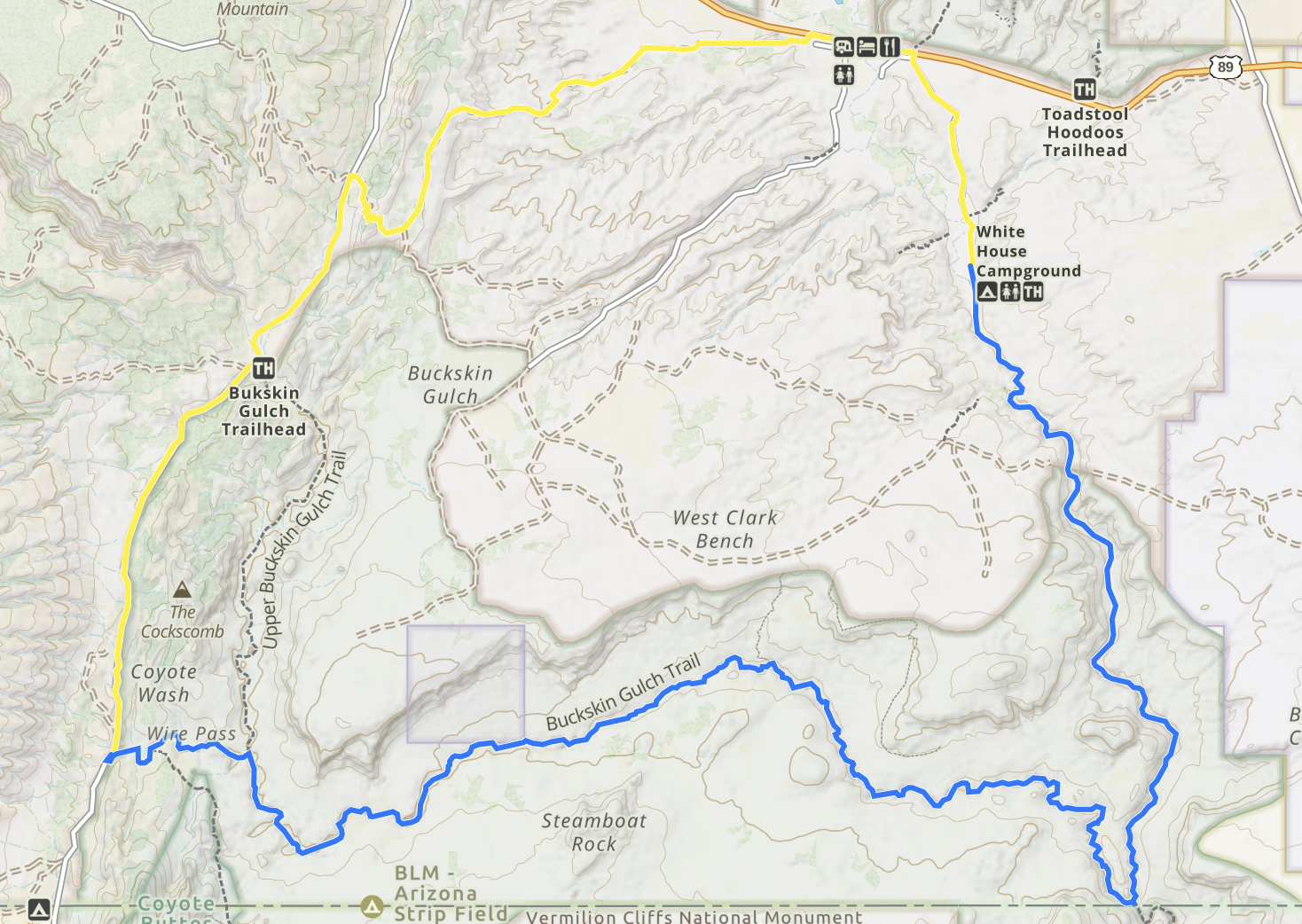
Wire Pass to White House Trailhead: Blue - Buckskin Gulch to White House TH | Yellow - Optional hitchhike and/or hike back to Wire Pass instead of car shuttle from White House
1-2 Night Trail Summary
Trailheads:Wire Pass Trailhead (start) and White House Trailhead (end)
Difficulty: Moderate to difficult depending on water depth and water availability for filtering.
Total Distance: 21 miles (33.7km) from Wire Pass TH to White House TH
Elevation Loss: -576 ft (175m)
Duration: 1-2 nights
Backcountry Campsites: Extremely limited until the Paria Confluence at ~13 miles from Wire Pass trailhead.
Water Sources: Buckskin Gulch is essentially a dry canyon, with muddy pools of water and no reliable springs until you get to the confluence with Paria. You can typically refill water from First Spring in Paria Canyon or settled pools of water near the confluence.
Camping Permit: Overnight permit required. See the “Overnight Camping Permits in Buckskin Gulch and Paria Canyon” section below.
Parking Permit: Issued with your backpacking permit, display on your vehicle dash.
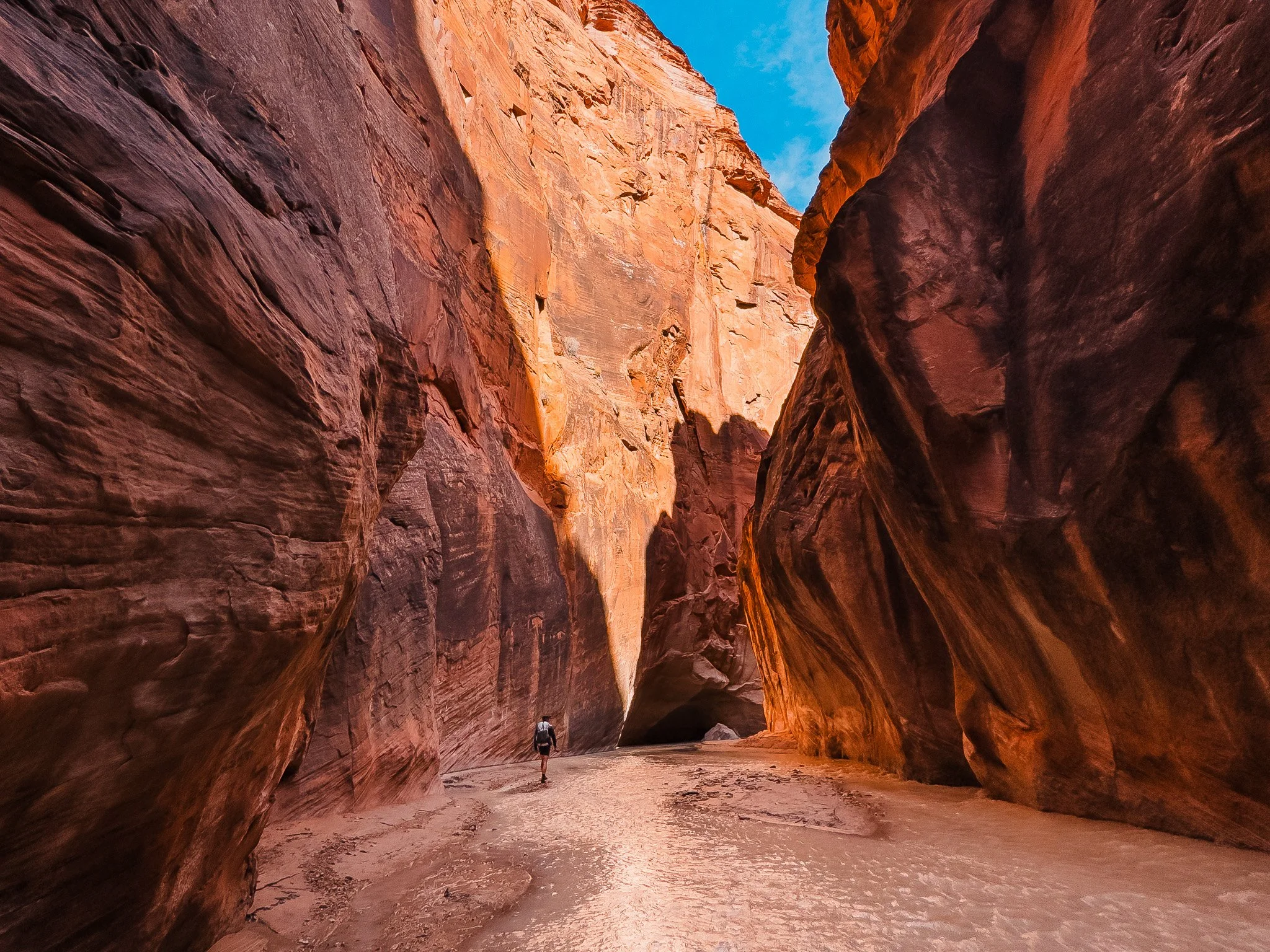
Everything You Need Know to Backpack this Section of Trail
Backpacking from Buckskin into Paria was unforgettable, and we highly recommend this section. We booked two nights on our permit, planning for no shuttle, but ended up turning it into one night, doing a very long second day. Even with limited time or a small group, this route is achievable and provides a substantial taste of Paria Canyon backpacking.
Camping: Extremely limited until the Paria Confluence at ~13miles from Wire Pass trailhead. Backpackers should plan to push all the way through to Paria Canyon before setting up camp just past the Buckskin/Paria Confluence. This is because the Buckskin Gulch section has the greatest flash risk and no reliable springs, so lingering overnight isn’t the safest option. That said, there are a few established sandbanks in Buckskin Gulch, but these spots are small and should only be used as a backup to the Paria location.
Water Sources: Buckskin Gulch is essentially a dry canyon, and reliable water sources are extremely limited. Most of the year, the only water you’ll encounter comes in the form of stagnant, muddy pools. There are no dependable springs within the Buckskin Gulch itself, so backpackers should enter with all the water they need for the day, plus extra if temperatures are high. Your first consistent water source will be the silty Paria River and then the First Spring, several miles beyond the confluence. During our visit, we were able to find clear puddles near the confluence where the silt had settled out, and were able to use those instead of hiking the extra ~4 mile RT from the confluence to First Spring and back.
The Boulder Jam: This is a massive pile-up of car-sized boulders wedged in Buckskin Gulch about 1.5 miles upstream from the confluence. This section often requires a short but exposed down climb. Depending on current conditions, you may encounter a hand line left by other hikers, or nothing at all depending on the most recent flood. Expect a 10–15 foot descent that often includes narrow footing, smooth walls, and sometimes a pool at the bottom. Be sure to check with the rangers on the updated condition of the hand line and bring at least 30 feet of rope or webbing in-case you need to replace it. Those with limited mobility, heavy overnight packs, or fear of heights may find the obstacle challenging. Consider lowering packs separately, spotting less confident climbers, and taking your time in this section. This is the crux of the route.
Loop Alternative: We didn’t have a second vehicle to arrange for our own car shuttle from White House back to Wire Pass TH so we did a combination of hitch hiking and hiking back to Wire Pass through the desert. This added 14.7 miles (yellow route on map) From White House we hitch hiked back to a pull-out near the Paria River Ranch. From there we hiked via an old OHV road east towards House Rock Valley Road. From there we were able to hitch hike back to the Wire Pass TH to our vehicle. Water was not available at the White House trailhead so be sure to top off your water at the Paria Contact Station if you plan to hike back to Wire Pass.
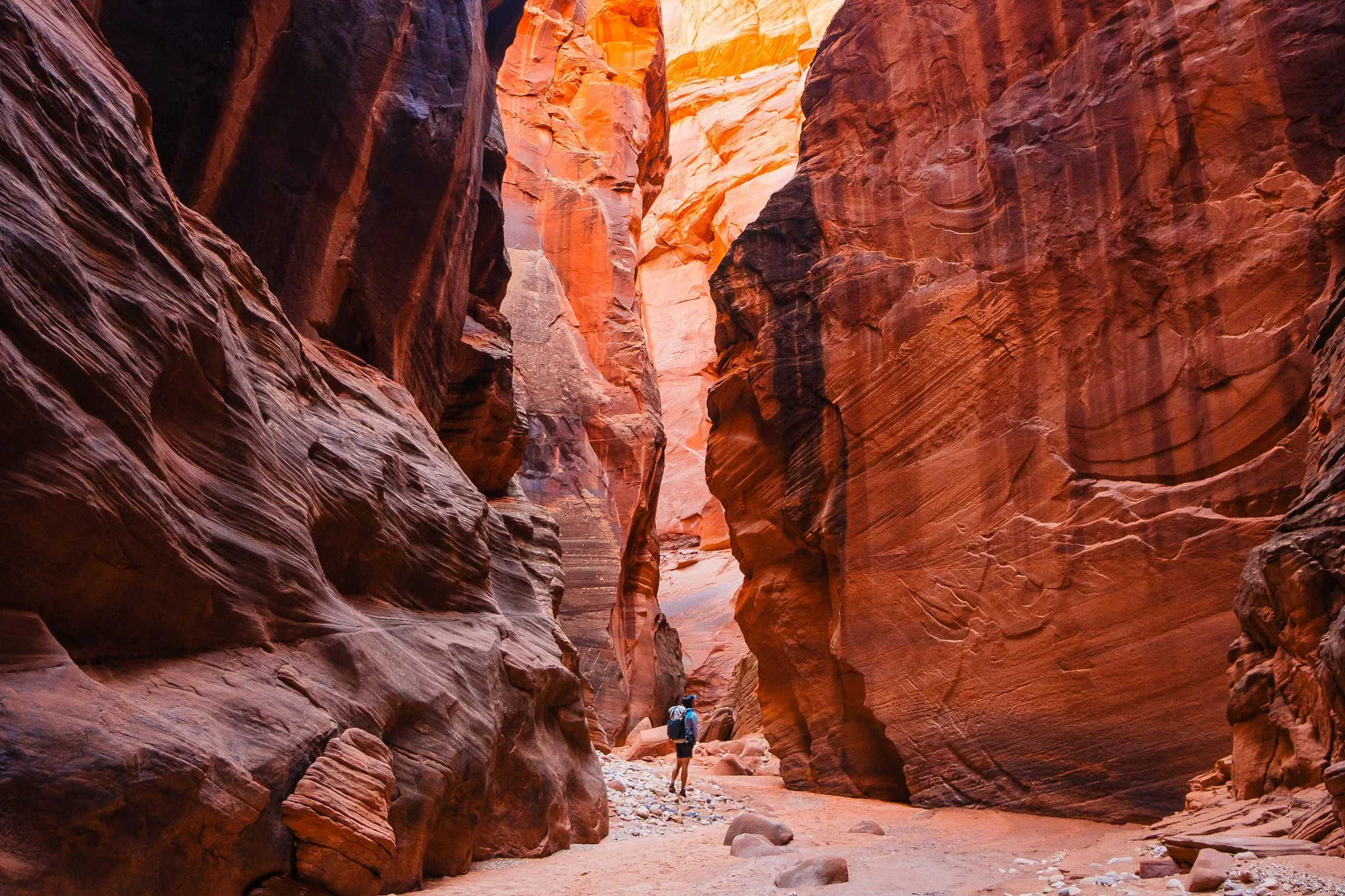
Full Paria Canyon: Wire Pass → Lees Ferry (car shuttle)
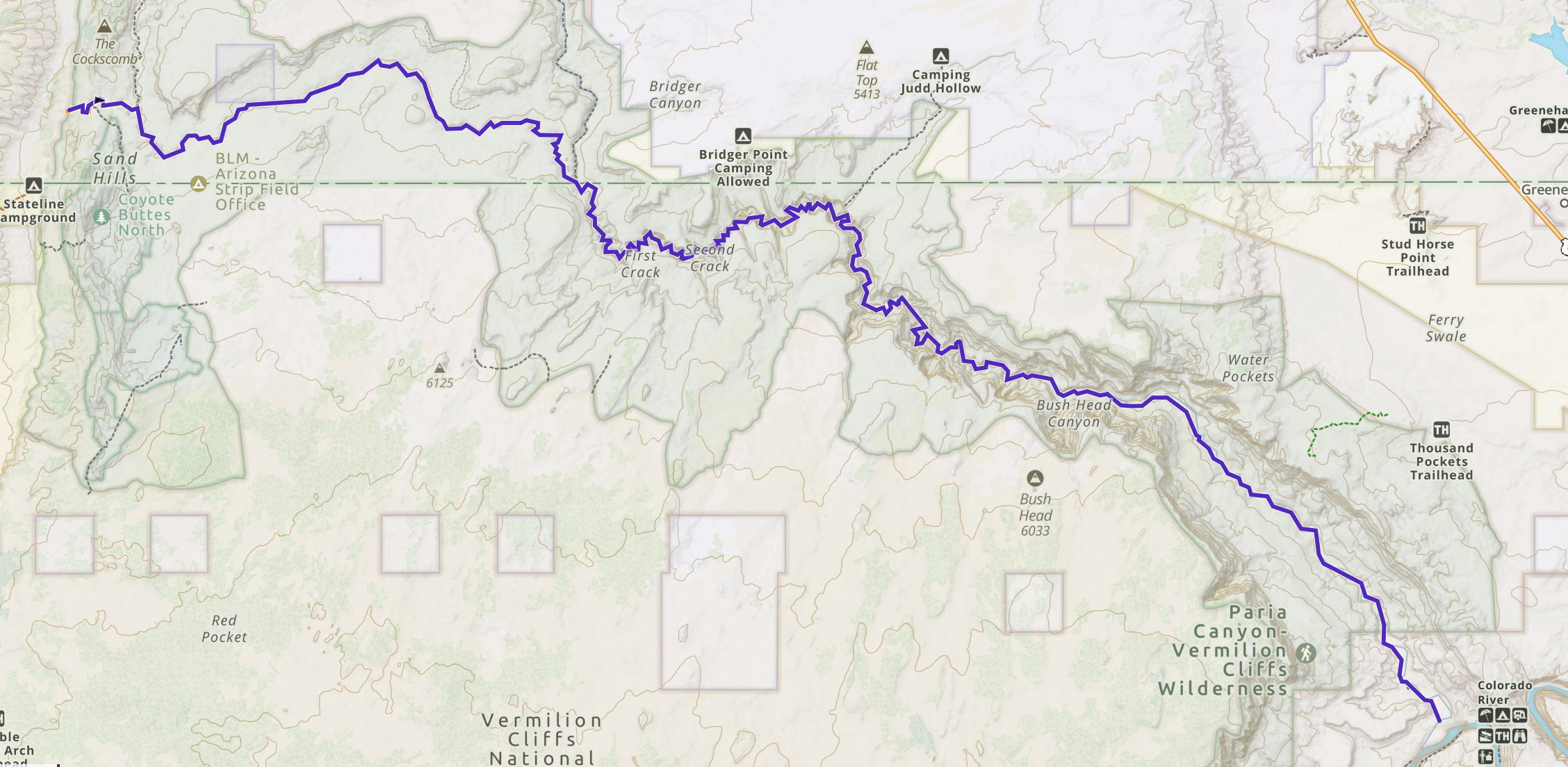
For those seeking the ultimate Paria Canyon backpacking experience, the classic Wire Pass to Lee’s Ferry route is it. This multi-day journey follows the full length of Buckskin Gulch before joining the lower portion of Paria Canyon at the confluence and eventually emerging at Lee’s Ferry on the Colorado River.
Most hikers complete this as a multi-day Utah-Arizona slot canyon backpacking trip, using a car shuttle to connect the remote trailheads on opposite ends of the canyon. From Wire Pass, the route winds through Buckskin Gulch to the Paria confluence. Beyond this point, the canyon widens slightly, water becomes more reliable, and the walls rise into towering sandstone formations. The final miles to Lee’s Ferry are wide, sandy, and exposed to the sun, requiring careful pacing and water planning.
This route is best suited for experienced backpackers seeking solitude, long-mile days, and a deep dive into some of the most dramatic Southwest slot canyon scenery in Utah and Arizona. An overnight permit, solid weather window, and thorough preparation are essential, but the payoff is unmatched.
Full Paria Trail Summary
Trailheads:Wire Pass Trailhead (start) and Lee’s Ferry Trailhead (end)
Difficulty: Hard
Total Distance: ~43.5 miles (70km)
Total Elevation Loss: 1,718 feet (523m)
Duration: 3-5 days
Backcountry Campsites: Various undesignated sites throughout Paria Canyon.
Water Sources: Seasonal springs throughout Paria Canyon and at Lee’s Ferry Trailhead.
Camping Permit: Overnight permit required.
Parking Permit: Issued with your backpacking permit, display on your vehicle dash.
Everything You Need Know to Backpack the Full Paria Canyon
This is the most technical and committing version of the canyon, meant for experienced hikers only. Beyond the considerations already mentioned, water, flash floods, boulder jams, and navigation, you’ll need to research route conditions, plan for long days, and ensure all gear and safety measures are in place. Proper preparation is non-negotiable if you want to complete this bucket-list Utah and Arizona backpacking trip safely and successfully.
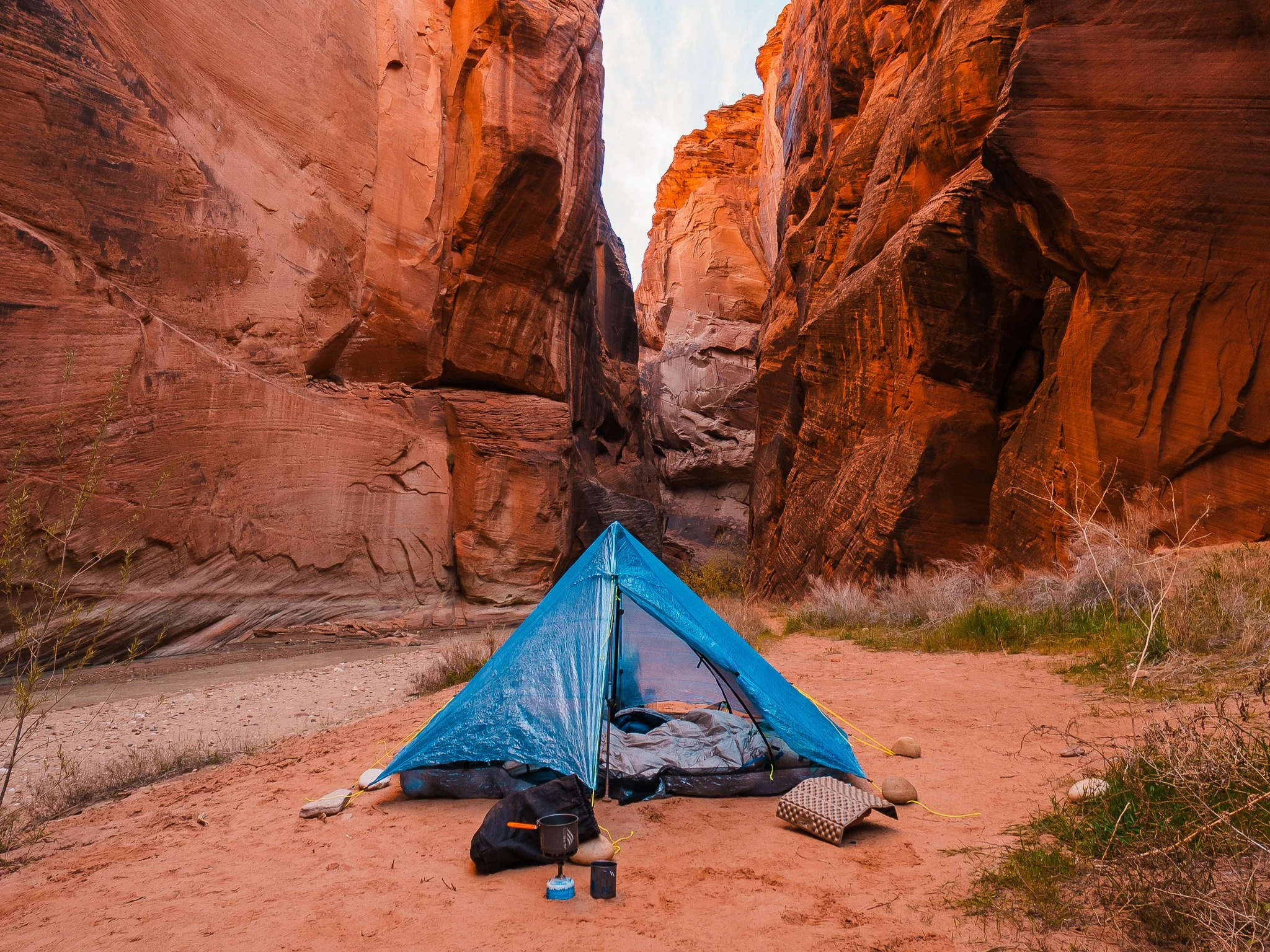
Camping: The stretch between Buckskin Gulch/Paria confluence and Lee’s Ferry includes undesignated campsites that can be sandy, primitive, and spread out. Most are near spring locations and are marked on the full GPX file here.
Water Sources: Water is technically available for most of the stretch from the confluence to Lee’s Ferry, but it’s either silty river water or intermittent springs. Your main source of water will be natural springs along the way. Some are tricky to find and keeping an eye out for green growth in seep lines is helpful. Check with the rangers when you get your permit for up to date info.
Water sources in order downstream from the Buckskin Gulch/Paria Canyon confluence:
The Boulder Jam: This is a massive pile-up of car-sized boulders wedged between the Buckskin Gulch walls about 1.5 miles upstream from the confluence. This section often requires a short but exposed down climb that most hikers manage with caution. Depending on current conditions, you may encounter a hand line left by other hikers, or nothing at all depending on the most recent flood. Expect a 10–15 foot descent that often includes narrow footing, smooth walls, and sometimes a pool at the bottom. Be sure to check with the rangers on the updated condition of the hand line and bring at least 30 feet of rope or webbing in-case you need to replace it. Those with limited mobility, heavy overnight packs, or fear of heights may find the obstacle challenging. Consider lowering packs separately, spotting less confident climbers and taking your time in this section.
Camping Permit: An overnight permit is required. See the “Overnight Camping Permits in Buckskin Gulch and Paria Canyon” section below.
Parking: You’ll receive an overnight parking permit with your backpacking permit to park at either trailhead.
Paid Shuttles: Private companies that will shuttle you back to Wire Pass if you only have one vehicle:
Overnight Camping Permits for Buckskin Gulch and Paria Canyon
If you’re planning to backpack Buckskin Gulch or continue through Paria Canyon, an overnight backcountry permit is required. Both canyons are part of the Paria Canyon–Vermilion Cliffs Wilderness, and permits are highly competitive to preserve the landscape and maintain a wild, low-impact experience.
How to Get Your Permit
All overnight trips require a backcountry permit reserved in advance, whether you’re starting at Wire Pass, Buckskin Trailhead, White House, or Lee’s Ferry. Permits can be applied for and purchased three months in advance, but you must pick the permit up in person within 10 days of your trip. Reservations open at 12:00 PM MT on the 1st of each month for trips three months out (for example, permits for August become available May 1st). Same-day or next-day reservations are not accepted.
Group Sizes and Permit Rules
Maximum group size: 10 people in a group, 20 people in the canyon at a time.
Only one permit per group (no splitting into multiple permits to travel together).
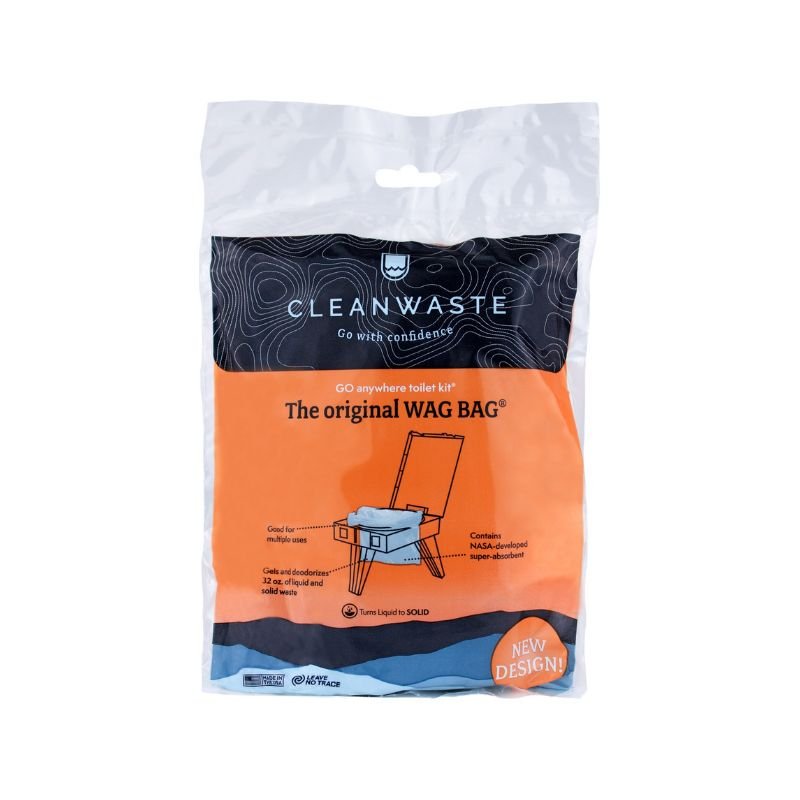
WAG bags are mandatory for all overnight travelers, there are no toilets in the canyon and you have to pack EVERYTHING out.
Dogs are not recommended in Buckskin Gulch or Paria Canyon due to deep pools, mud, and obstacles, but if you bring one, it must be included on the permit.
Where to Pickup Your Permit
After reserving your permit, you must pick it up in person at a designated ranger station and talk with a ranger about current conditions. When we did our trip, they also provided WAG bags; if they don’t give enough, pack a few extras.
Arizona Strip District Office and Public Lands Information Center
Location and Hours
4001 East Aviator Drive
St. George, UT 84790
435-688-3200
Paria Contact Station
Location and Hours
U.S. Highway 89 (44 miles east of Kanab, Utah)
435-689-0801
Kanab Field Office
Location and Hours
669 S. Highway 89A
Kanab, Utah 84741
435-644-1200
What to Pack for Backpacking Buckskin Gulch
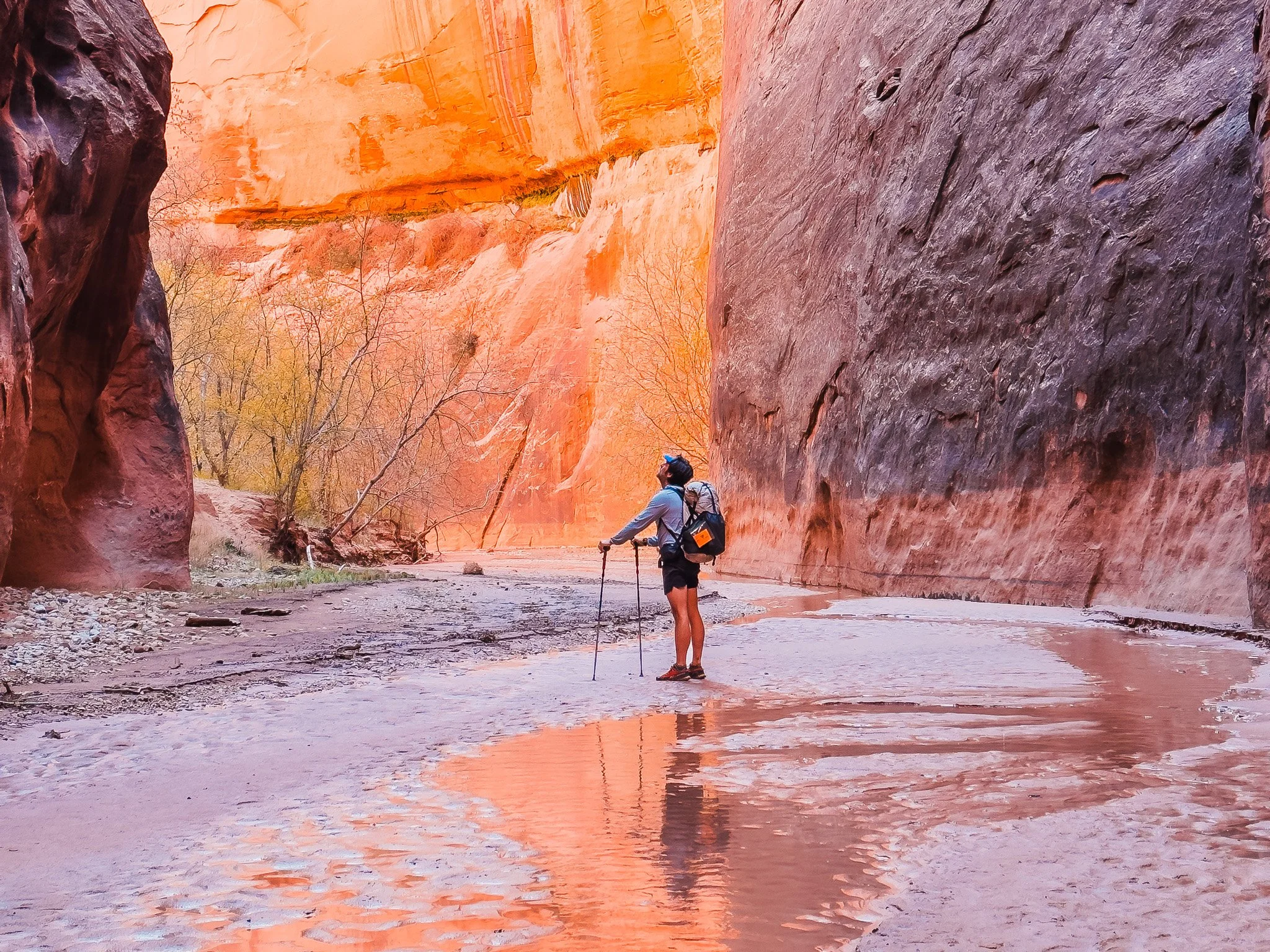
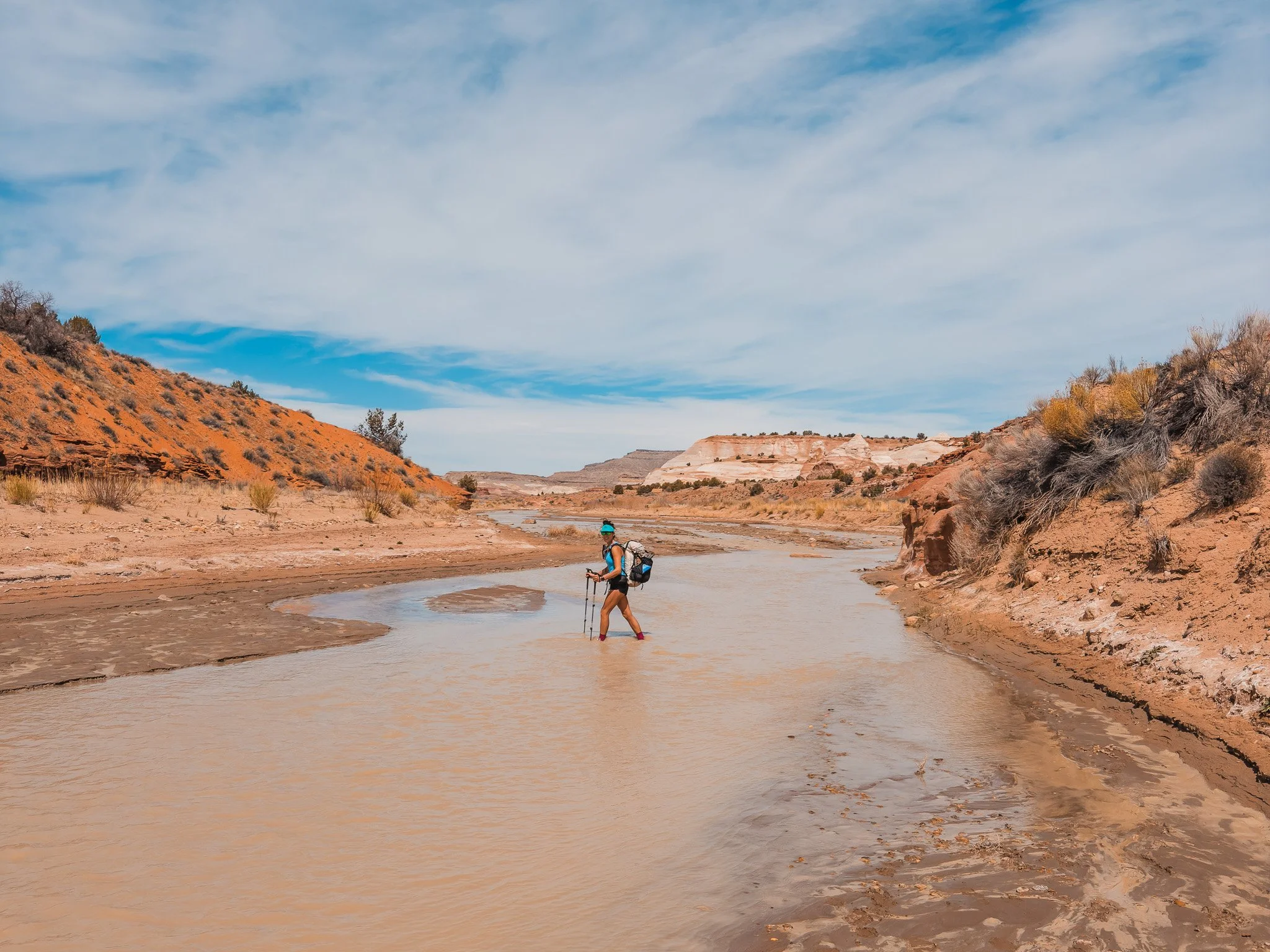
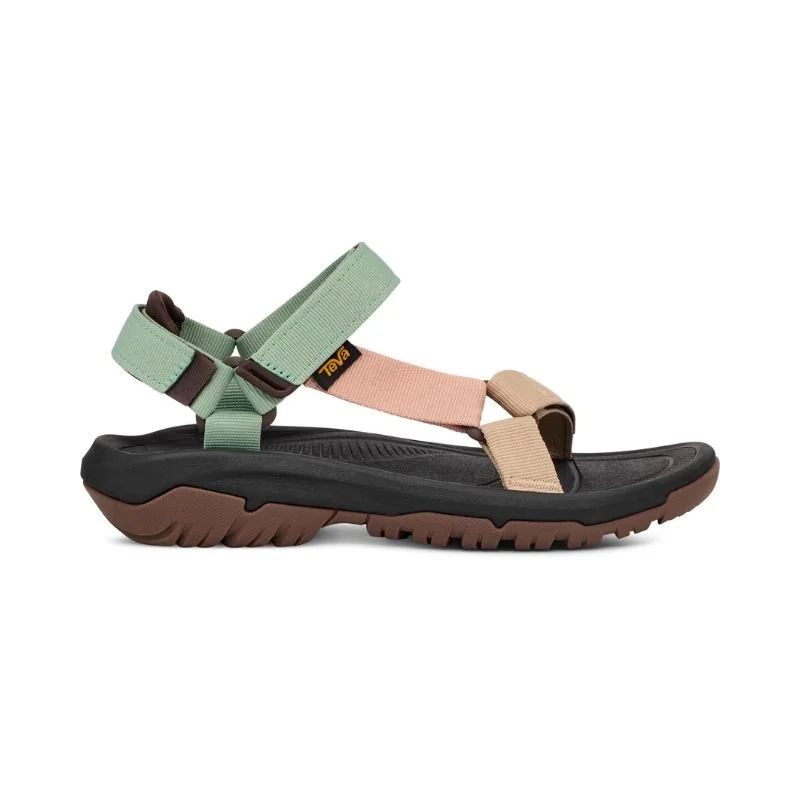
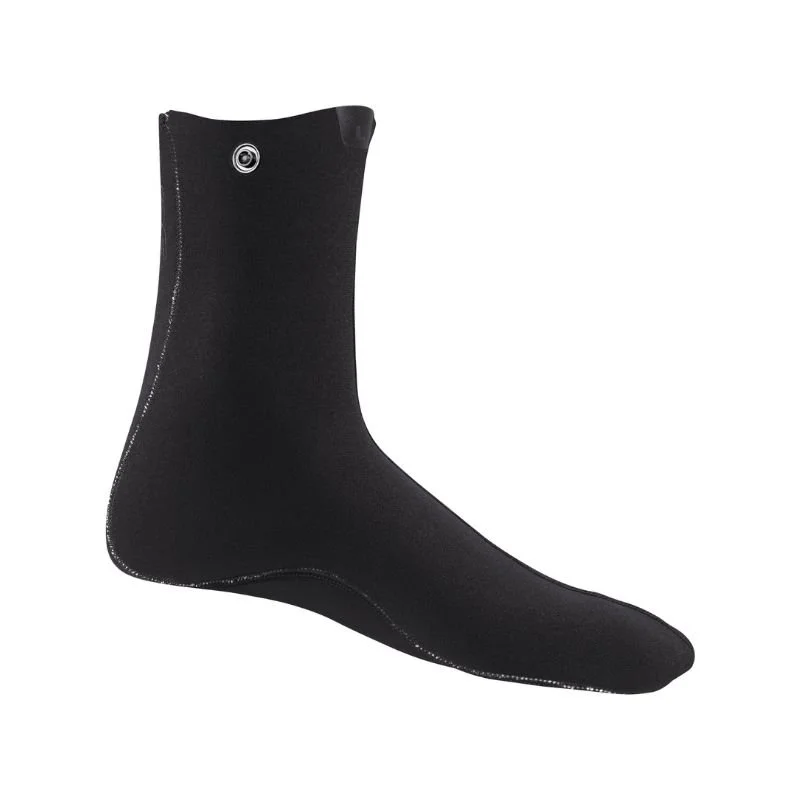
Packing the right gear is essential for Buckskin Gulch and Paria Canyon, where narrow walls, deep pools, mud, and shifting terrain demand items a bit different from a typical backpacking trip. Sturdy, water-ready footwear is a must, along with calf-high neoprene socks, your feet WILL get wet. We wore trail runners or approach shoes through Buckskin when water levels were shallow, then switched to hiking sandals with neoprene socks in Paria Canyon for ankle- to knee-deep water.
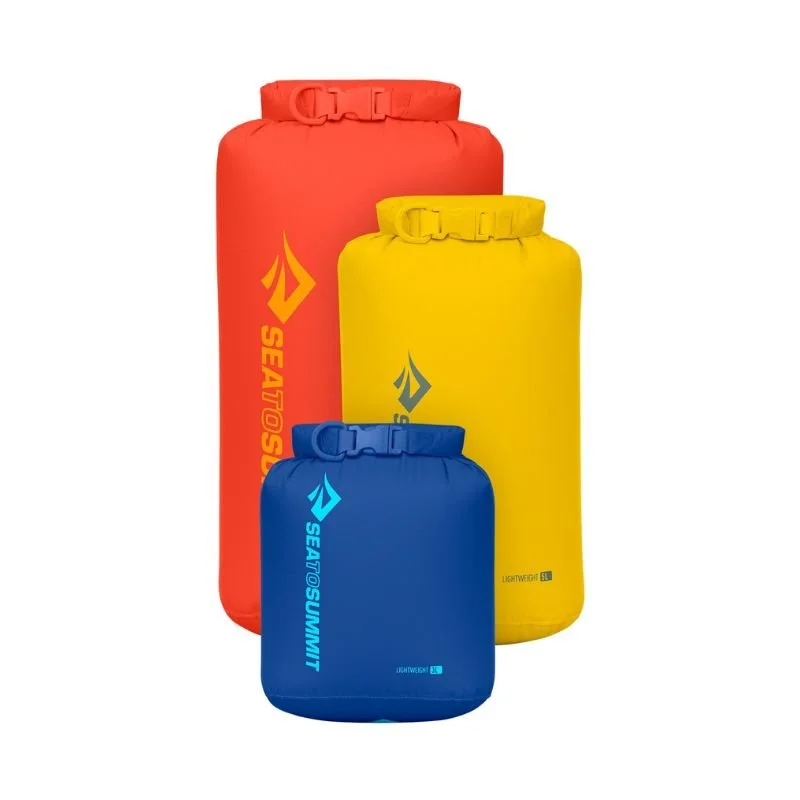
A lightweight dry bag (or several) or a waterproof backpack liner is a must to protect your gear inside of your pack in case of a fall in water, or if you set your pack down in mud or wetness. It’s also important to carry more water than you think you’ll need (4-5+ liters), along with high-calorie snacks, sun protection, and a small first-aid kit. For all routes, pack a satellite communicator, and extra layers as temperatures swing quickly from the desert plateau to the shady slots. Skye hiked almost all of Buckskin in an ultralight puffy jacket since it was so cold and shaded in the canyon.
Backpacking Big Three: Backpack, Tent, and Sleep System
Let’s start with your big three, the most important part of your backpacking gear list; your pack, tent, and sleep system. For the best ultralight backpacking gear, check out our Ultralight Backpacking Gear Guide.
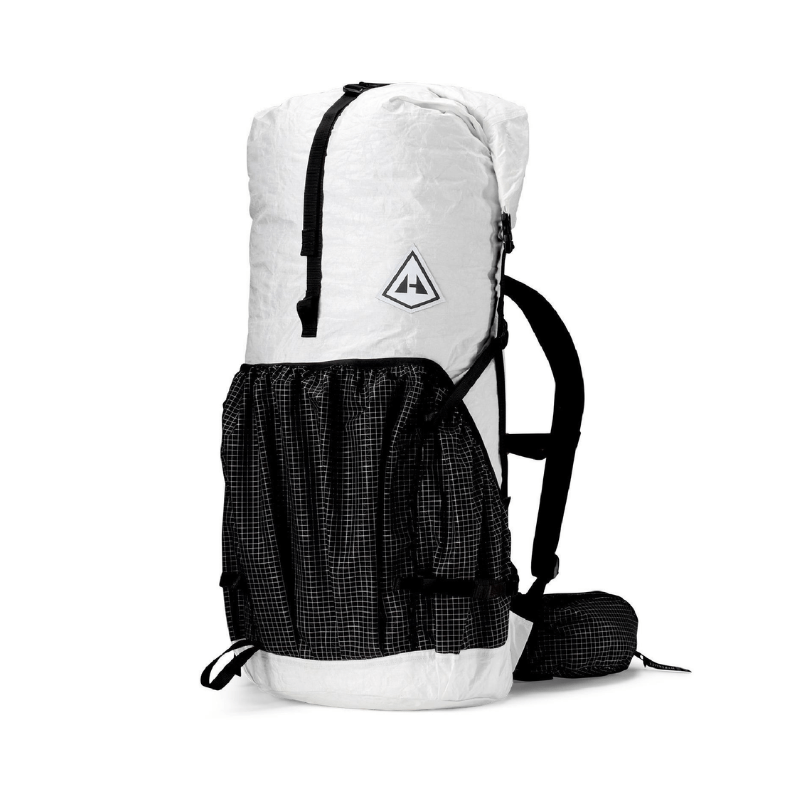
Backpack: A comfortable, ultralight pack that fits your gear and food for 3–5 days. Our all time favorite backpacking pack is the Hyperlite Southwest 55L, we both brought it on this trip and it was the perfect amount of space, and it’s waterproof! If you’re looking for an UL canyoning backpack, we also recommend the Hyperlite NorthRim 55L because it has extra durable dynema fabric for the toughest conditions a canyon can deliver.
An UL pack liner is also important because of the wet and muddy environment. This one is super cheap ($2.40) and we’ve used ours for years. They are a much better option than a pack cover, and will last a very long time. No, it is not like a trash bag, it’s much more durable and waterproof even after years of use. Alternatively, you can also pack your gear inside several lightweight dry bags.
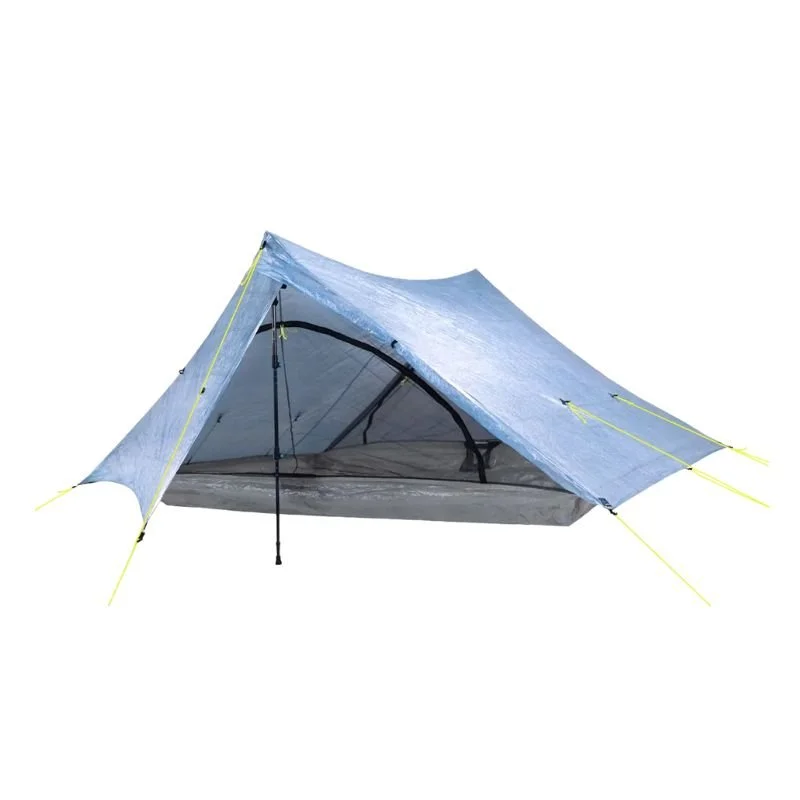
Tent / Shelter: Our two favorites are the Zpacks Triplex and Hyperlite Unbound 2, both are trekking pole tents and are 2lbs or under.
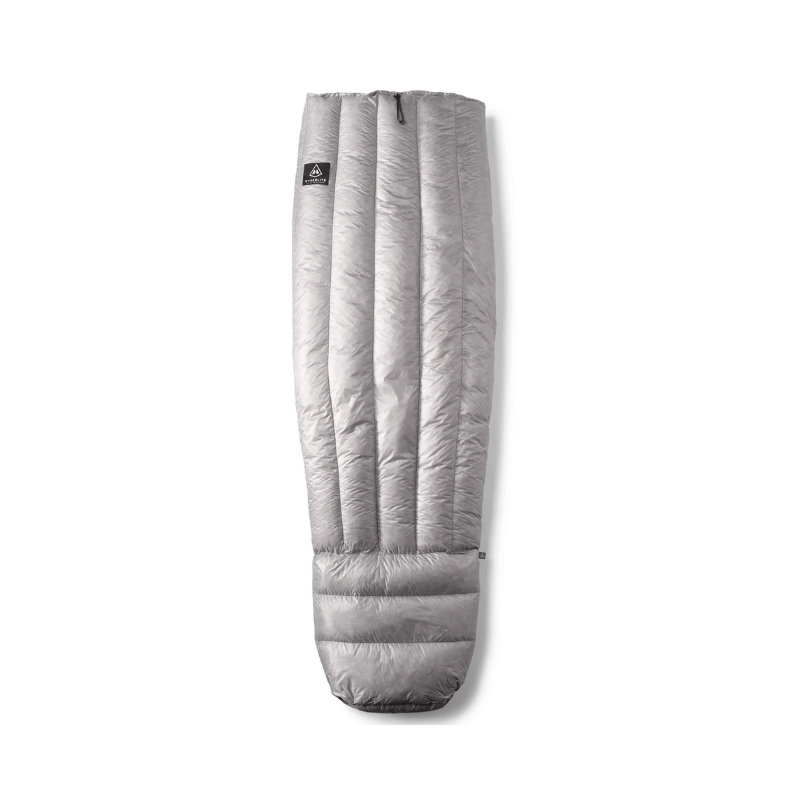
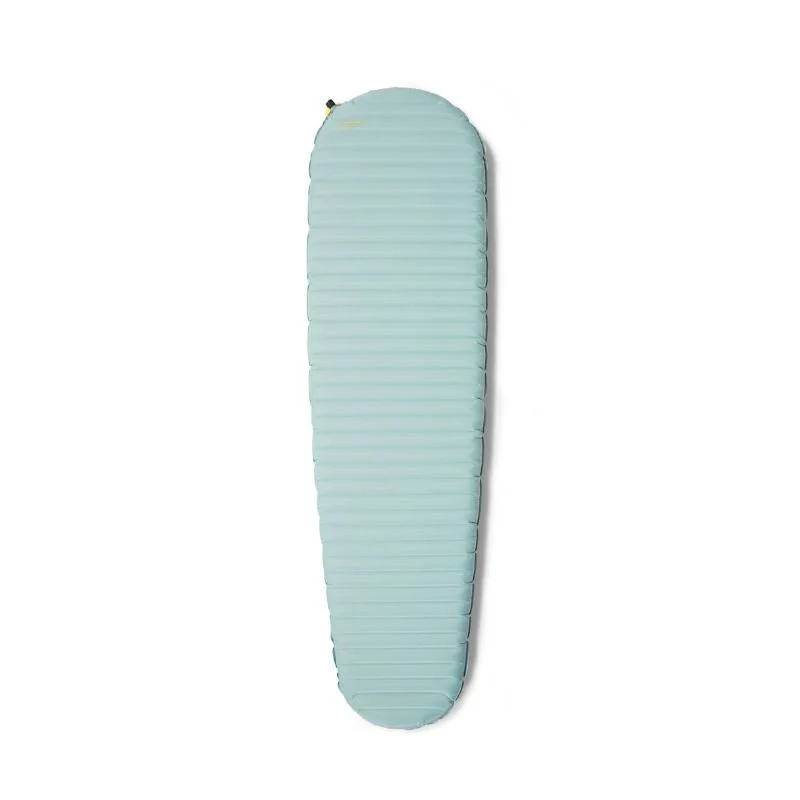
Sleeping Bag or Quilt & Sleeping Pad: We both love lightweight quilts and brought our 20 degree versions with us when we backpacked here in April. It can get very cold at night, so make sure yours is warm enough for chilly nights.
Canyon Specific Gear and Footwear
Backpacking in a slot canyon is very different from a standard trail hike, you may wade through waist-deep muddy pools or trek for miles in silty water. For Buckskin Gulch and Paria Canyon, we relied on sturdy approach shoes, trail runners, or quick-drying sandals paired with neoprene socks to keep our feet warm in wet sections. For a full guide on typical backpacking clothing, check out our What to Wear for Backpacking post, which covers most of the apparel we brought, minus the canyon-specific extras below.
We highly recommend protecting your overnight gear and clothing in either a large backpack liner or individual dry bags. Trekking poles were helpful for added walking stability in water and sand. You must pack out all your human waste, the ranger stations should give you complementary WAG bags when getting your permit, but we also recommend packing extras, unless you are planning to re-use one the entire trip…
Gear to Pack for Backpacking in a Canyon:
Hiking Sandals: Teva Hurricane XLT2
Approach Shoes: La Sportiva TX4 EVO
Neoprene Socks: Calf length 1-3mm socks
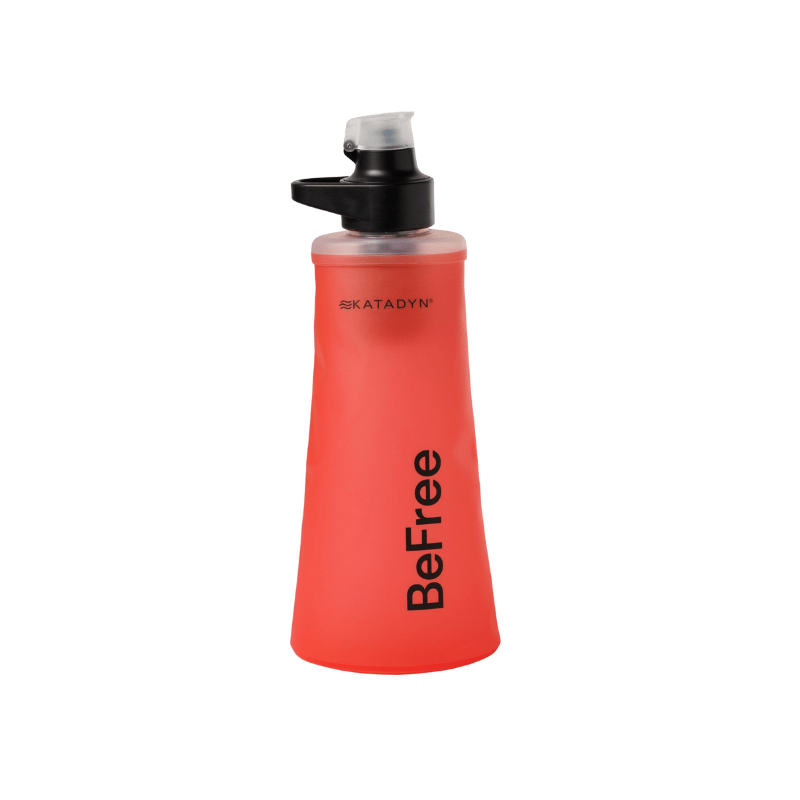
Water Filter: Katadyn BeFree 1L
Backpack Liner: Nylofume® Pack Liner
Trekking Poles: REI Trekking Poles
WAG Bags: Cleanwaste WAG Bag
And for a full packing list for backpacking, see our Backpacking Packing Guide
Backpacking Safety and Accessories
On a trip like Buckskin Gulch or Paria Canyon, carrying the ten essentials is critical. A reliable water filter is especially important, as water sources are often silty or stagnant, tablets or drops alone aren’t enough. Below is everything we recommend including in your pack to stay safe and prepared during this Southwest slot canyon adventure.
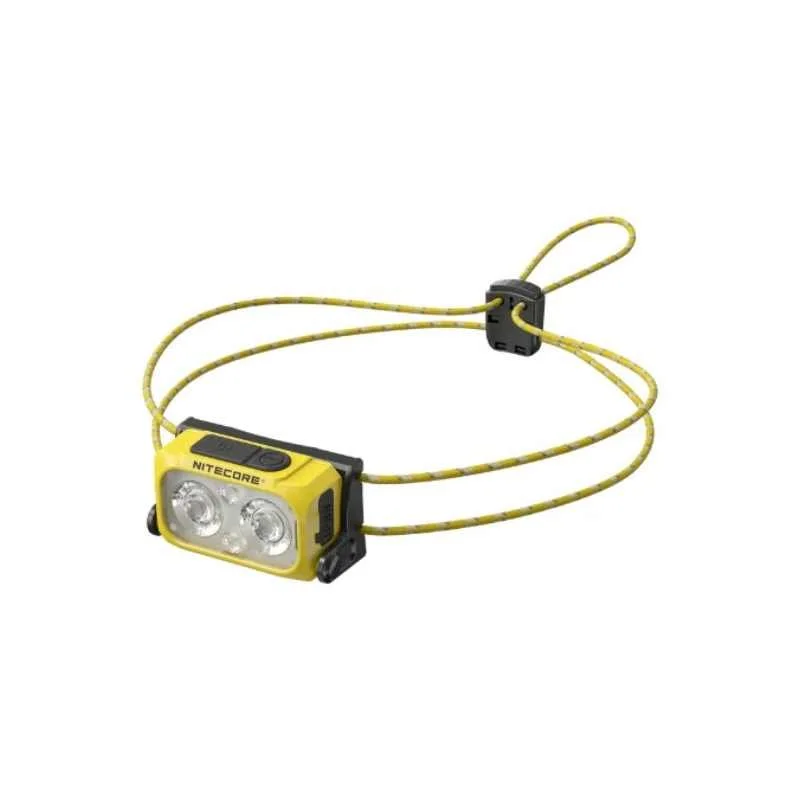
Headlamp: Nitecore NU25
Sunscreen:Dermatone Sport Sunscreen Lotion, SPF 50 (for the exposed sections)
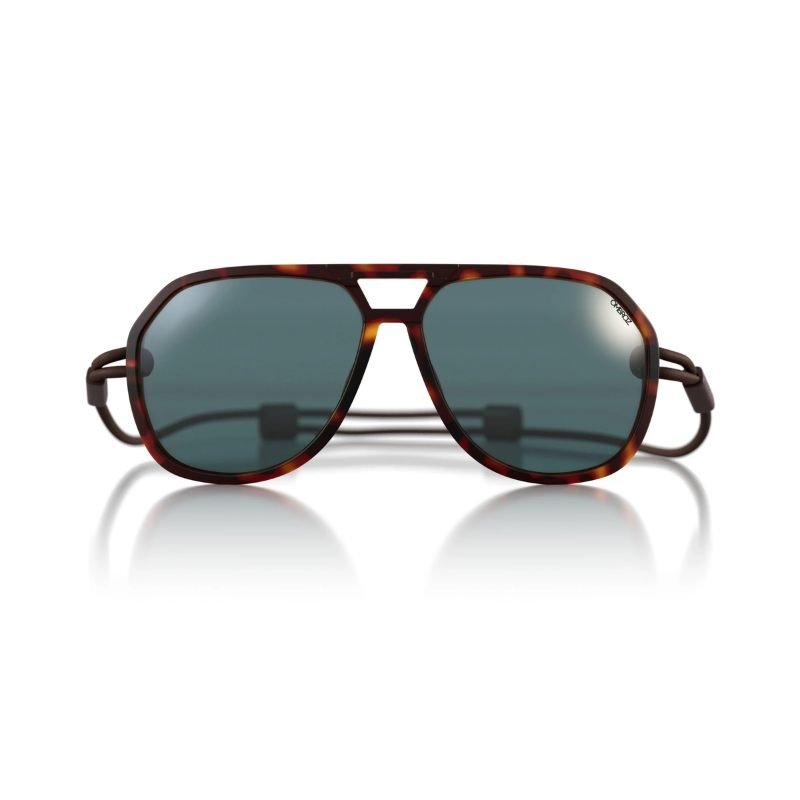
Sunglasses:Ombraz are Garrett’s favorite outdoor active sunglasses
Navigation: GaiaGPS or a similar navigation app
Water Filtration: Plenty of water storage and a method to purify water from the springs or river. Filters work best with clear water and clog easily with dirty water. If you absolutely must filter silty water, be sure to let the silt settle out in a still container and be ready for it to take a long time.
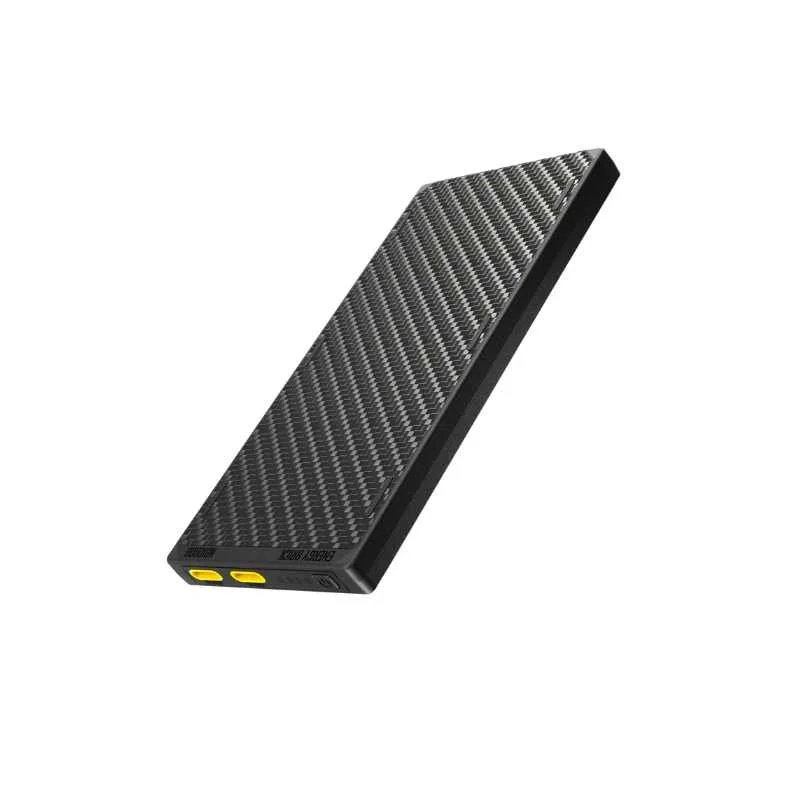
Power Bank: We both usually carry a Nitecore NB10000 to recharge electronics. We typically get two full charges per battery pack for our iPhones.
Responsible Hiking and Leave No Trace in Buckskin Gulch and Paria Canyon
Buckskin Gulch and the surrounding desert are fragile ecosystems, so following Leave No Trace principles is essential to protect this remarkable Southwest slot canyon for future backpackers.
Key Guidelines for Responsible Backpacking in Buckskin Gulch and Paria Canyon
Plan ahead and prepare: Check weather forecasts, know your route, and travel in small groups.
Travel and camp on durable surfaces: Stick to disturbed sandy areas and avoid trampling vegetation.
Dispose of waste properly: Pack out all trash, food scraps, and human waste. WAG bags are mandatory for overnight trips.
Leave what you find: Do not remove rocks, plants, or other natural objects, and avoid building structures or digging trenches.
Minimize campfire impact: Fires are prohibited, use a stove for cooking.
Respect wildlife: Do not feed or harass animals.
Be considerate of others: Camp away from others when possible and keep noise to a minimum as it can echo throughout the canyon.
Where to Stay Near Buckskin Gulch and Paria Canyon
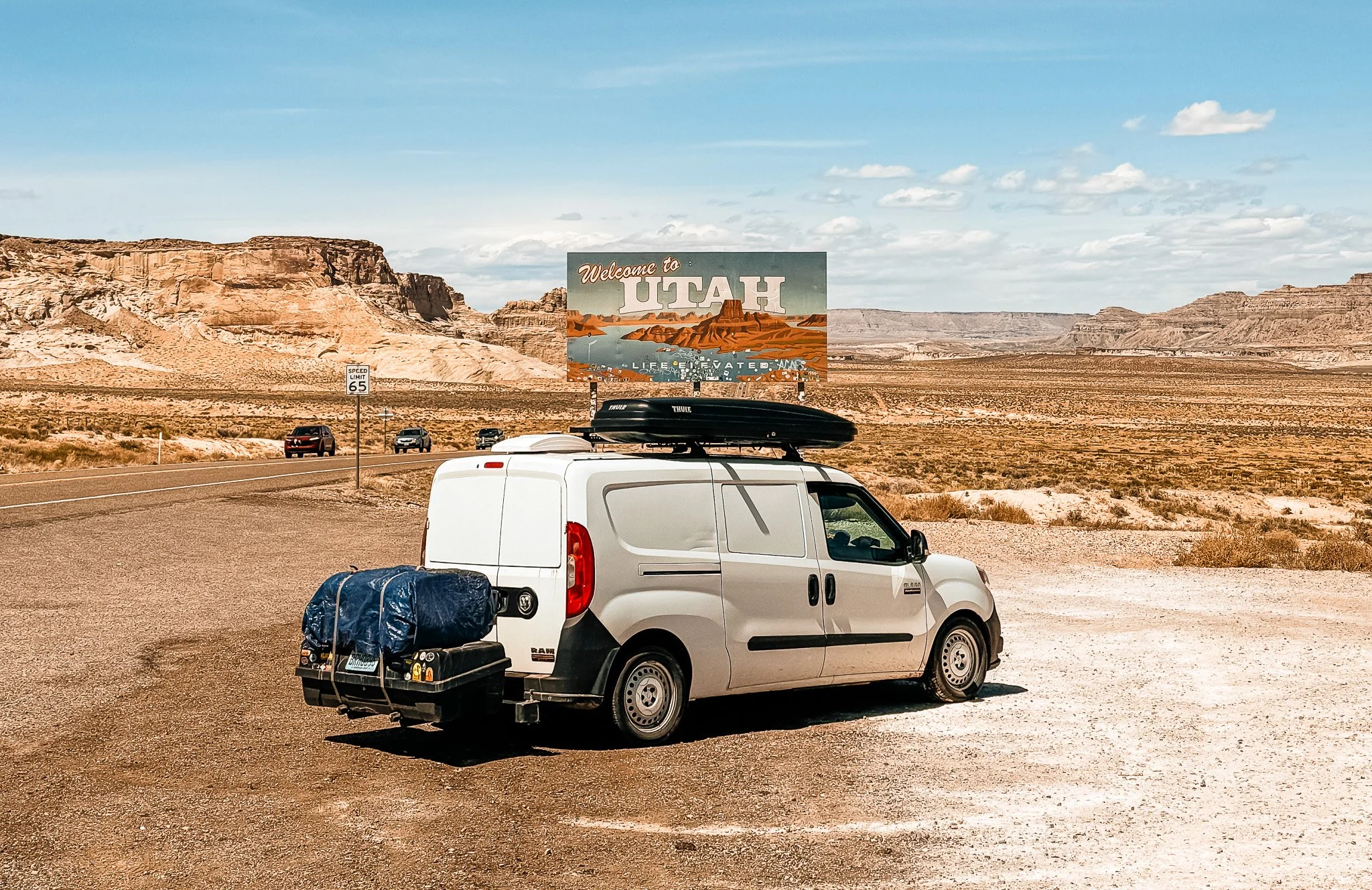
If you’re planning a Buckskin Gulch or Paria Canyon adventure, most visitors stay in nearby towns like Kanab, Utah or Page, Arizona, or camp close to the trailheads for early morning access. Options range from luxury hotels to budget motels, and of course, campgrounds near the canyon provide a more immersive backcountry experience.
Hotels and Lodging in Kanab, Utah and Page, Arizona
The towns of Kanab, UT and Page, AZ offer a wide range of hotel options and make convenient basecamps for exploring Buckskin Gulch, Paria Canyon, and other nearby Southwest outdoor adventures. Whether you’re looking for comfort, convenience, or budget-friendly accommodations, these towns put you close to the trailheads and all the adventure opportunities the region has to offer.
Luxury Lodging
Canyons Boutique Hotel (Kanab, UT) - Stylish rooms, modern amenities all with breakfast provided each morning.
Amangiri (Big Water, UT) - Ultra luxury hotel featured on Netflix’s Reluctant Traveler and host to celebrities, this one is pricy but beautiful. Breakfast is included!
Midtier Hotels
Kanab Suites (Kanab, UT) – Offers comfortable, budget-friendly accommodations with spacious rooms, convenient amenities, and a central location ideal for exploring nearby slot canyons and national parks.
SpringHill Suites by Marriott (Kanab, UT) - SpringHill Suites by Marriott in Kanab, Utah, provides modern, spacious suites with convenient amenities, complimentary breakfast, and easy access to southern Utah’s national parks and slot canyon adventures
Hyatt Place Page / Lake Powel (Page, AZ) - All the comforts you’d expect from an upper mid-tier chain.
Budget Options
Red Rock Motel (Page, AZ) - Charming, retro-style, family-run motel in Page that offers a cozy stay.
Motel 6 (Page, AZ) - Perfect for road-trippers or van-lifers, with basic amenities and good parking.
Glamping
Under Canvas Lake Powell-Grand Staircase (Big Water, AZ) - Luxury safari-style glamping retreat offering desert views and cozy tents.
White Camel Luxury Tents (Kanab, AZ) - Upscale desert glamping experience near Kanab, Utah, featuring spacious, well-appointed tents with modern comforts and stunning views of the surrounding red rock landscape.
Camping Near Buckskin Gulch and Paria Canyon
If you’re road-tripping in a campervan or looking for an affordable option before your backpacking trip, camping near Buckskin Gulch and Paria Canyon trailheads is a great choice. Options include both dispersed camping on public lands and established campgrounds with basic facilities.
Dispersed Camping
Dispersed camping means setting up on undeveloped public land, away from designated campgrounds, for free. You’ll find fewer crowds and more solitude, but no facilities. Always pack out all trash and human waste, stick to durable surfaces, and follow Leave No Trace principles. Avoid driving off road, both to protect fragile desert flora and to prevent getting stuck.
BLM land along House Rock Valley Road offers plenty of dispersed camping opportunities for those with high-clearance vehicles. Always camp on durable surfaces, pack out everything you bring, and be mindful of fire restrictions.
White House Campground
For a more established campground, White House Campground is at the White House trailhead and offers basic facilities including picnic tables, fire rings, and vault toilets. All sites are first-come-first-serve and include a nightly fee.
Stateline Campground
Further down House Rock Valley Road from Wire Pass Trailhead, Stateline Campground has designated site available for first-come-first-serve. Sites are free with picnic tables and vault toilets avaialble. There is no water here.
FAQ: Backpacking Buckskin Gulch and Paria Canyon
Do I need a permit to hike Buckskin Gulch?
Yes, day hikes only require you to pay for a $6 day pass at the trailhead. All overnight trips require a backcountry permit through the Paria Canyon–Vermilion Cliffs Wilderness system.
How long is Buckskin Gulch?
Buckskin Gulch itself is about 13 miles from Wire Pass to the Paria Canyon confluence. From there you can continue to White House trailhead 8 miles away, but many backpackers continue through Paria Canyon to Lee’s Ferry, making the full route around ~43 miles.
What is the difficulty level?
Difficulty varies greatly by route:
Wire Pass out-and-back: Easy to moderate, short day hike.
Wire Pass → White House: Moderate to difficult, 2 days, one night.
Wire Pass → Lee’s Ferry: Hard, 3-5 days of backpacking with long mileage, water navigation, and the Boulder Jam obstacle.
What are the main risks of hiking in a slot canyon?
Flash floods: Slot canyons fill rapidly; always check weather and consult rangers.
Difficult footing: Mud, sand, and scrambling at the Boulder Jam.
Water scarcity: Buckskin is mostly dry; reliable water starts at the Paria River.
Isolation: Any rescue effort will be limited by isolation and extremely limited satellite/cell phone service.
Is water available in Buckskin Gulch?
Water in Buckskin is extremely limited. Most of the gulch is dry, with occasional stagnant, muddy pools. Backpackers should carry 4–5+ liters per person. Once you reach Paria Canyon, the Paria River and intermittent springs become reliable water sources, but filtering is still required.
Can I hike with kids or dogs?
Day hiking the first few miles is ok for kids and dogs. Overnight backpacking is much more difficult for both. The narrow slots, deep water, Boulder Jam, and long mileage make it challenging and risky for younger hikers or animals. Dogs are allowed on the permit but must be listed and you must still pack out all of their waste.
When is the best time to hike Buckskin Gulch?
Late spring (March–May) and fall (September–November) are ideal. Summers can be extremely hot and winter water levels can be freezing. Always check the storm forecast to avoid flash floods.
How do I access the trailheads and what resources are available?
Wire Pass Trailhead: $6 day-use permit, no water, pit toilets.
White House Trailhead: $6 day-use permit, $26 per night for first-come-first-served camping, pit toilets, no water.
Lee’s Ferry: $30 per vehicle or America the Beautiful Pass, flushing toilets, potable water, first-come-first-served camping.
Can I do Buckskin Gulch as a day hike?
Yes and no. The Wire Pass out-and-back route is the most popular day option to cover the early section on Buckskin Gulch. It covers 3–10 miles round-trip depending on how far you go. Ideal for hikers who want a taste of the narrows without committing to overnight backpacking. An overnight permit is needed if you hope to hike all of Buckskin Gulch.
Extending Your Trip - Tours and Guided Trips in the Area
Final Thoughts: Why Buckskin Gulch and Paria Canyon Belong on Your Backpacking Bucket List
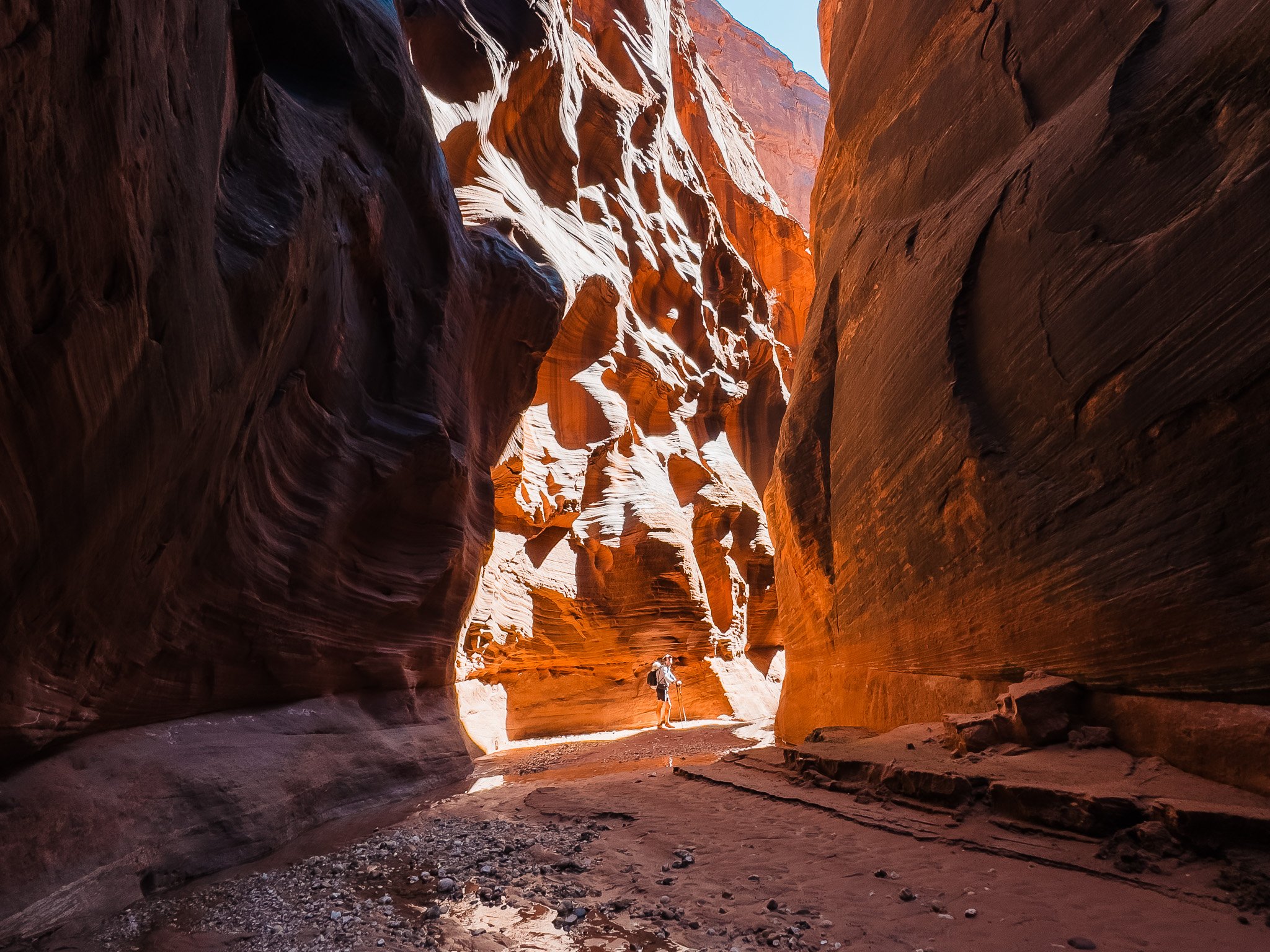
Buckskin Gulch is a true adventurous backpack, rewarding hikers with some of the most dramatic slot canyon scenery in the Southwest. Every step feels like entering another world, but the canyon demands careful planning, physical effort, and respect for the elements.
Whether you choose the short Wire Pass out-and-back, the mid-length trek to White House, or the full multi-day journey to Lee’s Ferry, this canyon delivers solitude, epic geology, and an unforgettable Utah and Arizona backpacking experience. For anyone seeking a bucket-list backpacking trip in the Southwest, Buckskin Gulch and Paria Canyon should be at the top of your list.
More Backpacking Posts & Gear Guides to Check Out Next
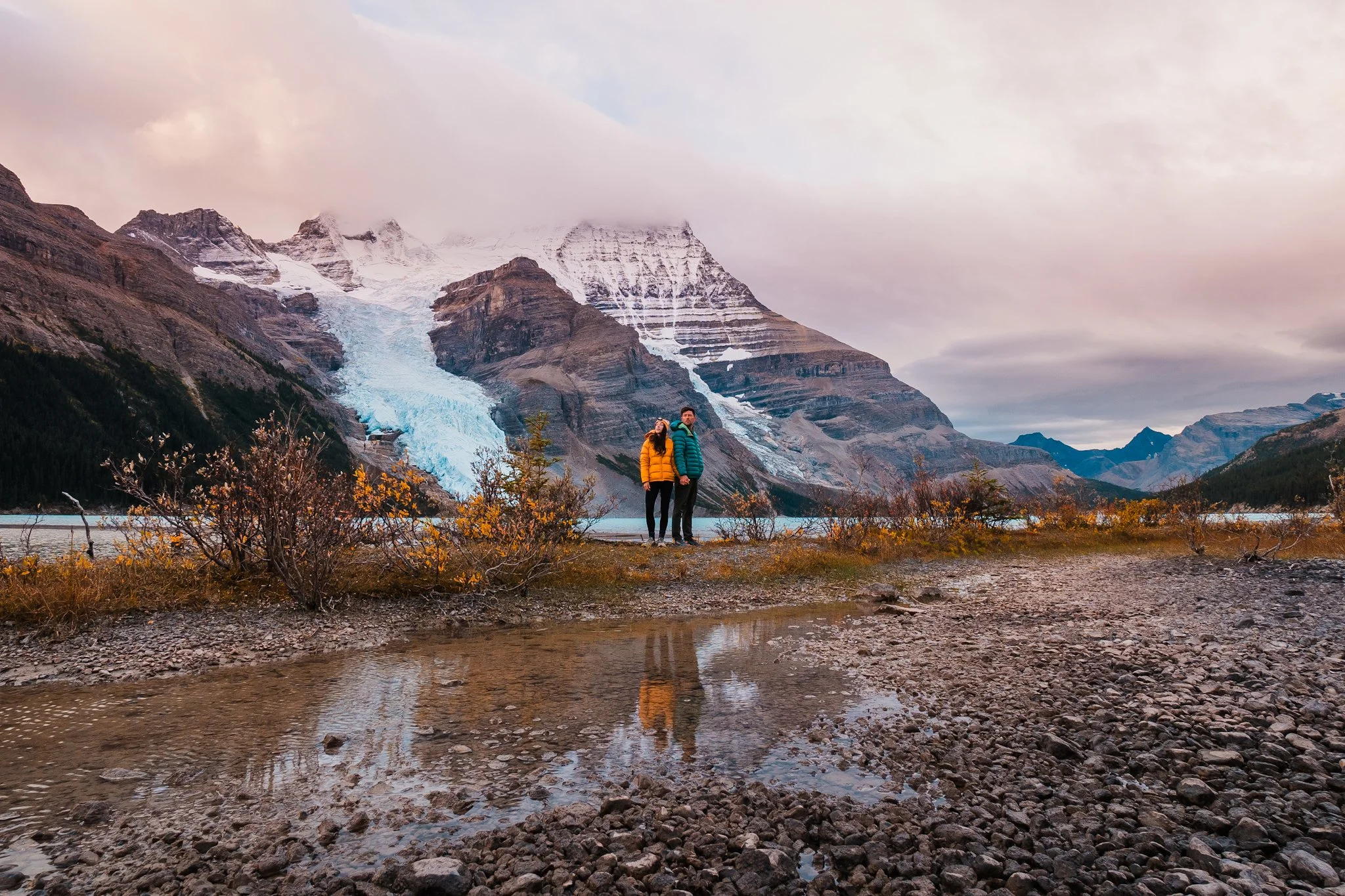
Backpacking the Berg Lake Trail in British Columbia(pictured above)
Gear Discount Codes and Links
I’ve partnered with a few of my favorite outdoor brands to hook you up with exclusive discounts on trail-tested gear. These are companies I actually use and love, and when you shop through the links below, you’ll get a deal and help support my blog. Win-win!
20% off SkyGOAT (grid fleece) - Click the link and add code SKYEGOAT to your cart at checkout to get 20% off your order.
15% off LUNA Sandals - Click the link and the discount will be added to your cart automatically. These are what I always bring as my camp shoes, but I also love hiking in them in the summer.
15% off Stio with code SKYE15 - Click the link and enter the code in your cart. My favorite hiking and backpacking clothing!
10% off Will and Bear hats with code SKYESTOURY - Click the link and the discount will be added to your cart automatically. If you need a new beanie for this trip, check them out.
20% off Wild Deodorant with code SKYESTOURY - Must enter the promo code at checkout to receive discount. They make a deodorant mini that is perfect for backpacking, it’s the size of a lip balm.
10% off Loop Earplugs with code SKYE10 - Enter the promo code at checkout. I use their Dream earplugs for sleeping both backpacking and car camping.
Save this Post for Later
The Best Fleece Mid-Layers for Hiking & Backpacking of 2026: Tested on Trail
2025 Holiday Gift Guide for Outdoor Lovers: Best Gifts for Hikers, Backpackers & Travelers
This image is copyrighted and owned by Skye Stoury Photography and skyestoury.com, if you would like to licence any images on this site, please email us at hello@skyestoury.com