
Backpacking the Berg Lake Trail: Ultimate Guide to Mount Robson’s Most Iconic Hike

A detailed Berg Lake Trail guide with route info, camping details, packing tips, and itinerary ideas for backpacking around Mount Robson in the Canadian Rockies.
If you’re dreaming of backpacking in the Canadian Rockies, the Berg Lake Trail in Mount Robson Provincial Park is a must-visit. From jaw-dropping glaciers to turquoise lakes and alpine peaks, this trail offers an unforgettable adventure for hikers and backpackers of all levels. This trail was closed for several years and just re-opened, and I was so excited to have a friend get a permit and bring us along on this amazing adventure.
In this guide, you’ll find everything you need to plan your trip, including routes, campsites, permits, and tips for making the most of your journey.
*Updated for the 2026 backpacking season.

Why the Berg Lake Trail Belongs on Every Backpacker’s Bucket List
Backpacking the Berg Lake Trail is one of those trips that you need to do at least once in your life. It includes stunning views the entire hike, and is truly a photographers dream. Winding through Mount Robson Provincial Park in British Columbia, this iconic trail takes you past roaring waterfalls, turquoise glacier-fed lakes, and the towering face of Mount Robson, the highest peak in the Canadian Rockies. Every mile brings new and amazing views, from lush forests to sweeping alpine meadows and ice-capped peaks.
Whether you’re planning a multi-day backpacking trip or a day hike to Kinney Lake, this guide covers everything you need to know; from permits and campsites to itinerary ideas, gear recommendations, and trail tips. All to help you plan your perfect Berg Lake adventure.
Disclaimer: This blog post contains affiliate links, meaning I receive a small commission of every purchase made with my links at no additional cost to you. Sometimes there is even a discount code for my readers which I specify next to the links.
Table of Contents

Berg Lake Trail Overview: Distance, Difficulty, and Best Time to Hike
The Berg Lake Trail is a legendary backpacking route in Mount Robson Provincial Park, stretching roughly 14.3 miles (23 km) one way, or 28.6 miles (46 km) round trip, with an elevation gain of about 2,625 feet (800 meters). The trail is generally considered moderate to challenging, making it suitable for experienced hikers and well-prepared beginners who are comfortable with longer distances and variable alpine conditions. Personally, I thought it was well graded and relatively easy compared to others in the Rockies, but I also spent all summer backpacking and hiking, leading up to this trip. So take my personal trail rating with a grain of salt…
Throughout the trail you will be treated to diverse views from the forest to above tree line, and high alpine valleys. Most hikers backpack this trail in 2-4 days, though day hikes to Kinney Lake or Emperor Falls are popular for those short on time. And we even saw trail runners going all the way to Berg Lake, which is doable, but a very long day.
The best time to hike is from July through September, when the trail is fully accessible and snow at higher elevations has melted out. Early summer can still have snow patches, while late fall brings stunning fall colors and fewer crowds, but be prepared for colder temperatures and quickly changing weather conditions.
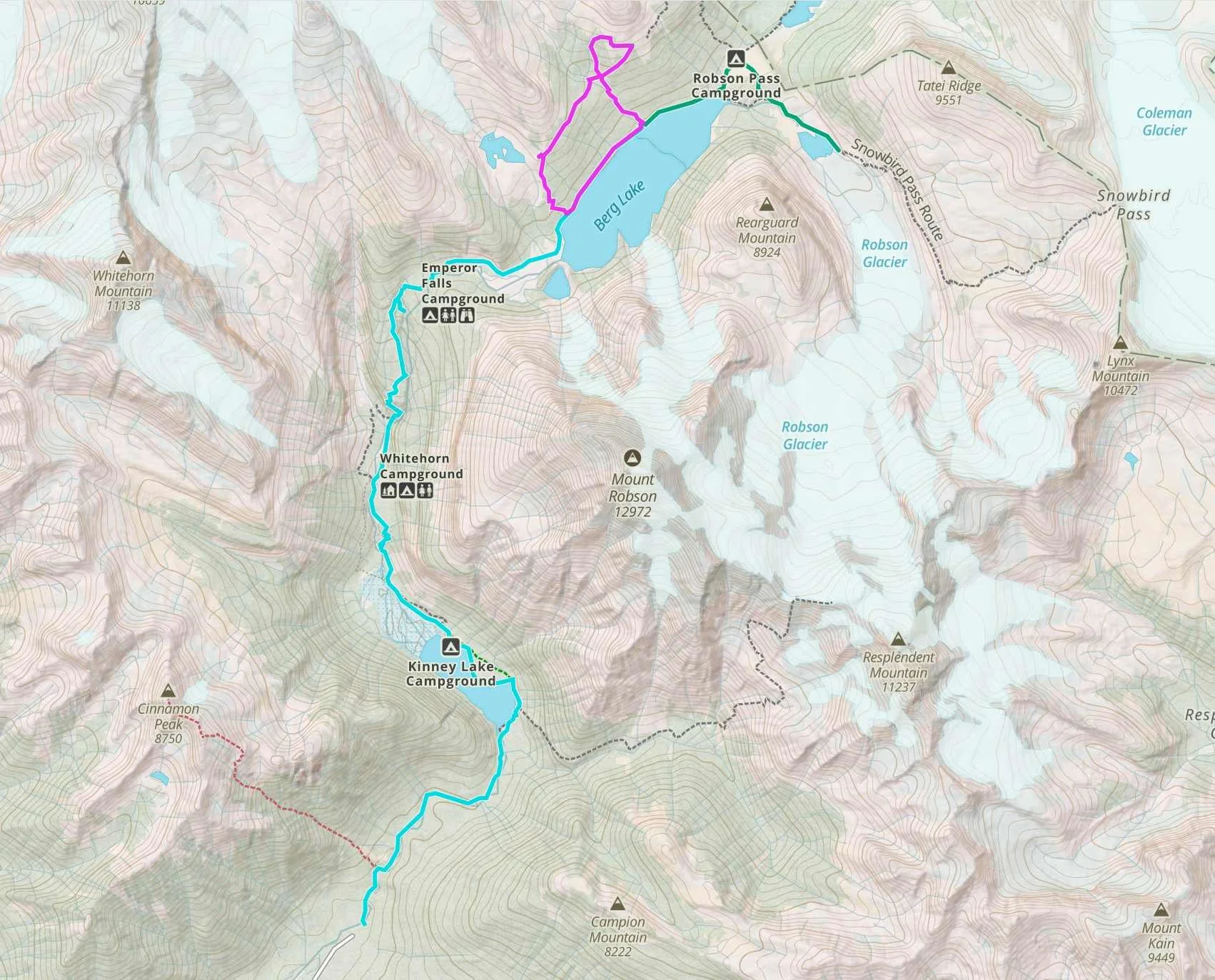
Gaia GPS map of our route + day hikes
Quick Trail Specs for Berg Lake Trail
Trailhead: Berg Lake Trailhead (Mount Robson Provincial Park, BC)
Route Type: Out and back
Total Distance: ~28.6 miles (46 km) round trip
Elevation Gain: ~2,625 feet (800 m)
Difficulty: Moderate to challenging, long days with some steady climbs, but the trail is very well graded
Duration: 2-4 days (depending on pace and side hikes)
Camping: Multiple BC Parks campgrounds; Kinney Lake, Whitehorn, Emperor Falls, Marmot, Berg Lake, Rearguard, Robson Pass. All have tent pads, bear-proof food storage, and pit toilets.
Camping Permit: Required, book months in advance through BC Parks. Cancellations may be available days before or even the day of. You will need to pick up your permit in person at the Mount Robson Visitor Center on the way to the trailhead.
Parking: Free at the trailhead, no pass needed to park
Best Time to Go: July through September for best trail conditions and scenery
Permits, Reservations, and Trail Access
Backpacking the Berg Lake Trail requires a bit of planning, all overnight campers need a BC Parks camping permit, which must be booked in advance through the BC Parks reservation system. Permits sell out quickly, especially for peak season (July–September), so it’s important to reserve your spot as early as possible. Reservations are made available four months in advance of your desired arrival date.
Key Trail Details:
Camping Permits: Required for all campgrounds along the trail (Kinney Lake, Whitehorn, Emperor Falls, Marmot, Berg Lake, Rearguard, Robson Pass). Permits are per person, per night.
Day Use: No permit is required for day hikes, but parking is limited, so arrive early.
Trail Access: The Berg Lake Trail is open from late June/early July through September, depending on snow conditions. Early summer may have snow patches in higher elevations, while late fall brings fewer crowds but colder temperatures.
Reservations: Book online through the official BC Parks system, selecting the specific campgrounds for your itinerary. Flexibility is limited, secure your first-choice sites months in advance.
Following these rules ensures you’ll have a safe, legal, and enjoyable backpacking experience while protecting the fragile alpine environment.
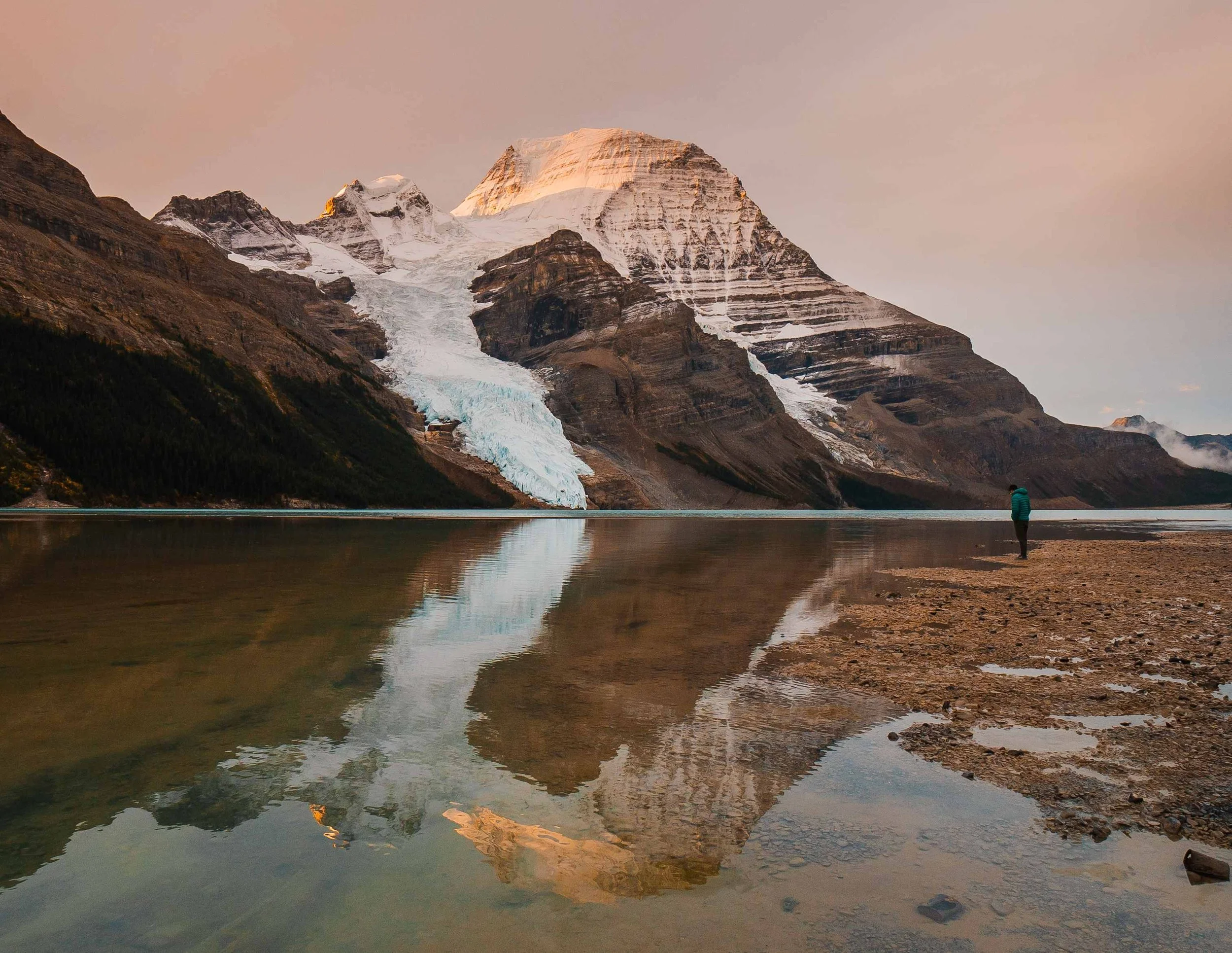
How to Get to the Berg Lake Trailhead
The Berg Lake Trailhead is located in Mount Robson Provincial Park, British Columbia, roughly 1 hour west of Jasper, Alberta, about 3.5 hours northeast of Kamloops, BC, and about 5 hours from Banff down Icefields Parkway.
Directions to Berg Lake:
From Jasper: Take Highway 16 west toward Tête Jaune Cache, then turn onto Highway 5 (Yellowhead Highway) south for a short distance before following signs to Mount Robson Provincial Park. The trailhead is just past the park entrance.
From Valemount: Drive north on Highway 5, then turn east at the park entrance. The trailhead is down a paved road behind the visitor center and is well-marked and accessible by any vehicle.
Parking at the Trailhead:
There is a paved parking lot with pit toilets and even a picnic shelter at the trailhead that fills quickly during peak season (July–August), so arrive early in the morning to secure a spot. On your way into the trailhead, you will pass the Mount Robson Visitor Center, a gift shop, restaurant, and gas station. The Visitor Center is where you will need to pick up your backpacking permit in person the day before or day of your trip.
Flying into the Area: Accommodations & Renting a Car
For those coming from farther away, flying into Kamloops, BC and then renting a car will be your best bet. Whether you’re planning to backpack Berg Lake, or spend a few days day hiking and sightseeing in Mount Robson Provincial Park, renting a car can make your trip a lot easier. For car rentals, I recommend booking through Discover Cars because they have no hidden costs, 24 hour support, and free cancelations. They compare car rental deals from many different rental companies so that you can choose which is best for your trip.
If you’re looking to find the best deal on a car rental, make sure to book early on discovercars.com. You can always make changes and even cancel up to 48 hours in advance of your reservation. And the earlier you book, the better price you can secure. When flying into nearby airports like Kamloops (YKA) or Jasper National Park Airport (YJA), you can pick up your rental car and then head to Mount Robson Provincial Park from there. When picking up your rental car, make sure to bring your drivers license, and if you’re traveling from outside of Canada, your passport.
Here’s some tips from Discover Cars to make your rental car experience the best it can be:
Book Early - Prices generally rise when it gets closer to the starting date of your trip. Book ahead to save and don’t worry, you can always make changes or cancel for free up to 48 hours before pick-up if your plans change.
Pay Attention To Reviews - See what previous customers have to say about the rental supplier. Choosing a company with a score of 8 or higher is recommended.
Keep the Deposit in Mind - You will have to leave a deposit when you pick up the car. In the rental conditions, you can see how much it will be. Make sure you have enough credit available to cover it.
Know the Fuel and Mileage Policies - Avoid costly fees by knowing how much mileage is included in your rental and what the fuel policy is.
Where to Stay on Your Way to Mount Robson
Closest accommodations outside the park are in Valemount or Jasper. But there are campgrounds near by that you can reserve before or after your backpacking trip. Planning your travel carefully ensures you start your Berg Lake backpacking adventure smoothly and stress-free. We have a full guide on the best lodging options in Jasper National Park that is worth a read.

Backpacking Itinerary for the Berg Lake Trail
Whether you’re planning a three to five day backpacking trip or a shorter adventure, the Berg Lake Trail offers incredible scenery at every turn. Here’s a suggested itinerary (what our group did) with options for splitting up the first day and must do day hikes along the way. When planning your trip, I would suggest two nights minimum at the Berg Lake Campground. That gives you a full day to be able to day hike around the area and catch a couple sunrises and sunsets. One night honestly would not be enough, and I do wish we had had three nights to be able to do a little more in the area.
Day 1: Hike to Berg Lake Campground

Heading around Kinney Lake
Most hikers make the full trek to Berg Lake Campground on the first day (what we did), but you may prefer to break up the hike and stop at Whitehorn or Emperor Falls campgrounds along the way. Regardless of your pace, don’t miss Emperor Falls, just 0.1 miles off the main trail, this huge and dramatic waterfall (pictured below) is a perfect spot for photos. It can be very wet from the mist, so have your rain jacket ready.
Distance to Berg Lake Campground: ~14.3 miles (23 km) one way
Elevation Gain: ~2,625 feet (800 m)
Trail Overview: From the Trailhead to Berg Lake
The Berg Lake Trail starts off easy and flat, winding through a lush forest alongside the glacial-blue Robson River. The first few miles are mellow and well-graded, offering the perfect warm-up as you make your way toward Kinney Lake. This stunning turquoise lake is surrounded by mountains and, it’s one of the most popular day hikes in Mount Robson Provincial Park. Both on the hike in and out, Kinney Lake was perfectly still and reflective, even when it was windy up at Berg Lake. This is definitely worth a stop for photos and a snack if needed.
After hiking around Kinney Lake, the crowds thin out as you follow the trail into the Valley of a Thousand Falls. Here, the route begins to climb steadily, with switchbacks leading you higher through forests and eventually past roaring cascades. Though the trail gains more elevation here, it is still well graded and manageable.

Stopping at Emperor Falls for photos
A short 0.1-mile detour off the main trail leads to Emperor Falls, one of the most powerful and awe-inspiring sights on the entire trail. The mist here can be intense if there is any wind, and you’ll likely feel it before you even see the falls, so have your rain jacket easily accessible. Emperor Falls is well worth the quick side trip, we only stopped on the way out but I wish we would have on the way in too. From this point, the scenery opens up dramatically as you gain elevation. The trees thin out, revealing sweeping views of Mount Robson’s glaciers and the valley below.
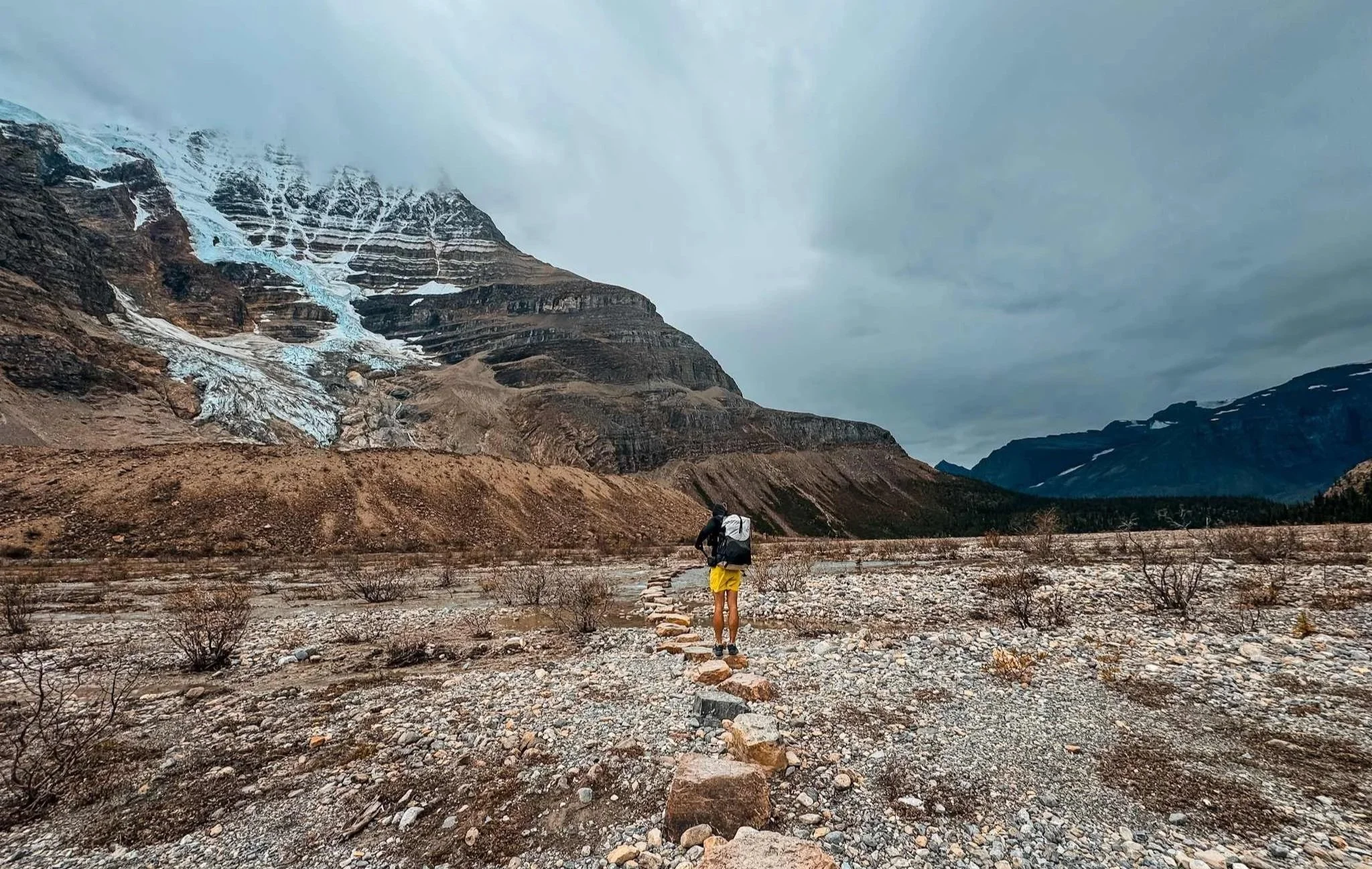
The final stretch to Berg Lake Campground follows a rocky, open valley beside the glacier, with panoramic views in every direction. It’s often very windy here, but the effort pays off when you round the final corner and see Berg Lake for the first time! You then traverse around Berg Lake before reaching the main campground.
Arriving at Berg Lake Campground feels like stepping into another world. Some of the campsites sit just steps from the water, with views of the glacier calving into the lake and the sound of icefalls echoing through the valley. Others are more sheltered up in the forest above the lake. There is also an enclosed cooking shelter, grey water washing station, pit toilets, and bear lockers to store your food and scented items. This campground is the perfect basecamp for exploring Snowbird Pass, Mumm Basin, or simply soaking in one of the most iconic alpine landscapes in Canada.
Day 2: Sunrise at Berg Lake, Day Hike to Snowbird Pass and Berg Lake Viewpoint

Wake up early to catch the sunrise along the lake shore, the morning light on the turquoise waters and the north face of Mount Robson is unforgettable. While we were there, it was windy, so unfortunately we didn’t get a reflection, but the pink sunrise was still worth waking up for. After breakfast, set out on a day hike along the Mumm Basin Trail to the Berg Lake Viewpoint and over to Snowbird Pass and the glacial lake before it. We chose to stop at the lake below Snowbird Pass, which had ice bergs floating in it that had broken off from the glacier.
Distance: 6–16 miles round trip (depending on exact side trails)
Highlights: Glacier-fed lakes, panoramic alpine views, and the dramatic peaks of the Robson massif
Tip: Bring extra layers and a water filter; conditions can change quickly in the alpine and the wind makes it feel even colder than it is

Day hike up the Mumm Basin Trail
Day Hike the Mumm Basin Trail (via Toboggan Falls or Hargreaves Trail)
This scenic route climbs steeply above Berg Lake via the Tobbogan Falls trail, rewarding you with sweeping views of Mount Robson, the Robson Glacier, and the turquoise lake far below. The ascent starts near the Berg Lake Campground and leads into the rocky alpine plateau of Mumm Basin, where wildflowers bloom in mid-summer and mountain goats are often spotted. There’s even a cave that is worth a stop. You can return the same way or loop down via the Hargreaves Lake trail, which adds a bit more distance but includes a fun change of scenery.
Distance: ~5 miles (8 km) round trip depending on which route you choose Mumm Basin to Toboggan Falls trail has a partial closure due to a land slide
Elevation Gain: ~1,300 feet (400 m)
Trail Type: Out and back (partial closure – see notes below) or loop trail if doing Toboggan Falls to the Hargraves Trail
Difficulty: Moderate
Note that the connector section between Mumm Basin and Toboggan Falls is currently closed due to a landslide. Because of this, hikers now have two main options:
Hike up the Toboggan Falls Trail to connect with the Hargreaves Trail (mentioned above), which continues into the alpine near Mumm Basin for equally stunning views.
Ascend the Mumm Basin Trail from the Berg Lake side as far as the closure point, then return the same way.
Both routes are steep and rocky in sections, but well worth the effort for the incredible perspective of Mount Robson’s north face and the shimmering turquoise waters of Berg Lake far below. Be sure to check with park staff at the Ranger Station for the latest trail conditions before heading up.
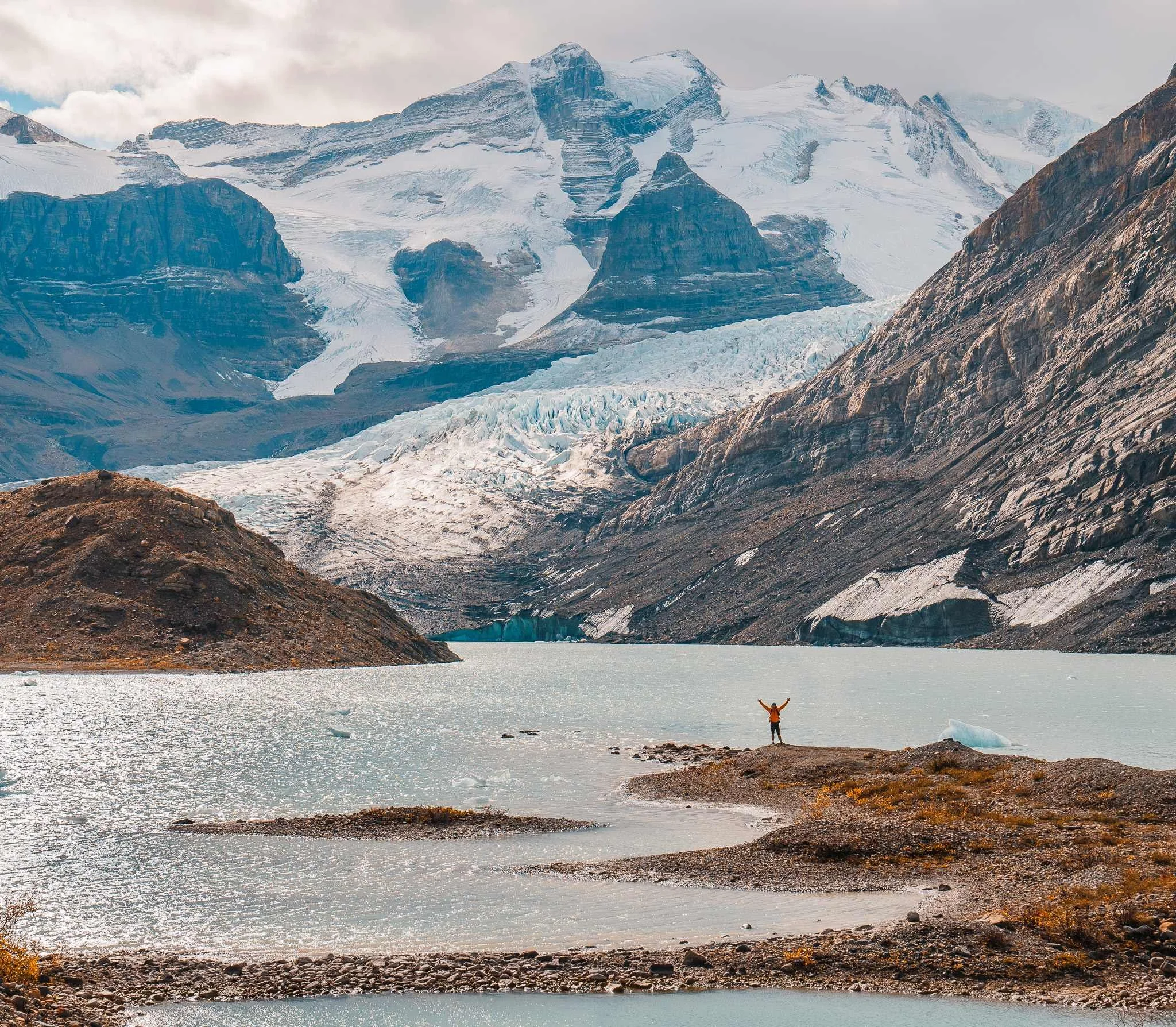
Lake below Snowbird Pass and the Robson Glacier
Day Hike the Snowbird Pass Trail
If you have the energy for a bigger day, the Snowbird Pass Trail is the ultimate adventure from Berg Lake Campground. This challenging route delivers some of the most breathtaking scenery in the entire Canadian Rockies, combining glacier views, alpine meadows, and rugged mountain terrain.
Distance: ~13.5 miles (22 km) round trip from Berg Lake Campground
Elevation Gain: ~2,600 feet (800 m)
Trail Type: Out and back
Difficulty: Challenging, if going to the pass, it is along day with a sustained climb
The trail begins from camp and follows the valley past the base of Robson Glacier, where you’ll walk beside towering ice walls and meltwater streams. After a gradual start, the route steepens considerably as it climbs toward the pass, gaining steady elevation on switchbacks that reveal increasingly expansive views.
At the top, you’re rewarded with a jaw-dropping panorama of the glacier spilling into the valley below, one of those rare “worth every step” moments. From here, you can see deep into the remote wilderness along the Continental Divide, with endless ridge lines stretching into the distance.
If you are not up for the full hike, you can stop at a stunning unnamed lake along the way. We did this since we only had one full day for day hikes and wanted to do both the Berg Lake overlook via Toboggan Falls, and see the glacier. This shortens the hike to about 5.78 miles round trip, with only 741 feet of elevation gain.

Even More Day Hikes Around Berg Lake if You Have More Time
If you have another full day, there are several incredible side trails that start right from Berg Lake Campground, making it easy to explore without carrying a heavy pack. These hikes offer some of the most stunning views in Mount Robson Provincial Park and are well worth adding an extra night for.
Don’t Miss these Extra Day Hikes from the Berg Lake Campground
Robson Glacier Viewpoint: Follow the gentle trail along the Robson River toward Rearguard Camp, then continue to the edge of the Robson Glacier. It’s about 4 miles (6.5 km) round trip from Berg Lake Campground and offers a front-row view of the glacier’s lower icefall, especially beautiful in early morning light.
Hargreaves Lake Viewpoint: A short but steep hike above camp rewards you with sweeping views over Berg Lake, Mount Robson, and Mist Glacier. This one can easily be done in a few hours, and the alpine meadows along the way are often filled with wildflowers in July and August.
Exploring Around Berg Lake Shoreline: Even a casual wander along the lakeshore is spectacular. It’s the perfect low-effort way to soak in the views (and snap a few final photos) before hiking out.
No matter which route you choose, plan for a full day of exploring and bring layers, weather can shift quickly at higher elevations.
Day 3 or 4: Hike Back to the Trailhead
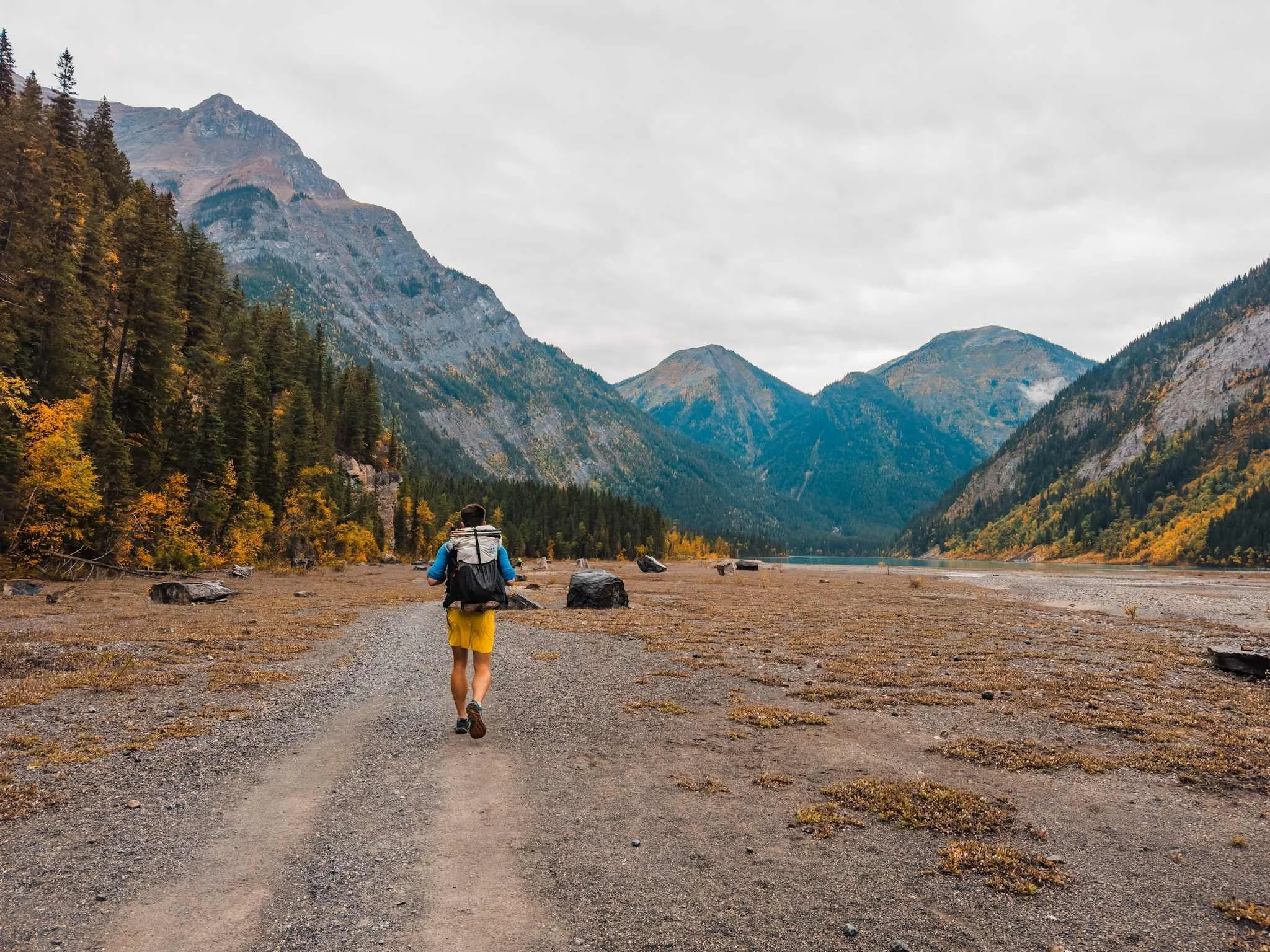
The hike out follows the same route as your first day, descending steadily through alpine meadows, forested valleys, and past familiar landmarks like Emperor Falls and Kinney Lake.
Many hikers start early to make the most of daylight and enjoy one last peaceful morning at Berg Lake before heading down. Expect the return to take 6–8 hours, depending on pace and rest stops. Trekking poles are helpful for the long descent, especially if your pack is heavy.

Best Campsites Along the Berg Lake Trail
The Berg Lake Trail offers several BC Parks campgrounds along the route, each with its own highlights. Reserving your campsite early is essential, most sites fill quickly during peak season (July–September).
Kinney Lake Campground
First major campground along the trail, about 4 miles (6.5 km) from the trailhead.
Scenic lakeside setting with easy access for shorter hikes or first-night stopovers.
Tent pads, pit toilets, and bear-proof food storage.
Whitehorn Campground
Approximately 7 miles (11 km) from the trailhead.
Good for splitting the first day of hiking into two shorter days.
Open meadow setting with classic mountain views.
Tent pads, pit toilets, and bear-proof food storage.
Emperor Falls Campground
Around 10 miles (16 km) in, adjacent to the famous waterfall.
Great spot for photos and a mid-day rest.
Tent pads, pit toilets, and bear lockers.
Marmot Campground
Located past Emperor Falls and before Berg Lake proper.
Offers quieter surroundings and access to side hikes.

Our tent platform and Zpacks tent at Berg Lake Campground
Berg Lake Campground (Where I Recommend You Camp)
The iconic main campsite, located at the lake’s edge with stunning views of Mount Robson’s north face and glaciers.
Access point for side hikes like Snowbird Pass and Mumm Basin Trail.
Tent pads, pit toilets, and bear-proof food storage.
Rearguard and Robson Pass Campgrounds
For longer trips or hikers looking to extend their stay, these sites offer higher elevation alpine settings and closer proximity to glacier viewpoints.
Tip: Book your preferred campgrounds as early as possible through BC Parks, availability is limited and fills quickly for summer trips.

What to Pack for the Berg Lake Trail
Packing smart is key to enjoying the Berg Lake Trail safely and comfortably. Even in summer, weather in Mount Robson Provincial Park can change quickly, and alpine conditions mean you’ll want the right layers, gear, and essentials.
Backpacking Gear Essentials:
Let’s start with your big three, the most important part of your backpacking gear, your pack, tent, and sleep system. For the best ultralight backpacking gear, check out my Ultralight Backpacking Gear Guide.
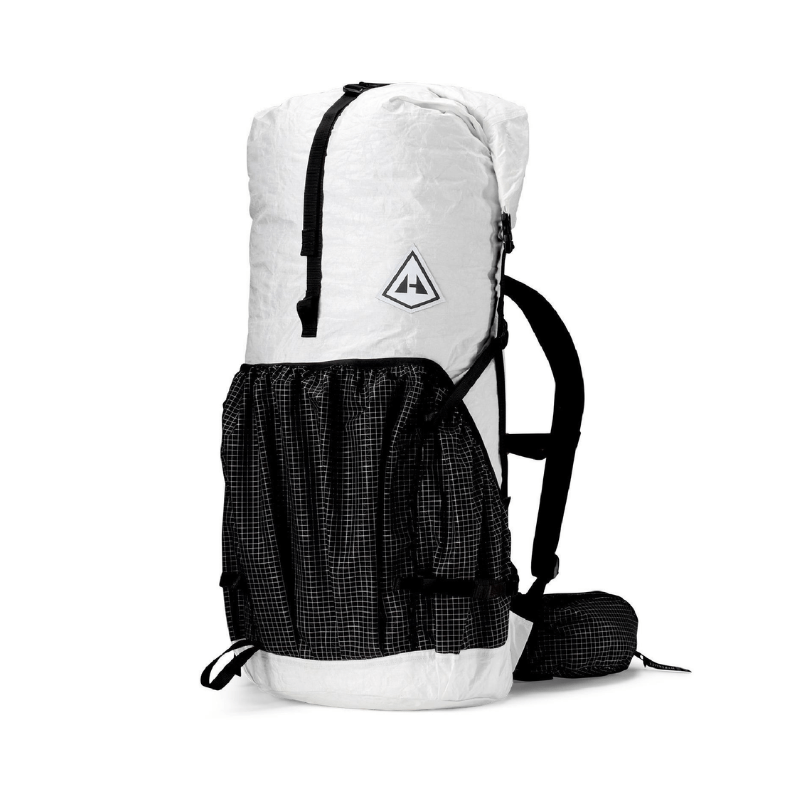
Backpack: A comfortable pack that fits your gear and food for 3–5 days. My all time favorite is the Hyperlite Southwest 55L, I brought it on this trip and it was the perfect amount of space, and it’s waterproof! I do still recommend bringing an UL pack liner if there is rain in the forecast. This one is super cheap ($2.40 USD at the time I’m writing this) and I’ve used it for years, so much better than a pack cover.
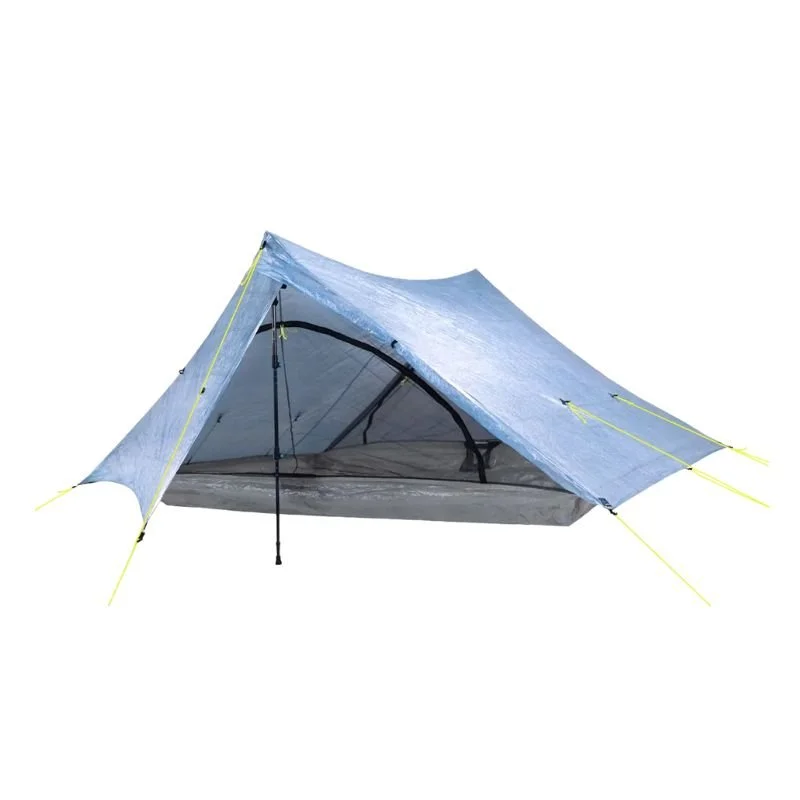
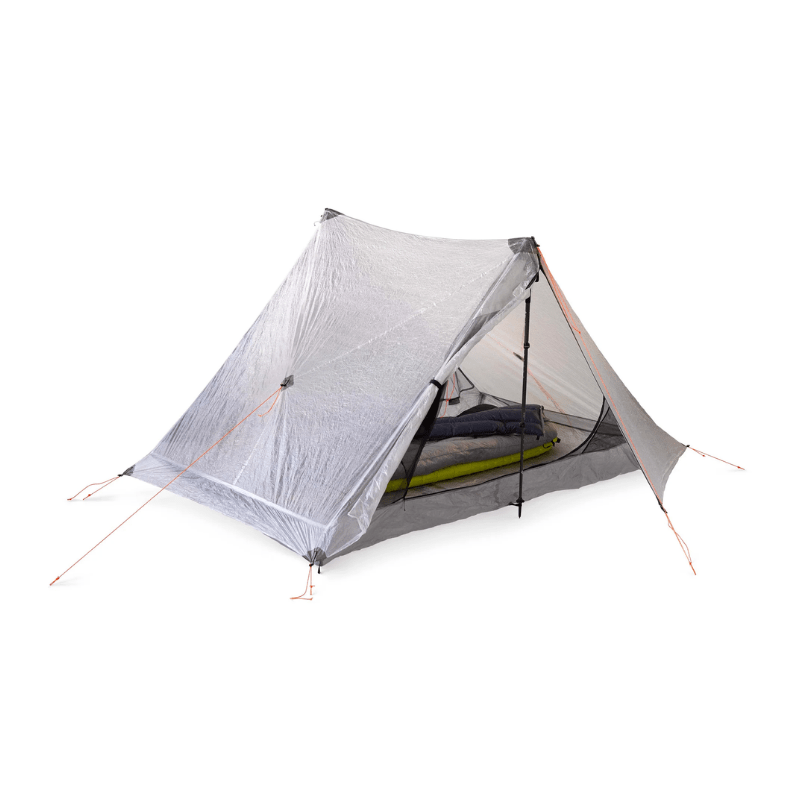
Tent / Shelter: Lightweight tent that can hold up well in wind. My two favorites are the Zpacks Triplex and Hyperlite Unbound 2, both are trekking pole tents and are 2lbs or under.
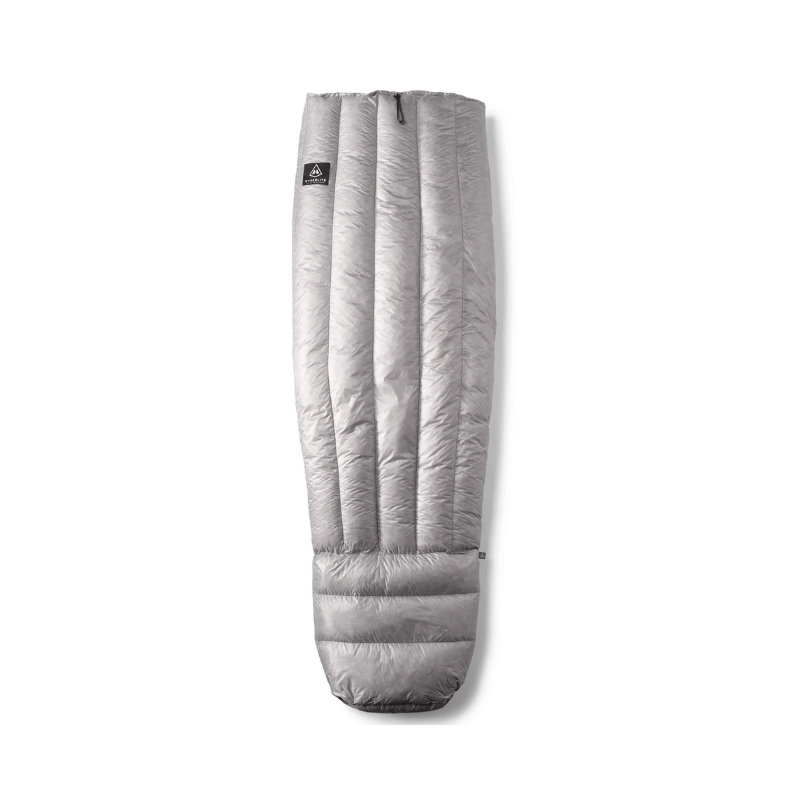
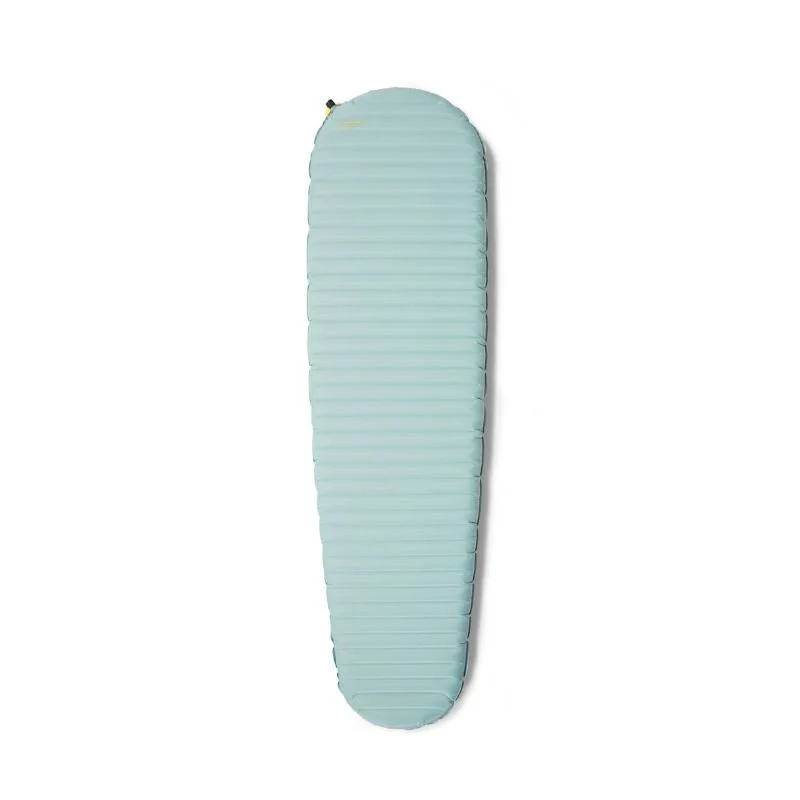
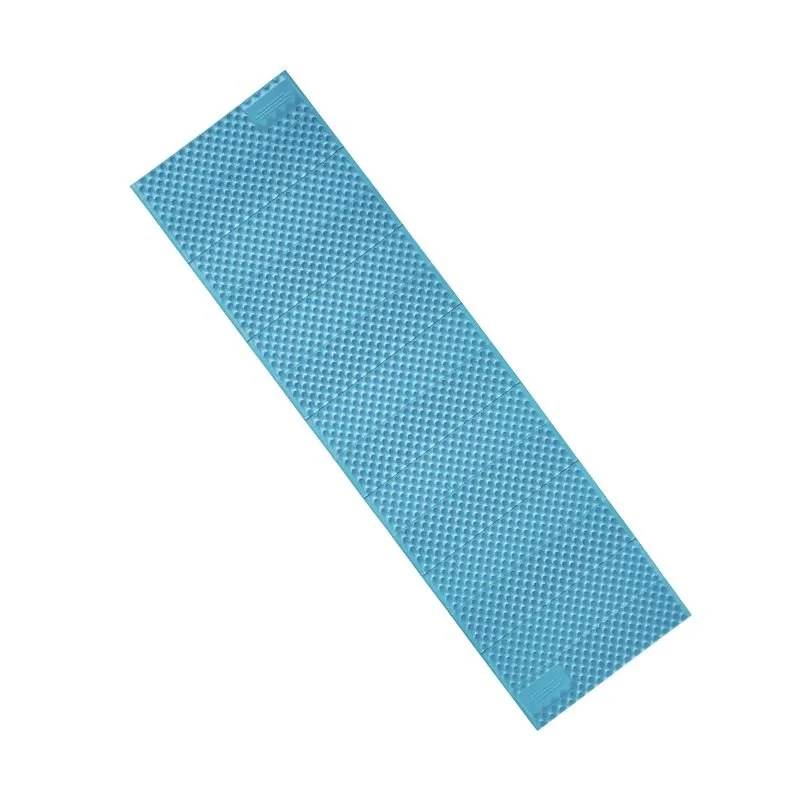
Sleeping Bag or Quilt & Sleeping Pad: I love a lightweight quilt and brought my 20 degree with me when we backpacked here in late September. It can get very cold at night, so make sure yours is warm enough for chilly alpine nights. And make sure to bring a sleeping pad with a high R rating. Mine only has an R value of 3, so I also brought my Z-Pad as well to add extra insulation and comfort.
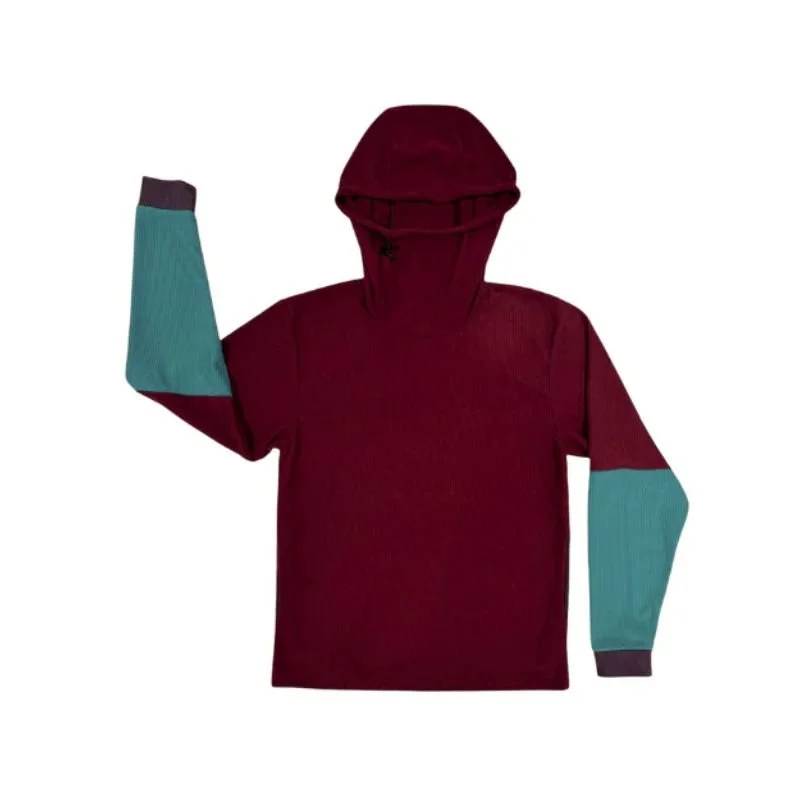
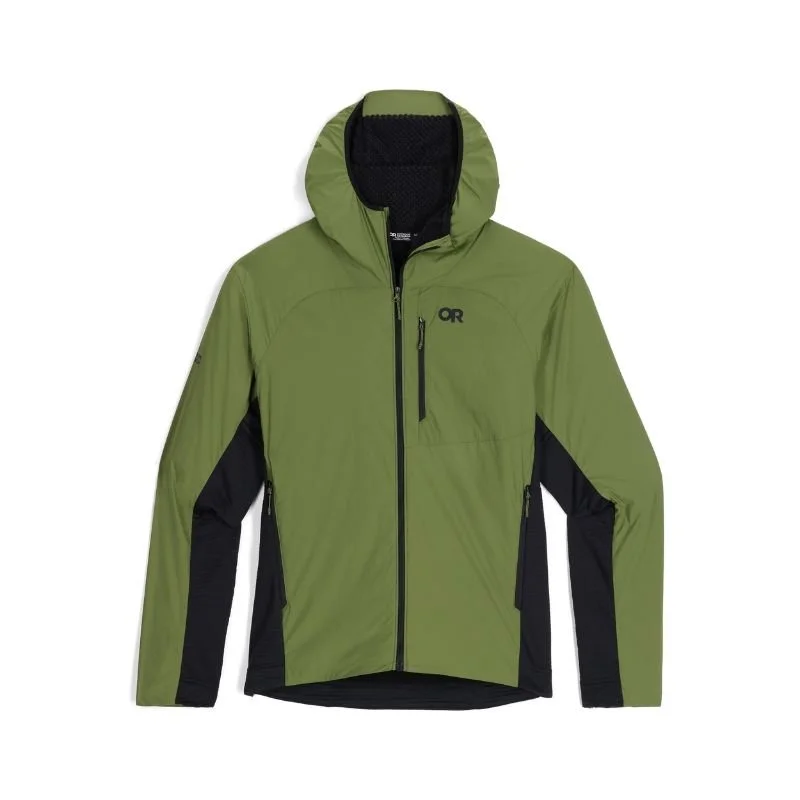
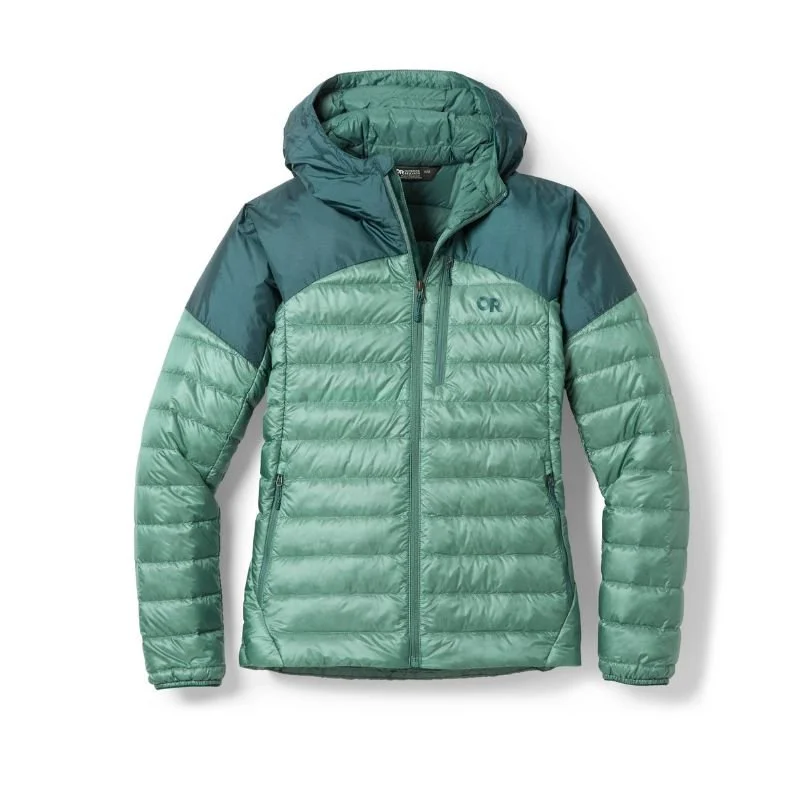
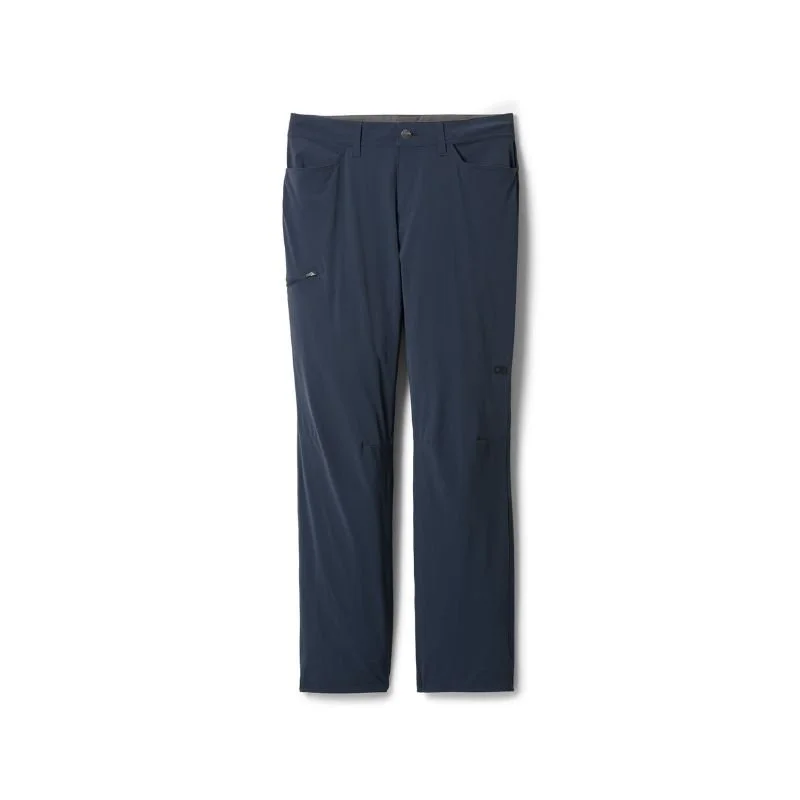
Clothing & Footwear:
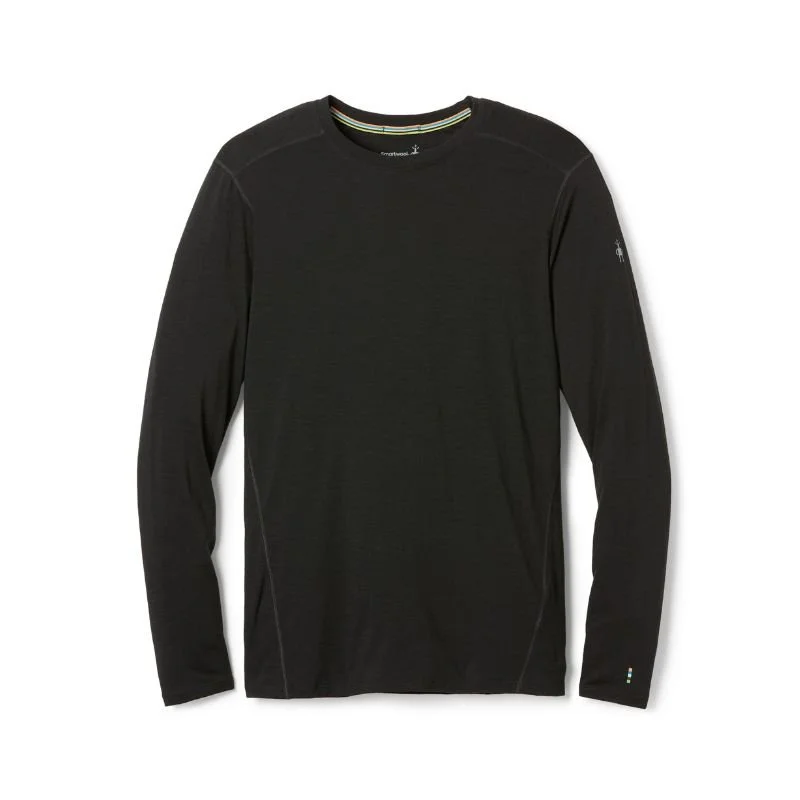
Warm mid-layers for mornings and evenings.
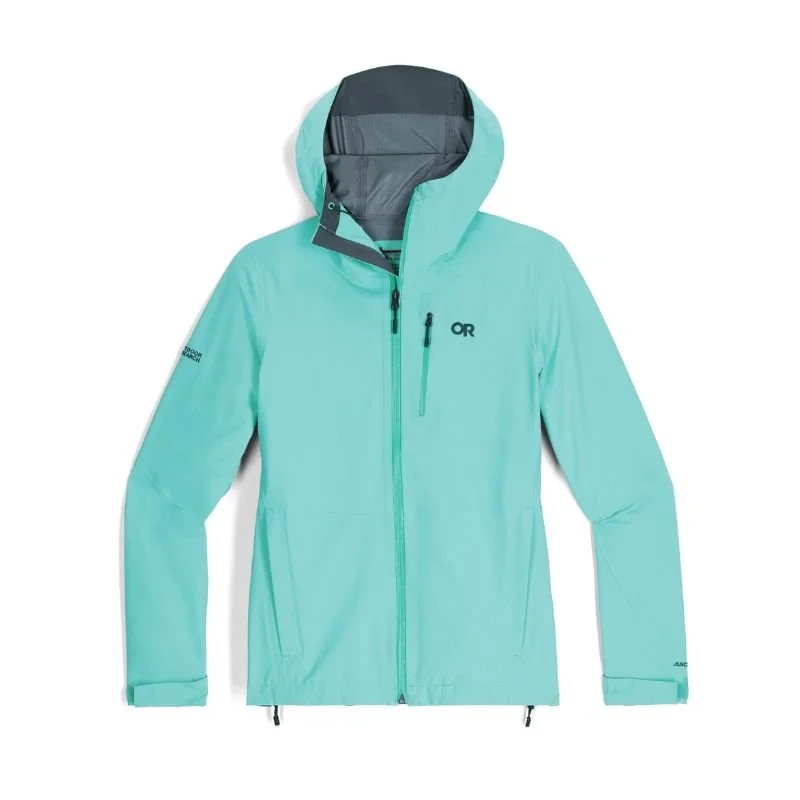
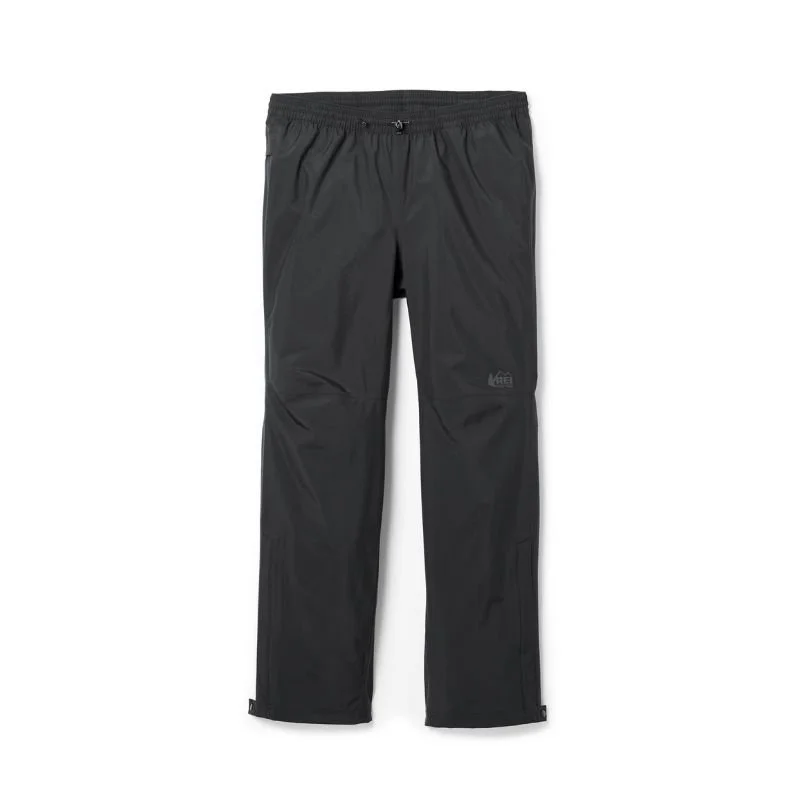
Rain jacket and waterproof pants, storms are common and though I rarely backpack with rain pants, I wish I’d had them on this trip…
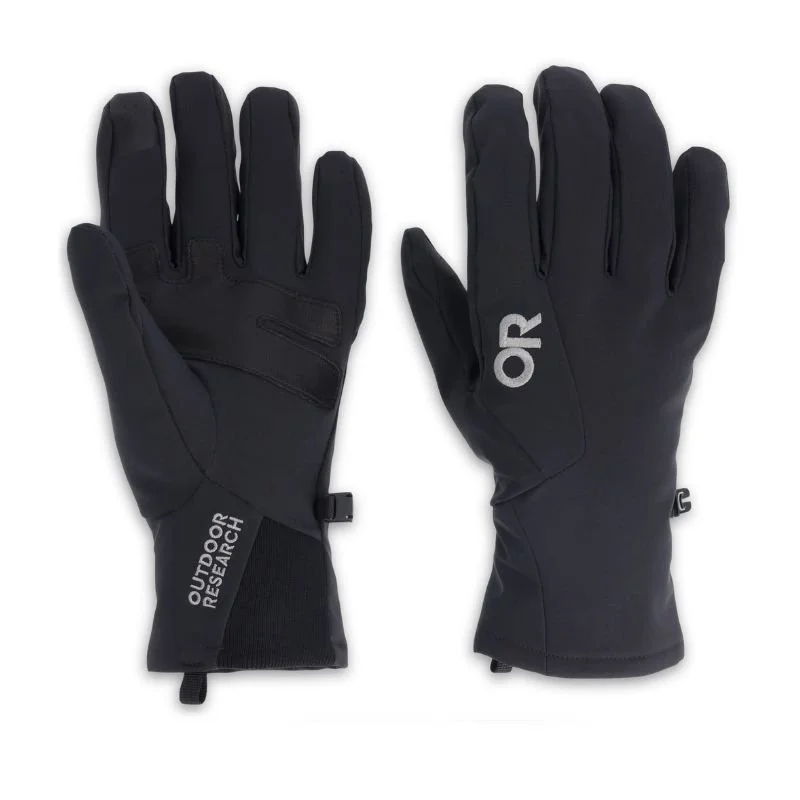
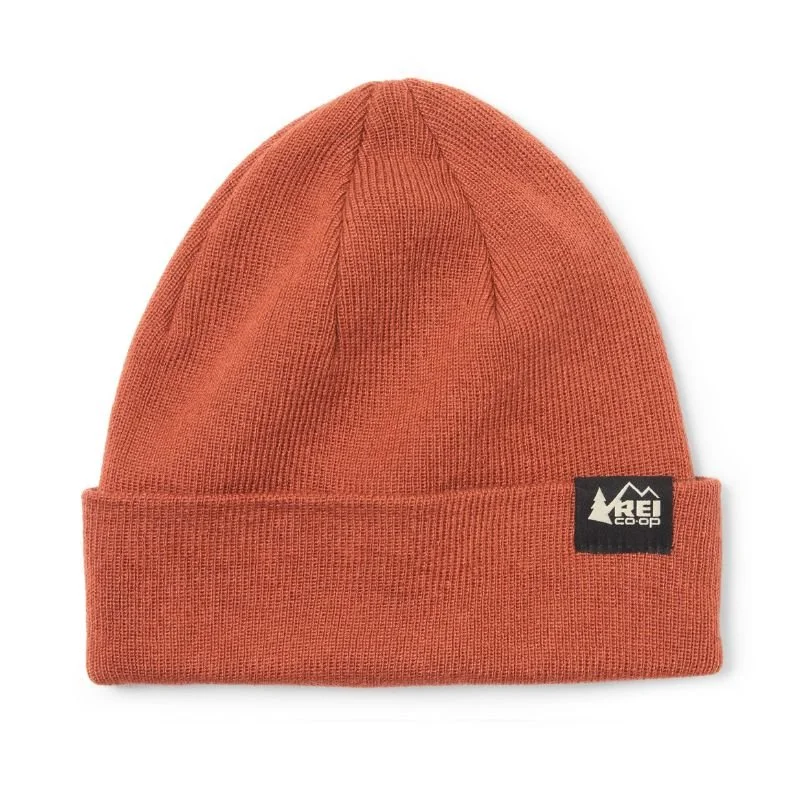
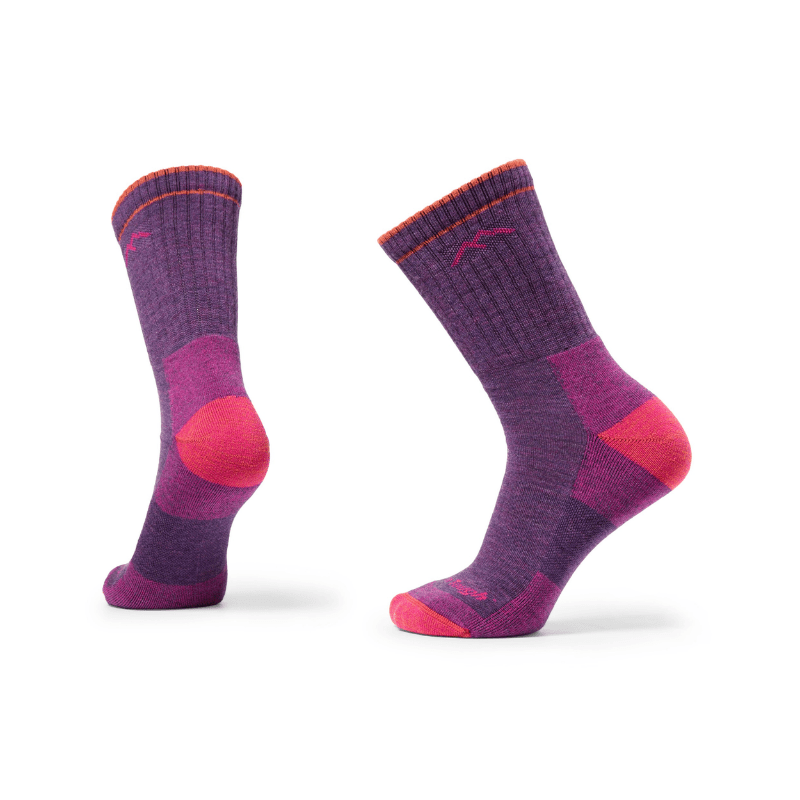
Gloves, hat, and extra socks for variable conditions.
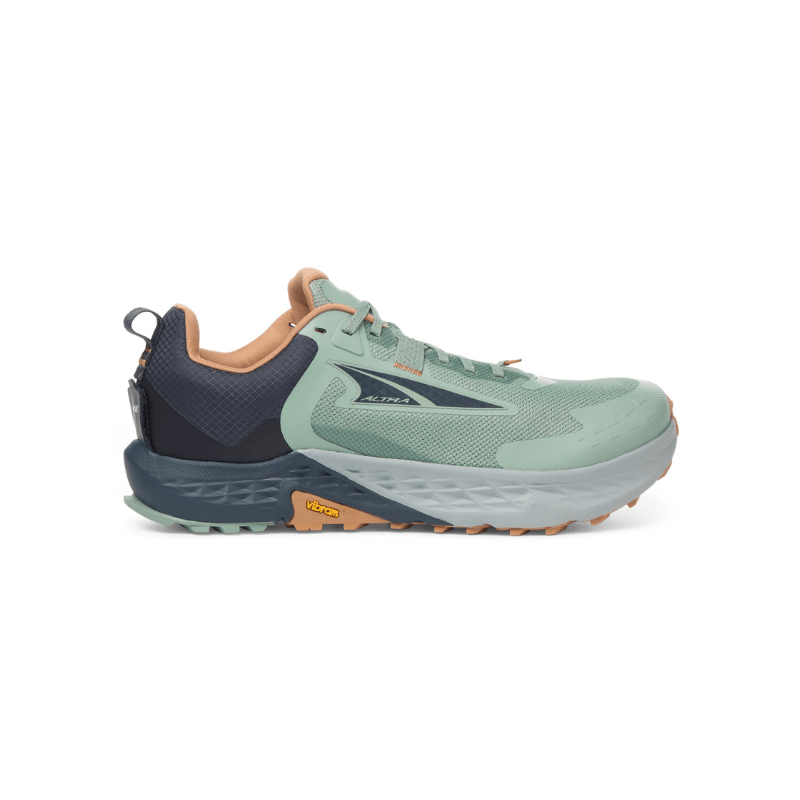
Trail runners or hiking boots depending on comfort and weather. I always recommend trail runners unless there is a lot of rain or snow in the forecast, then a leather/waterproof boot is needed.
Safety & Essentials:
Bear spray and knowledge of proper food storage.
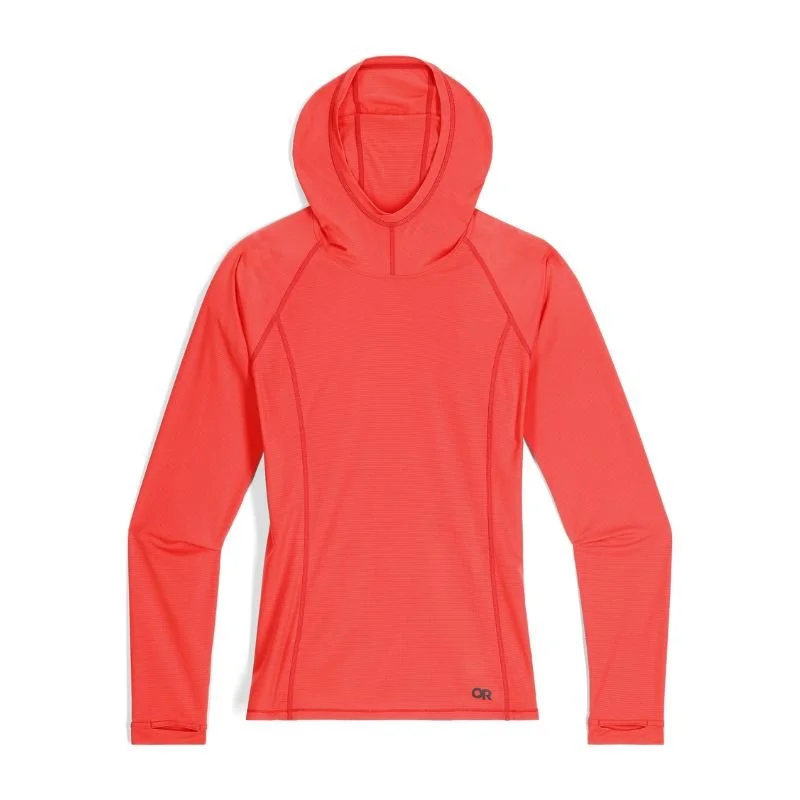
Sunscreen and sunglasses, even on cloudy days, UV exposure is high at elevation.
Map, compass or GPS, and trail guide.
Plenty of water and a method to purify lake or stream water.
Trekking poles for steep sections and long days.
Tip: Pack as light as possible while still carrying safety essentials. The Berg Lake Trail has long stretches between campgrounds, so balancing comfort and weight is crucial.

Responsible Hiking and Leave No Trace on the Berg Lake Trail
The Berg Lake Trail traverses a fragile alpine ecosystem, so following Leave No Trace principles is essential to protect the environment for future hikers.
Key Guidelines to Follow When Backpacking:
Pack it in, pack it out: Carry out all trash, food scraps, and personal waste.
Use designated campsites: Stick to tent pads and avoid disturbing vegetation.
Respect wildlife: Keep a safe distance from bears, marmots, and other wildlife. Never feed animals.
Minimize campfire impact: Fires are not permitted at most campgrounds. Use a stove for cooking.
Stick to trails: Avoid shortcutting switchbacks or wandering off marked trails to prevent erosion.
Following these practices ensures the Berg Lake Trail remains pristine and safe while giving you a more enjoyable, responsible adventure in Mount Robson Provincial Park.

FAQ: Backpacking the Berg Lake Trail
How long is the Berg Lake Trail?
The Berg Lake Trail is about 14.3 miles (23 km) one way, or 28.6 miles (46 km) round trip. Most backpackers hike it in 2–4 days depending on pace and side trips.
How difficult is the Berg Lake Trail?
The trail is considered moderate to challenging. The distance is long, but the grade is surprisingly manageable thanks to well-built switchbacks. Beginners who are comfortable with full-day hikes and variable mountain weather will do fine with proper preparation.
Do I need a permit to backpack Berg Lake?
Yes. All overnight hikers need a BC Parks camping permit, reserved for specific campgrounds along the trail. Permits open four months in advance and sell out fast. Day hikers do not need a permit.
When is the best time to hike the Berg Lake Trail?
July through September offers the best trail conditions. Early summer can still have snow, and late fall means colder temperatures but fewer crowds and gorgeous golden larches.
Can I hike the Berg Lake Trail in one day?
It’s possible, strong trail runners do it, but it’s a very long, strenuous effort. Most hikers prefer a multi-day trip to enjoy the scenery and explore side trails like Snowbird Pass and Mumm Basin.
Which campsite is the best on the Berg Lake Trail?
Berg Lake Campground is the standout. It sits right on the lake with unreal views of Mount Robson’s north face, plus access to the cooking shelter and the most iconic day hikes. For breaking up the first day, Whitehorn or Emperor Falls are great options.
How early should I book my camping permit?
As early as possible, ideally the same day reservations open (four months before your start date). Cancellations do pop up, so checking frequently can help you snag a last-minute spot.
Is there food storage on the Berg Lake Trail?
Yes. All campgrounds have bear-proof food storage lockers. You’ll still want to bring bear spray and know basic bear safety.
How do I get to the Berg Lake Trailhead?
The trail begins in Mount Robson Provincial Park, about an hour west of Jasper, Alberta. The parking lot fills early in summer, so plan to arrive in the morning. All backpackers must pick up their permit at the Mount Robson Visitor Centre before starting.
What should I pack for the Berg Lake Trail?
Prepare for variable alpine weather: a warm sleeping system, lightweight but durable layers, rain gear, trekking poles, and a way to purify water. Temperatures can be surprisingly cold at night, even in July and August. A full packing list is included in the blog.
Are campfires allowed?
No. Fires are prohibited at most campgrounds. Use a backpacking stove for cooking and follow Leave No Trace principles.
Can I bring my dog on the Berg Lake Trail?
Dogs are allowed on the Berg Lake Trail for day hikes, but they are not permitted for overnight backpacking trips.
Are there good day hikes from Berg Lake Campground?
Yes! Snowbird Pass, Mumm Basin, Toboggan Falls, and the Robson Glacier Viewpoint are the most popular.
Is the trail still affected by the 2021 flooding?
As of September 2025, some connector trails (like the link between Mumm Basin and Toboggan Falls) remain partially closed due to a landslide, but the main Berg Lake Trail is open. Check conditions with BC Parks or the ranger station before heading out.
Is the water safe to drink?
Yes, if you treat it. Bring a water filter or purification tablets, as all water sources are natural streams, lakes, or glacial runoff.
How cold does it get at night?
Even in midsummer, nighttime temps can dip near freezing at higher elevations around Berg Lake. Bring an appropriately warm bag or quilt and insulating layers.
Final Thoughts: Why the Berg Lake Trail Should Be on Your Bucket List
Backpacking the Berg Lake Trail is an unforgettable adventure that showcases some of the best scenery in the Canadian Rockies. From glacier-fed turquoise lakes and roaring waterfalls to the towering face of Mount Robson, every step brings new views and photo opportunities.
Whether you’re tackling the full 3–5 day backpacking itinerary, stopping at Emperor Falls along the way, or exploring side hikes like Snowbird Pass and Mumm Basin, this trail rewards careful planning, preparation, and a sense of adventure.
With a combination of BC Parks permits, scenic campsites, and flexible itineraries, it’s a trail that’s accessible to determined hikers while still feeling remote and wild. Start planning early, pack thoughtfully, and embrace the alpine experience, the Berg Lake Trail is truly a bucket-list hike in Mount Robson Provincial Park that will stay with you long after you leave the mountains.
Gear Discount Codes and Links
I’ve partnered with a few of my favorite outdoor brands to hook you up with exclusive discounts on trail-tested gear. These are companies I actually use and love, and when you shop through the links below, you’ll get a deal and help support my blog. Win-win!
20% off SkyGOAT (grid fleece) - Click the link and add code SKYEGOAT to your cart at checkout to get 20% off your order.
15% off LUNA Sandals - Click the link and the discount will be added to your cart automatically. These are what I always bring as my camp shoes, but I also love hiking in them in the summer.
15% off Stio with code SKYE15 - Click the link and enter the code in your cart. My favorite hiking and backpacking clothing!
10% off Will and Bear hats with code SKYESTOURY - Click the link and the discount will be added to your cart automatically. If you need a new beanie for this trip, check them out.
20% off Wild Deodorant with code SKYESTOURY- Must enter the promo code at checkout to receive discount. They make a deodorant mini that is perfect for backpacking, it’s the size of a lip balm.
10% off Loop Earplugs with code SKYE10 - Enter the promo code at checkout. I use their Dream earplugs for sleeping both backpacking and car camping.

More Backpacking & Canadian Rockies Posts to Check Out
Save this Post for Later


The Ultimate Guide to Fall and Winter Hiking: Clothing, Gear and Safety Tips
The Best Sun Hoodies and Sun Shirts for Hiking, Backpacking, and Climbing (2026)
This image is copyrighted and owned by Skye Stoury Photography and skyestoury.com, if you would like to licence any images on this site, please email us at hello@skyestoury.com