
What to Pack for Your Next Backpacking Trip: A Complete Backpacking Packing List
Backpacking Packing List: Gear, Clothing & Essentials for Your Next Trip
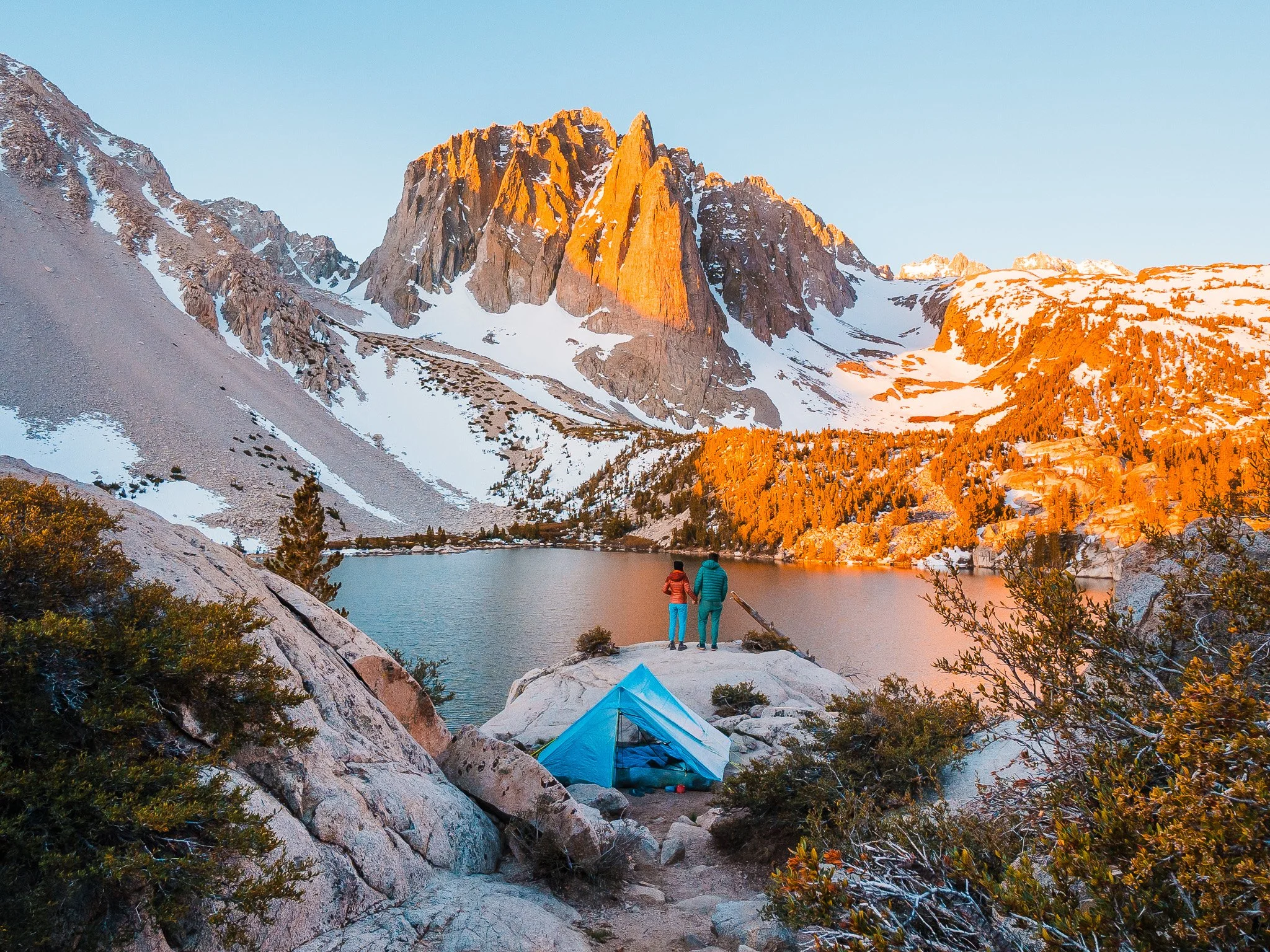
A Detailed Backpacking Packing List for Beginners to Experienced Backpackers
Whether you’re packing for your very first backpacking trip or refining a system you’ve used for years, having a clear, reliable backpacking packing list makes all the difference. This guide covers what to pack for a 1–3 night backpacking trip, including essential gear, clothing, food, and safety items.
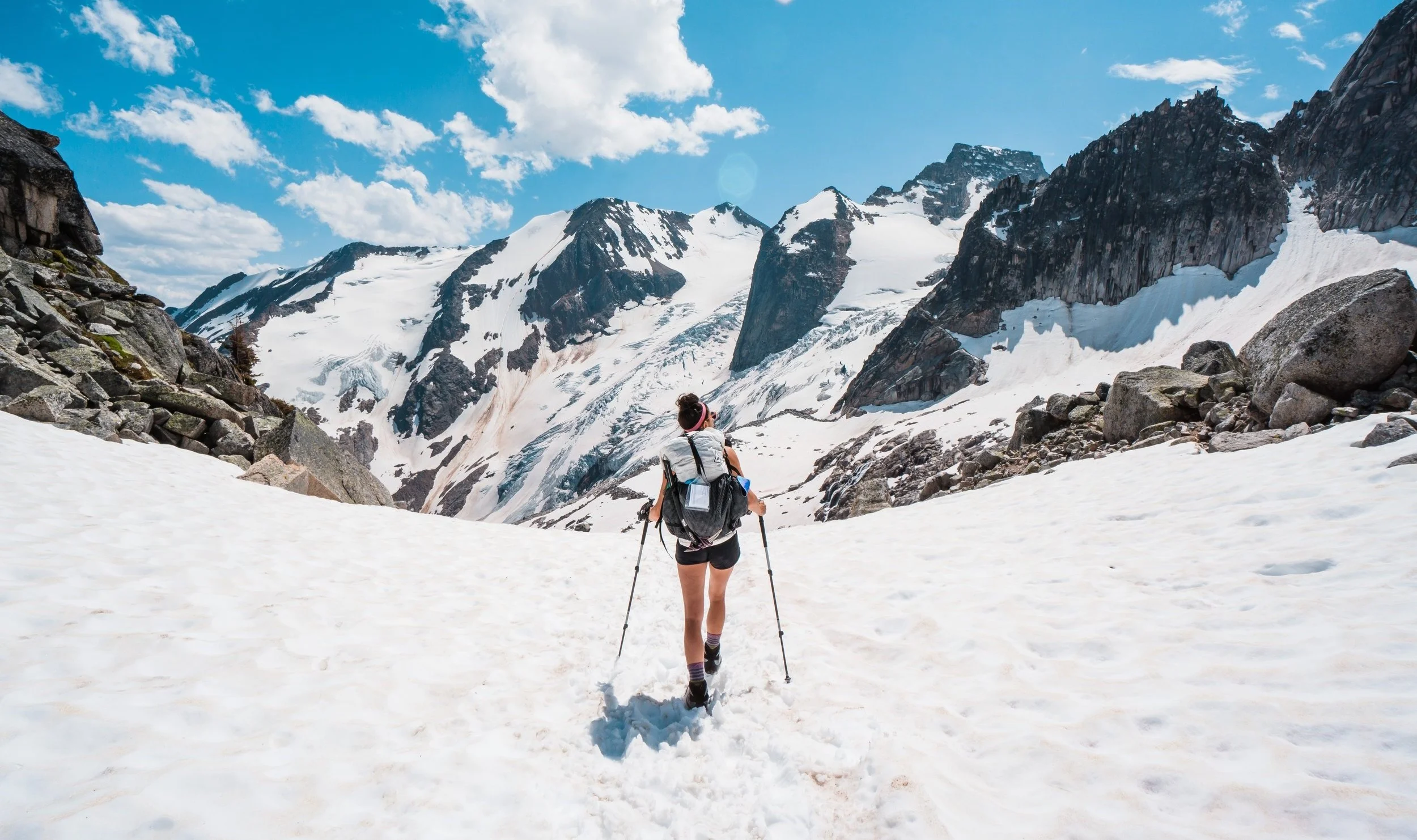
After more than a decade of backpacking, from alpine routes in the Bugaboos to long-distance treks in Patagonia, this is the backpacking gear checklist I personally use and adapt for different conditions, regions, and experience levels.
*This post was updated for the 2026 backpacking season.
Beginner vs. Ultralight Backpacking Gear (What to Keep vs. What to Cut)
If you’re new to backpacking, prioritize comfort, safety, and reliability over cutting weight. It’s far better to carry a few extra ounces and sleep well than to push ultralight limits too early.
As you gain experience, you’ll naturally start to streamline your backpacking gear by:
Swapping heavier items for lighter alternatives
Removing redundancies once you know what you actually use
Dialing in clothing layers and food quantities based on personal preference
This list reflects a well-tested lightweight and ultralight-leaning setup, but beginner backpackers should feel empowered to add items that increase confidence, comfort, and enjoyment on trail.
Disclaimer: This blog post contains affiliate links. I may earn a small commission at no additional cost to you. In some cases, I also share discount codes specifically for my readers.
Seasonal Backpacking Gear Considerations (3-Season, Shoulder Season & Winter)
This backpacking packing list is designed primarily for three-season backpacking (late spring through early fall) in typical mountain and backcountry conditions.
If you’re hiking during shoulder seasons (early spring or late fall), you may need additional insulation, traction, or a higher R-value sleeping pad depending on overnight temperatures and snow conditions.
For winter backpacking, this list will require significant modifications, including a winter-rated shelter, sleeping bag, clothing layers, and safety equipment. Always check weather forecasts, overnight lows, and recent trail conditions before packing.
Regional Backpacking Considerations (Bear Country, Desert Travel & Alpine Terrain)
Backpacking gear needs can vary significantly depending on where you’re hiking.
Bear country: Always follow local food storage regulations. In some areas, a bear canister is required instead of an Ursack, and proper food storage should never be optional.
Desert environments: Water sources can be unreliable or nonexistent. You may need to carry significantly more water than listed here, along with electrolytes and sun protection.
Alpine and exposed terrain: Afternoon storms, strong winds, and cold nights are common. Be prepared with extra layers, reliable weather protection, and a flexible itinerary.
Table of Contents
The Ultimate Backpacking Packing List
Below is a complete backpacking packing list covering everything I typically bring on a 1–3 night backpacking trip. This list is designed to work for beginner to experienced backpackers and can be adjusted based on trip length, season, and conditions.
I personally aim for a lightweight, efficient setup, but this is not an ultralight-only checklist. For longer trips, I usually pack the same core gear and add a few extra consumables, such as additional food, socks, and underwear. I’ve also included examples of my favorite, trail-tested gear throughout the list to help you round out your setup if needed.
Backpack (How to Choose the Right Backpack for Backpacking)
Your backpack is the foundation of your entire backpacking setup. A good backpack should be comfortable, durable, and properly fitted for long days on trail.
When choosing a backpack for backpacking, look for:
The correct torso size and hipbelt fit
A volume that matches your gear and trip length
Comfortable load carry, even when fully packed
No matter which pack you choose, always try it on with weight before your trip to ensure it fits your body and hiking style.
My Top Pick for Backpacking Pack (1–3 Night Trips and Beyond)
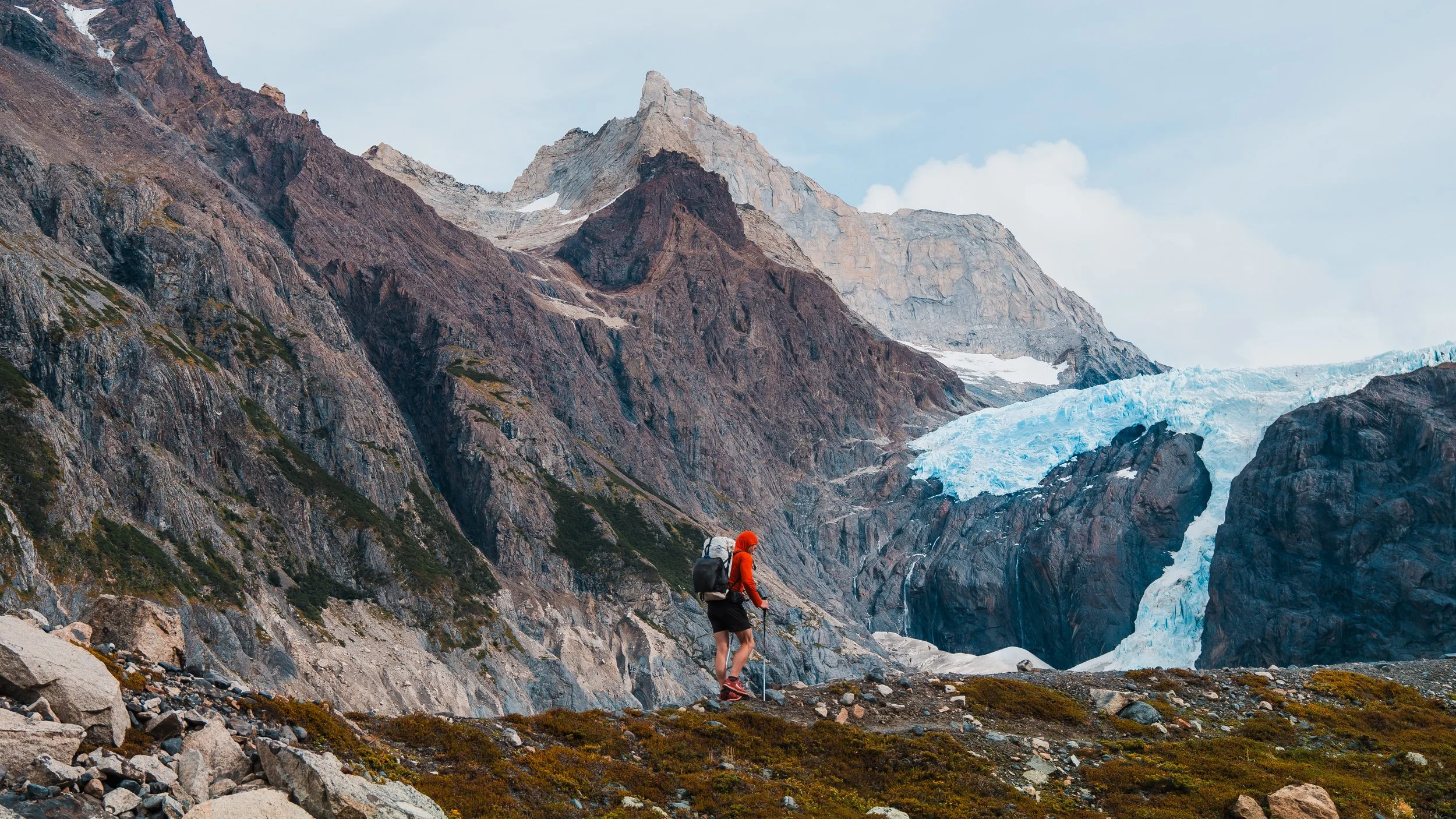
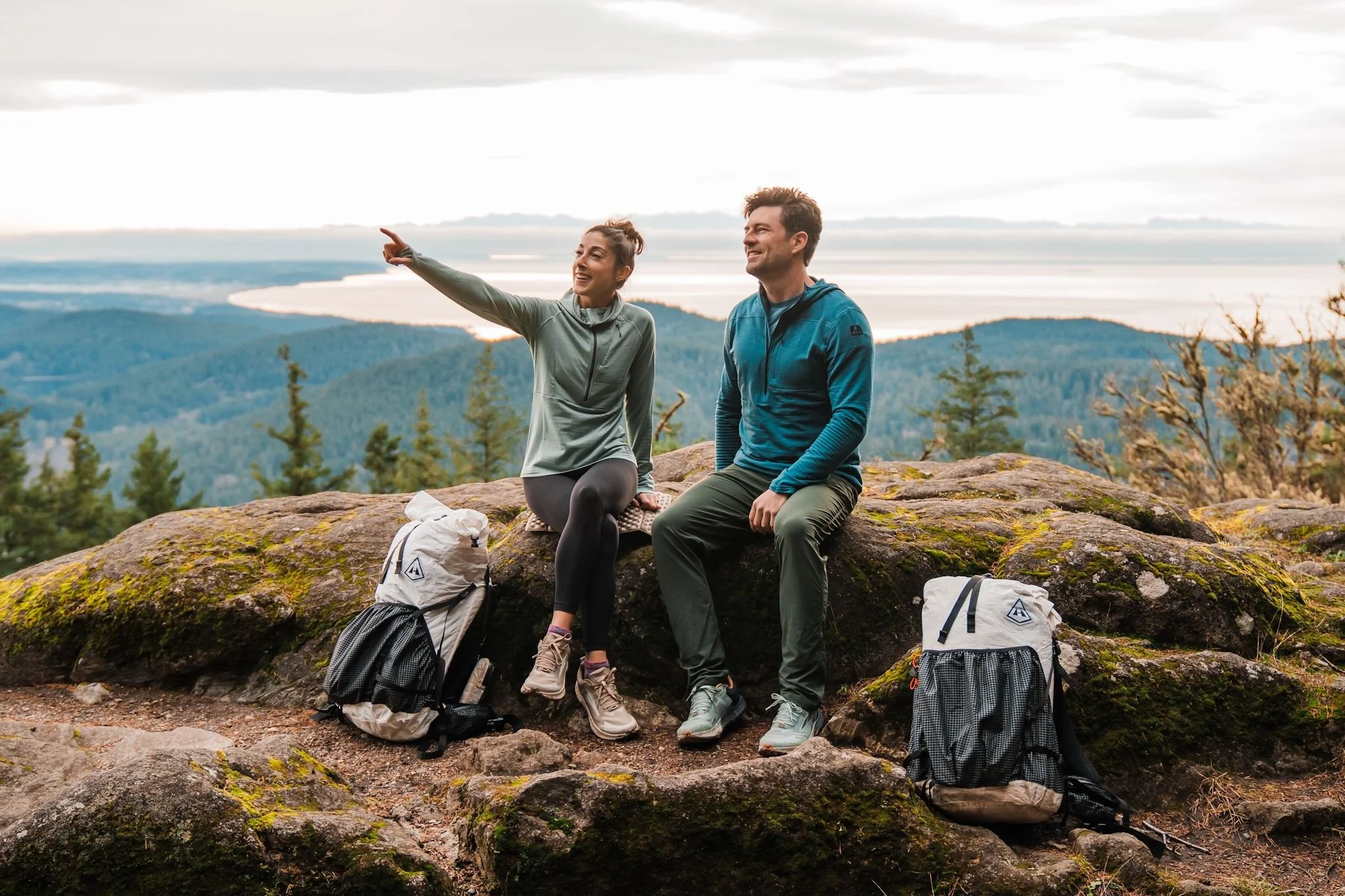
Hyperlite Mountain Gear Southwest 55L - This is my go-to backpacking pack for trips ranging from 1 to 8 nights. While it’s considered an ultralight pack, its durability, weather resistance, and comfortable carry make it a great option for both experienced and newer backpackers who want a reliable pack that can grow with them.
The Southwest 55L compresses down well for shorter trips but still has enough capacity for longer backpacking trips, colder weather layers, or bulkier food carries. I’ve tested this pack for years in a wide range of environments, from Patagonia to Wyoming’s Wind River Range to Washington’s Cascade Range, and it continues to perform well in rugged, real-world conditions.
Sleep System for Backpacking (Tent, Sleeping Bag or Quilt & Sleeping Pad)
A solid sleep system is one of the most important parts of any backpacking packing list. Staying warm, dry, and comfortable at night can make or break your trip, especially on multi-day hikes.
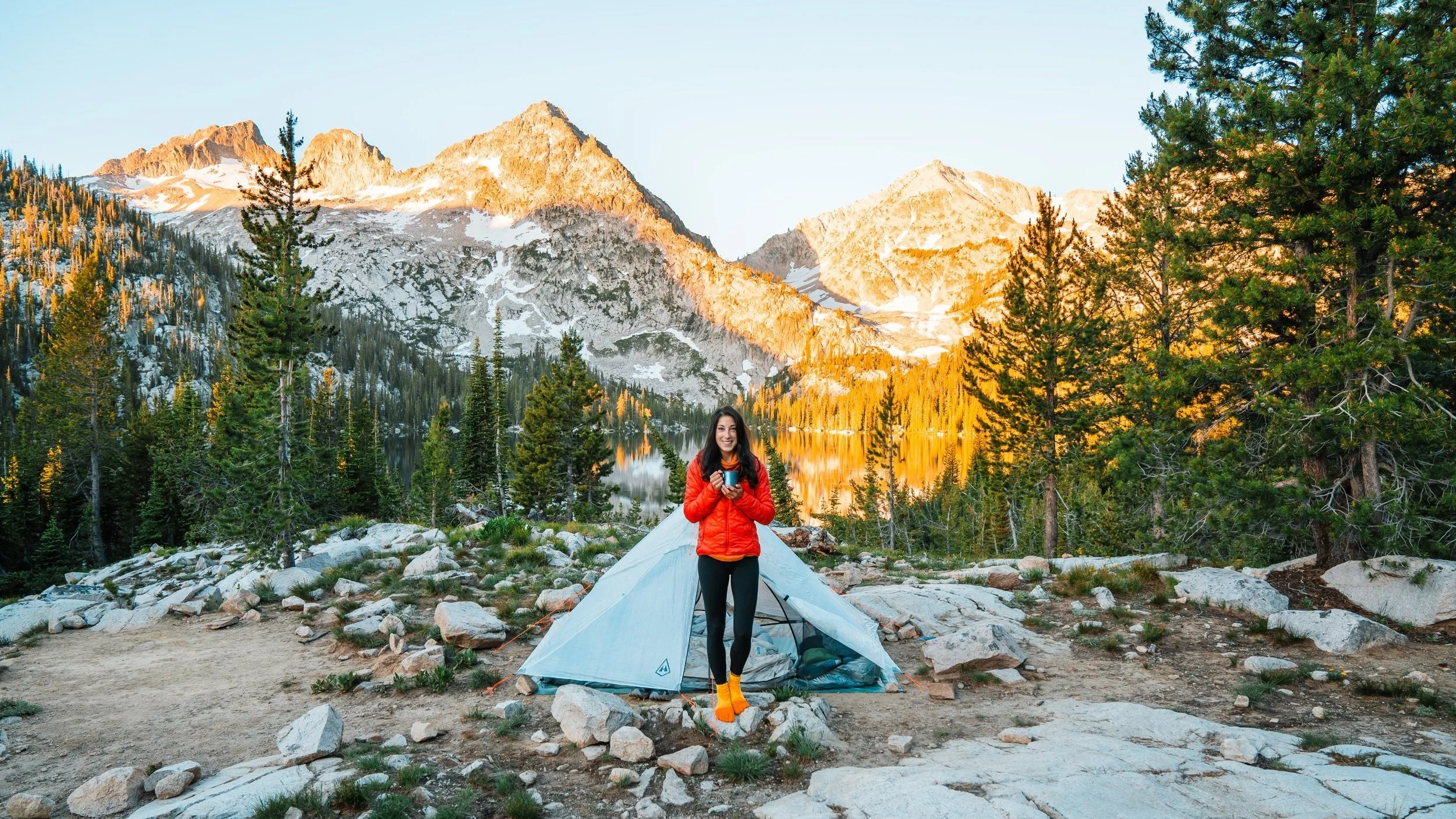
For backpacking, your sleep system typically includes a shelter (tent or tarp), a sleeping bag or quilt, and a sleeping pad. I prioritize a setup that balances warmth, weight, and packability, but this system can easily be adjusted for different seasons, climates, and comfort preferences. Below are the tent, sleeping bag or quilt, sleeping pad, and pillow options I personally use and recommend for 1–3 night backpacking trips.
Beginner tip: If you’re unsure where to invest, prioritize a warm sleeping bag or quilt and a well-insulated sleeping pad, these two items have the biggest impact on sleep quality.
Sleep System Gear Recommendations
Tent:Hyperlite Mountain Gear Unbound 2: This is an amazing tent that is ultralight, weighing just 1.5 lbs and sets up with two trekking poles
Footprint:Hyperlite Ground Cloth
Trekking Poles (for setting up tent):Black Diamond Trail Trekking Poles
Quilt or sleeping bag: We prefer ultralight quilts to sleeping bags, Skye has the Therm-A-Rest Vesper 20 and Garrett has the Hyperlite 20 Degree Quilt
Sleeping pad: We both have the Therm-A-Rest Xtherm air pads and love them, they have an R value of 7.3 (that’s really high), so keep us warm even in the high alpine on chilly nights
Pillow: Garrett uses the Hyperlite Stuff Sack Pillow with a down jacket inside, and Skye uses the Sea to Summit Aeros Premium Pillow along with the Hyperlite Stuff Sack Pillow for a little extra neck support
Backpacking Clothing & Shoes (What to Wear and Pack While Backpacking)
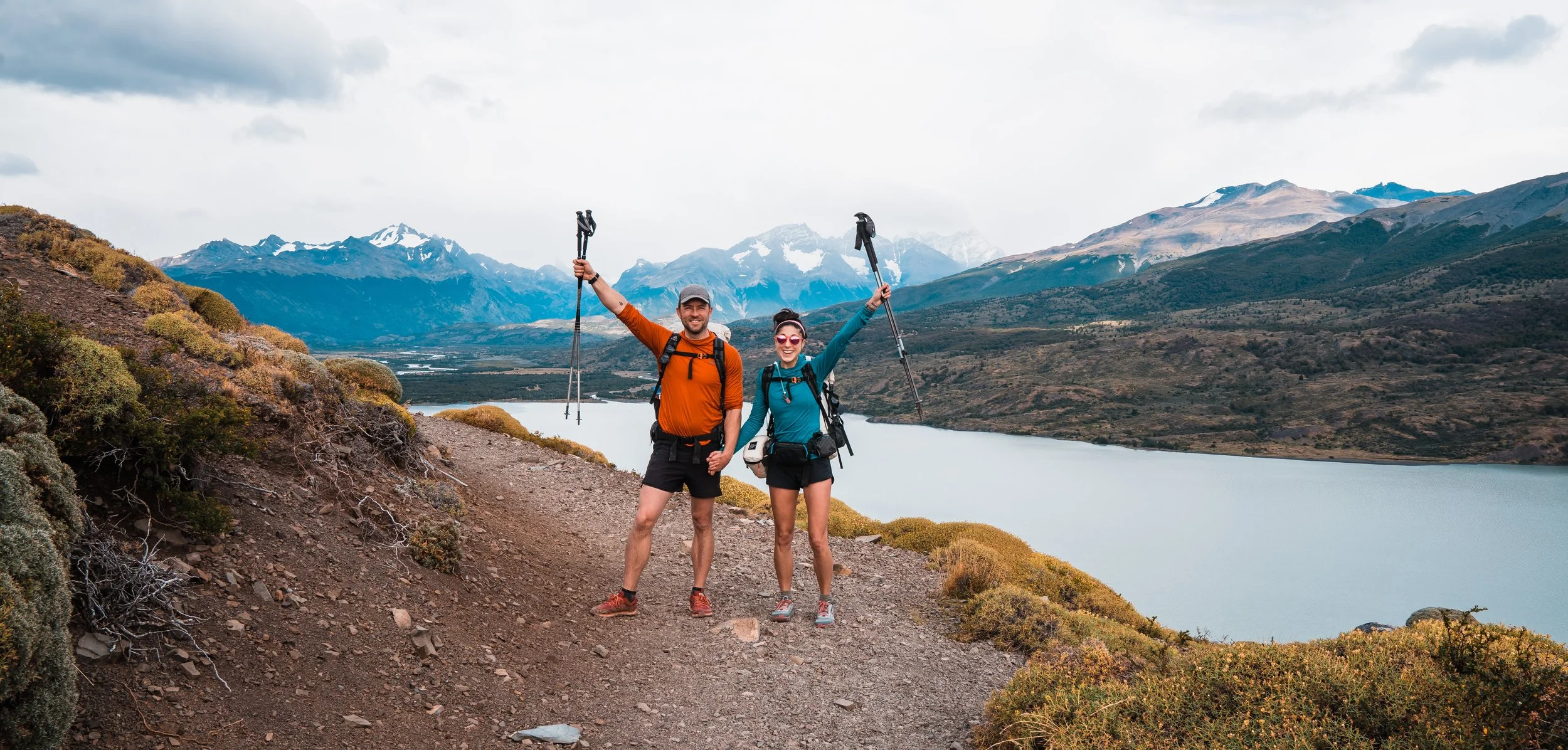
Choosing the right backpacking clothing and shoes is all about balancing comfort, weather protection, and versatility. What you wear on trail should keep you cool, protected from the sun, and comfortable for long hiking days, while still allowing easy layering for changing conditions.
Beginner tip: Avoid cotton while backpacking. Stick to synthetic or wool fabrics that dry quickly and regulate temperature better.
Worn on Body (Backpacking Clothing & Footwear)
Shorts: Patagonia Strider Pro Shorts 3.5" - Women's | Patagonia Strider Pro 5" Shorts - Men's
Sun Shirt: OR Echo Sun Hoodie - Women’s | OR Echo Sun Hoodie - Men’s
Sports Bra: Vuori AllTheFeels Sports Bra
Underwear: Victoria’s Secret No Show Thong - Women’s | OR Echo Boxer Briefs - Men’s
Hiking Socks: Injinji Ultra Run Mini-Crew x 2
Trail Runners: Altra Timp 5
Sunglasses: Goodr Circle Gs
Packed in a Stuff Sack for Use at Camp
Light Jacket: OR SuperStrand LT Hoodie - Women's | OR SuperStrand LT Hoodie - Men’s
Down Jacket: OR Helium Down Hoodie - Women’s | OR Helium Down Hoodie - Men’s
Leggings: Lululemon Align High Rise 25” Leggings
Sleep Shirt: Smartwool Classic Quarter Zip
Sleep Pants: Smartwool Classic Thermal Bottoms
Sleep Socks: Injinji Hiker Crew
Packed on the Outside of Your Backpack for Easy Access on Trail
Sun Hat/Visor:Outdoor Research Trail Visor
Camp Shoes: In warmer conditions we love our Luna Sandals Oso Flacos, or OR Tundra Trax Boodies in winter weather.
Backpacking Toiletry Kit & Personal Care Essentials
A simple, lightweight backpacking toiletry kit helps you stay comfortable and hygienic on trail without carrying unnecessary extras. I keep everything consolidated in a small stuff sack and focus on multi-use, travel-size items that meet basic needs for 1–3 night backpacking trips.
Here’s what we include in our backpacking toiletry kit:
Stuff Sack: Draw String Stuff Sack - 2L (to hold everything)
Toothbrush: Foldable travel toothbrush
Wet Wipes: Wilderness Wipes (works for both face and body)
Face Moisturizer: Size down by putting it in a contact lens case
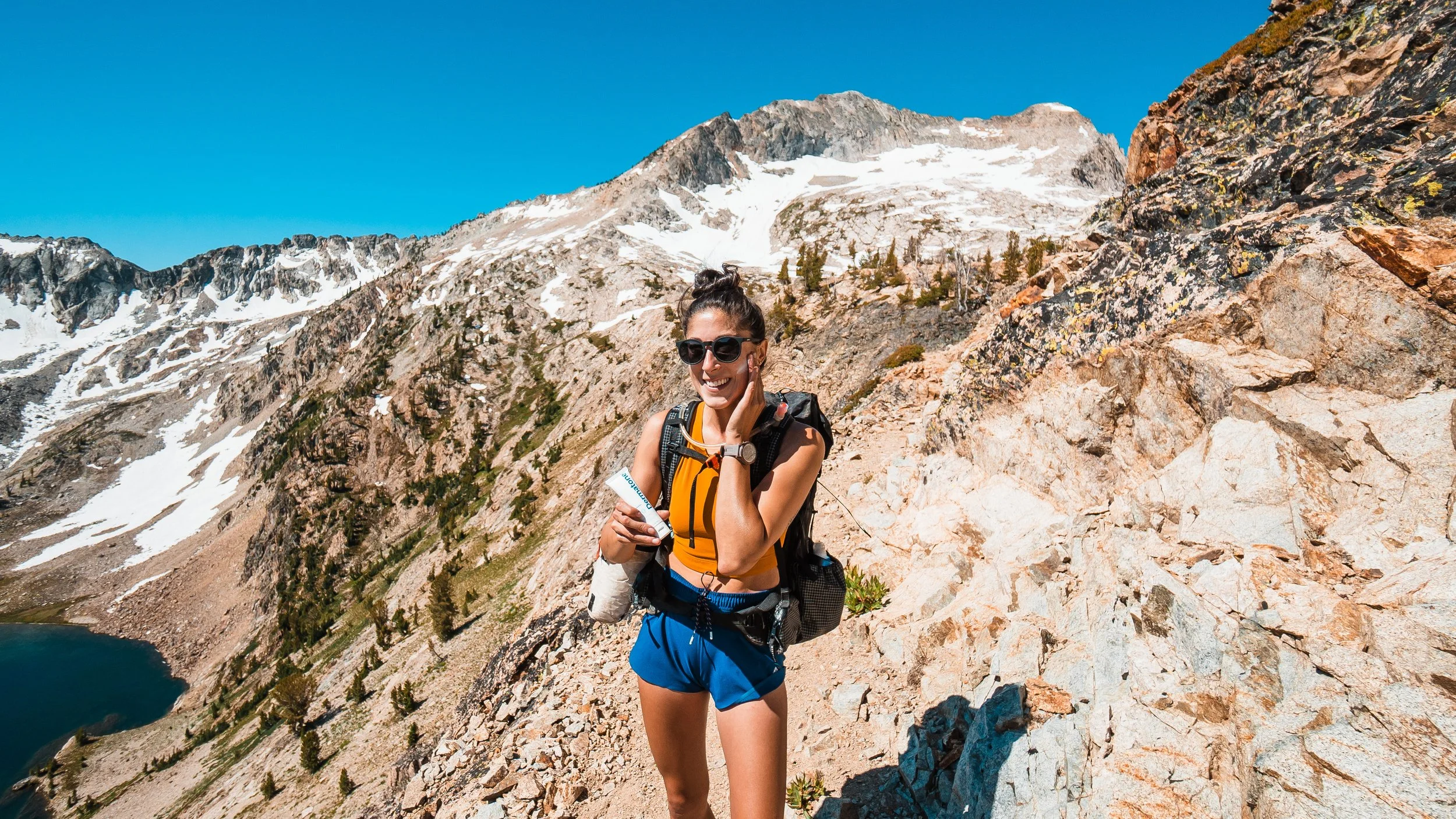
SPF lip balm: Dermatone SPF 30
Travel Size Toothpaste or Toothpaste Tabs
Travel Size Floss
Medications: Any required medication, packed in a small ziplock bag
Beginner tip: Keep toiletries minimal and avoid scented products when possible, especially in bear country.
Backpacking Food & Water Essentials
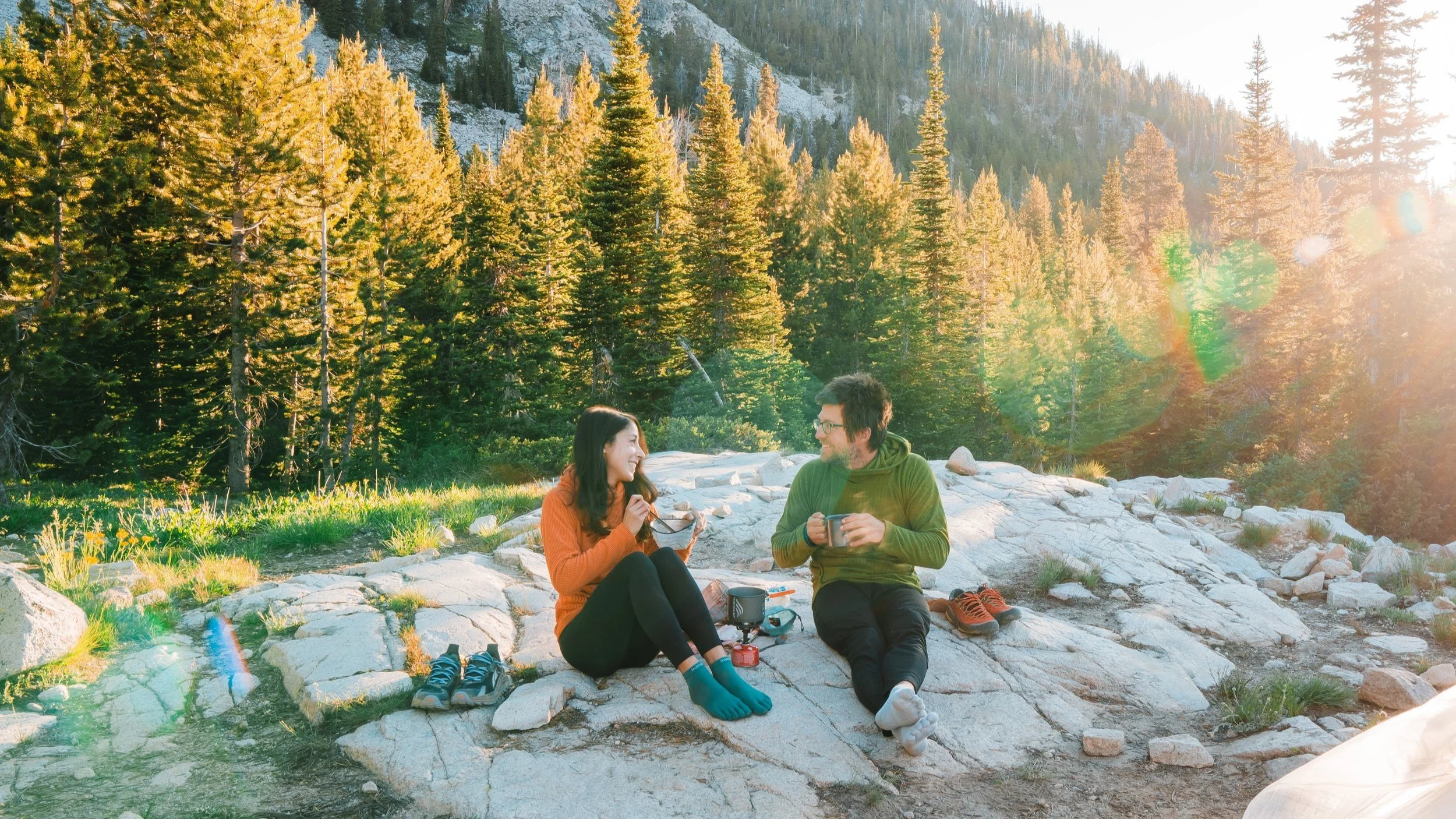
Planning your food and water system for backpacking is about balancing calories, hydration, weight, and ease of use. What you carry will vary based on mileage, climate, and available water sources, but this setup works well for 1–3 night backpacking trips in a wide range of conditions.
Below is what we typically pack for food, hydration, and water treatment while backpacking.
Water & Hydration
Hydration bladder: 1.5 L of water in a hydration bladder (if there are not streams or lakes along the way and I am hiking over 5 miles, I’ll bring 2 L)
Water Filter: Katadyn BeFree
Food Storage for the Backcountry
Food Storage: Ursack bear bag to store food in
Bear Hang Kit: Optional, depending on if you’re in bear habitat or if there are provided storage options. Hyperlite hang kit.
Backpacking Meals & Snacks
Snacks: bars, shot bloks, Gu, vegan jerky, pickles, dried fruit
Lunch: Thawed frozen Amy’s bean burritos or homemade sandwiches
Dinner: Backpacker’s Pantry Pad Thai
Breakfast: Oatmeal packets
Hydration Powder: Gnarly Hydrate packets
Beginner tip: Plan for more calories than you think you’ll need, especially on high-mileage or high-elevation days.
Backpacking Cook Set
Stove + Pot: Jetboil Stash Cooking System
Bowl: Fozzils snapfold bowl from their set
Long spoon x2: Sea to Summit Alpha Light Spork - Long
Cooking Fuel: Small to medium isobutane fuel canister
Lighter: always carry one even if your camp stove has a built-in starter.
Sun & Bug Protection for Backpacking
Sun exposure and insects can have a big impact on comfort and safety while backpacking, especially on long days or in exposed terrain. These sun and bug protection essentials help prevent sunburn, dehydration, and bug bites across a wide range of conditions.
Sunscreen: Dermatone SPF 50 sport lotion (water and sweat resistant and reef safe)
Bug Protection at Camp: Thermacell Backpacker + small isobutane fuel canister
On Body Bug Protection: Sawyer Picaridin Lotion, Deet spray, clothes treated with Sawyer Permethrin Gear Spray
Backpacking Essentials You Shouldn’t Forget
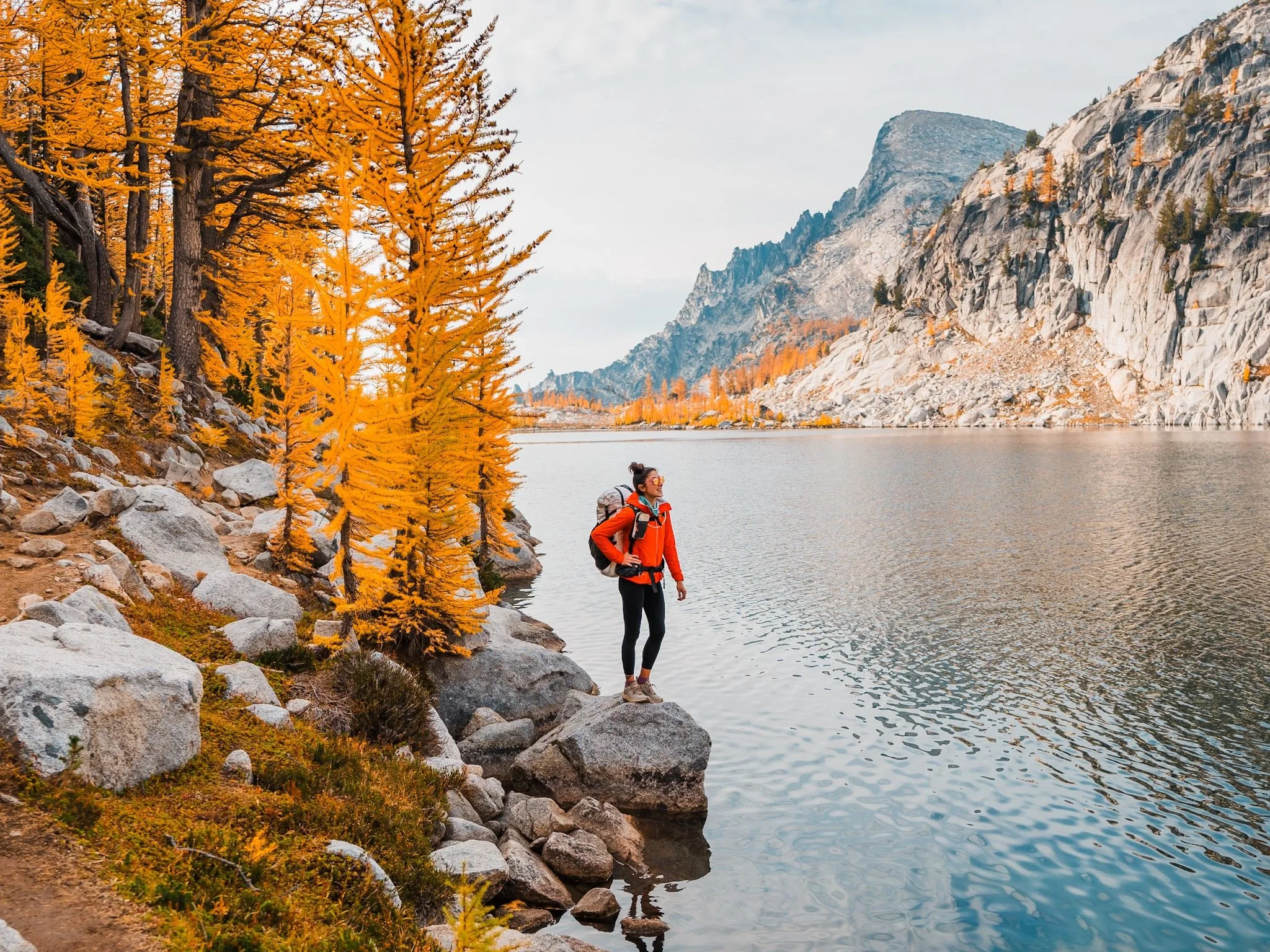
These backpacking essentials cover safety, hygiene, navigation, and emergency preparedness. While some items may feel optional at first, they’re all things I consistently carry to stay prepared on trail.
First Aid & Emergency Gear + Navigation
First Aid Kit: ace bandage, pain killers, gauze, a couple bandages, leukotape strips, blister bandages, Kinfield Relief Patches for bug bites, all packed into a ziplock and inside of a Hyperlite 2L Stuff Sack
Navigation: We primarily navigate via GaiaGPS downloaded maps, if there is any doubt about your mobile device battery life, you should carry a battery pack or paper map/compass that you know how to use.
Emergency Messaging Device: Garmin InReach Mini 3
Headlamp: Black Diamond Spot 400
Cell Phone: iPhone 15 Pro (what we have)
Hygiene & Waste Management
Toilet Kit: Wag bags, toilet paper, hand sanitizer, Kula Cloth (pee rag), all inside of a Hyperlite 2L Stuff Sack
Gear Organization & Repairs
Packing Cubes: I use stuff sacks for clothing, toiletries, sleeping bag/quilt
Repair kit: Your tent and sleeping pad should come with small repair kits but I also add small squares of gear repair tape for fabric tears.
Electronics & Camera Gear
Camera: Sony a7iv with 10-18mm and 24-70mm lenses
Battery Pack + Charging cord: Nitecore NB10000 Gen 3 UL Battery Pack
Camera Case: Hyperlite Camera Pod
Optional Backpacking Gear & Comfort Items (Luxury Items)
These optional backpacking items aren’t strictly necessary, but they can make a big difference in comfort and enjoyment on trail. Depending on the forecast, terrain, and your personal preferences, some of these may move from “luxury” to “must-have.”
Sit Pad: Therm-a-Rest Z Seat Pad
Rain Jacket: Outdoor Research Helium Rain Jacket (move to necessary if rain is in the forecast)
Camp Towel: Nomadix Ultralight Towel
Buff: An essential item for many. Buffs are great for blocking the sun, wiping snot, or using as a makeshift sleep mask.
Earplugs: If you can overcome your scary imagination, blocking out nighttime sounds with earplugs will help your sleep. We love the reusable and comfortable Loop Earplugs.
Backpacking gear is always a personal balance between weight, comfort, and conditions. Over time, you’ll dial in what’s truly essential for your style of backpacking.
Final Thoughts on Backpacking Gear & Packing
A well-planned backpacking packing list is the key to enjoying your trip, staying safe, and sleeping comfortably, no matter your experience level. Use this guide as a flexible framework, adjusting gear, layers, and food based on season, region, and personal preference.
Over time, you’ll discover which items are truly essential for your style of backpacking, and what you can leave behind. Whether you’re a beginner just starting out or an experienced hiker refining your system, this list gives you a solid foundation for stress-free packing and a more enjoyable adventure.
Remember: good planning and the right gear make every trail more fun and every night’s sleep more restorative.
Gear Discount Codes and Links
I’ve partnered with a few of my favorite outdoor brands to hook you up with exclusive discounts on trail-tested gear. These are companies I actually use and love, and when you shop through the links below, you’ll get a deal and help support my blog. Win-win!
20% off SkyGOAT (grid fleece) - Click the link and add code SKYEGOAT to your cart at checkout to get 20% off your order.
15% off LUNA Sandals - Click the link and the discount will be added to your cart automatically.
15% off Stio with code SKYE15 - Click the link and enter the code in your cart.
10% off Will and Bear hats with code SKYESTOURY - Click the link and the discount will be added to your cart automatically.
20% off Wild Deodorant with code SKYESTOURY- Must enter the promo code at checkout to receive discount. They make a deodorant mini that is perfect for backpacking, it’s the size of a lip balm.
10% off Loop Earplugs with code SKYE10 - Enter the promo code at checkout. I use their Dream earplugs for sleeping both backpacking and car camping.
Wind River High Route Guide: Complete Backpacking Itinerary and Trail Tips
Alice-Toxaway Loop Backpacking Guide: Routes, Campsites & Tips for the Sawtooths
This image is copyrighted and owned by Skye Stoury Photography and skyestoury.com, if you would like to licence any images on this site, please email us at hello@skyestoury.com