
Hiking and Backpacking El Chaltén, Argentina: Patagonia Travel and Trail Guide

El Chaltén, Argentina is the trekking capital of Patagonia, a tiny mountain town surrounded by granite spires, turquoise lakes, and backcountry camping. Whether you’re here for a few day hikes or a full backpacking circuit beneath Mount Fitz Roy, El Chaltén offers some of the most breathtaking scenery in South America. Below I share some of my favorite hikes, tips and places to stay in this magical place.
Disclaimer: This blog post contains affiliate links, meaning I receive a small commission of every purchase made with my links at no additional cost to you. Sometimes there is even a discount code for my readers which I specify next to the links.
Table of Contents
Getting To El Chaltén
From Chile (Puerto Natales)
If you visited Torres del Paine or you are already in Chile, take a five-hour bus from Puerto Natales to El Calafate, Argentina. We used Bus Sur and it was affordable (about $30 USD per person, one-way). The bus was comfortable with plush reclining seats and they even gave us snacks. From El Calafate you then need to board a second bus to get to El Chaltén. The second ride is about two hours, and was less expensive. We opted to stay the night in El Calafate to explore the town, and then took our second bus the next day. You must have your passport and Proof of Entry (little white slip of paper you receive when arriving to Chile) with you since you have a land border crossing.
Fly Straight to Argentina (Buenos Aires)
If you fly to Argentina first, you’ll fly into Buenos Aires and then fly into El Calafate. From there you will do the same bus into El Chaltén as we did.

Halfway up Loma de las Pizarras
When to Visit El Chaltén
The best time to visit depends a lot on what you want to see and do. If you are wanting to hike and backpack, or even rock climb, January and February will be your best bet. But for fall colors, you’d want to visit in March, and for ski touring and snowy adventures, their winter (North American summer) will be best. Most hikers and travelers will want to visit between December and March.
High season: January–February (Patagonian summer)
Shoulder Seasons: December (spring), March (fall)
Expect strong winds, cool temps, and the occasional snow or rain even in midsummer. We visited in mid-February and had several good weather windows — though 40 mph (64 km/h) wind gusts are common. Bring layers, waterproofs, and patience for Patagonia’s moody weather.
Where to Stay in El Chaltén
El Chaltén had it all in terms of lodging. You can choose between upper scale hotels, hostels, or camping. There is camping in town, though we chose to only camp in the backcountry while backpacking. Hotels were cheap enough that we stayed in a couple different ones while in town and while waiting for good weather windows to head into the backcountry.
Luxury Options
Explora El Chaltén – An upscale all-inclusive lodge set in a private nature reserve just outside town. Features include top-tier rooms, fine gastronomy, guided excursions and sweeping views of the glaciers and forest.
Los Cerros Boutique Hotel – Located right in town with luxe amenities and spectacular mountain views. Perfect if you want comfort without straying far from trailheads.
Mid-Tier Options
Hotel Poincenot – A well-located 3-star hotel offering modern rooms with views, breakfast included, and good value for the quality.
Destino Sur Hotel & Spa de Montana – A solid mid-range pick noted for comfortable rooms, spa/hot-tub access, and a hearty buffet breakfast. Great for recharging after big hikes.
Hostería Confín Patagónico - Great value and location near the center of town.
Estancia La Quinta - Peaceful setting just outside town that is surrounded by expansive scenery (note that this hotel is outside of town and requires either a 30 minute walk to/from town or short taxi).
Budget / Backpacker Options
Hostel El Peredon – A basic but comfortable hostel with shared kitchen facilities and friendly mountain-town vibes. Ideal for backpackers.
Rancho Grande Hostel – Among the most affordable beds in town, dorms available and a social atmosphere for the budget traveller.
What to Pack
Patagonia’s weather is famously unpredictable, even in summer. Head over to my blog What to Pack for the O-Circuit in Torres del Paine for a list of my must have essentials and favorites for both men and women that are great for all parts of Patagonia.
Getting Around Town
El Chaltén is compact and walkable. You can reach most trailheads right from your accommodation. Taxis are available if you’re staying farther out or carrying heavy packs.
Food and Groceries
There are a few small grocery stores for trail food, though the selection is limited. Bring protein bars or dehydrated meals from home if you’re doing multi-day hikes as they are very hard to find in town. Though groceries are limited, there were a lot of good restaurants and cafes.
Top Restaurant Pick: Cúrcuma — an absolutely amazing vegan place and honestly the best food I had on our entire trip to Argentina and Chile. Even if you’re not vegetarian or vegan, I highly recommend checking them out. Aside from that, there are a ton of good restaurant options and lots of amazing empanadas everywhere.
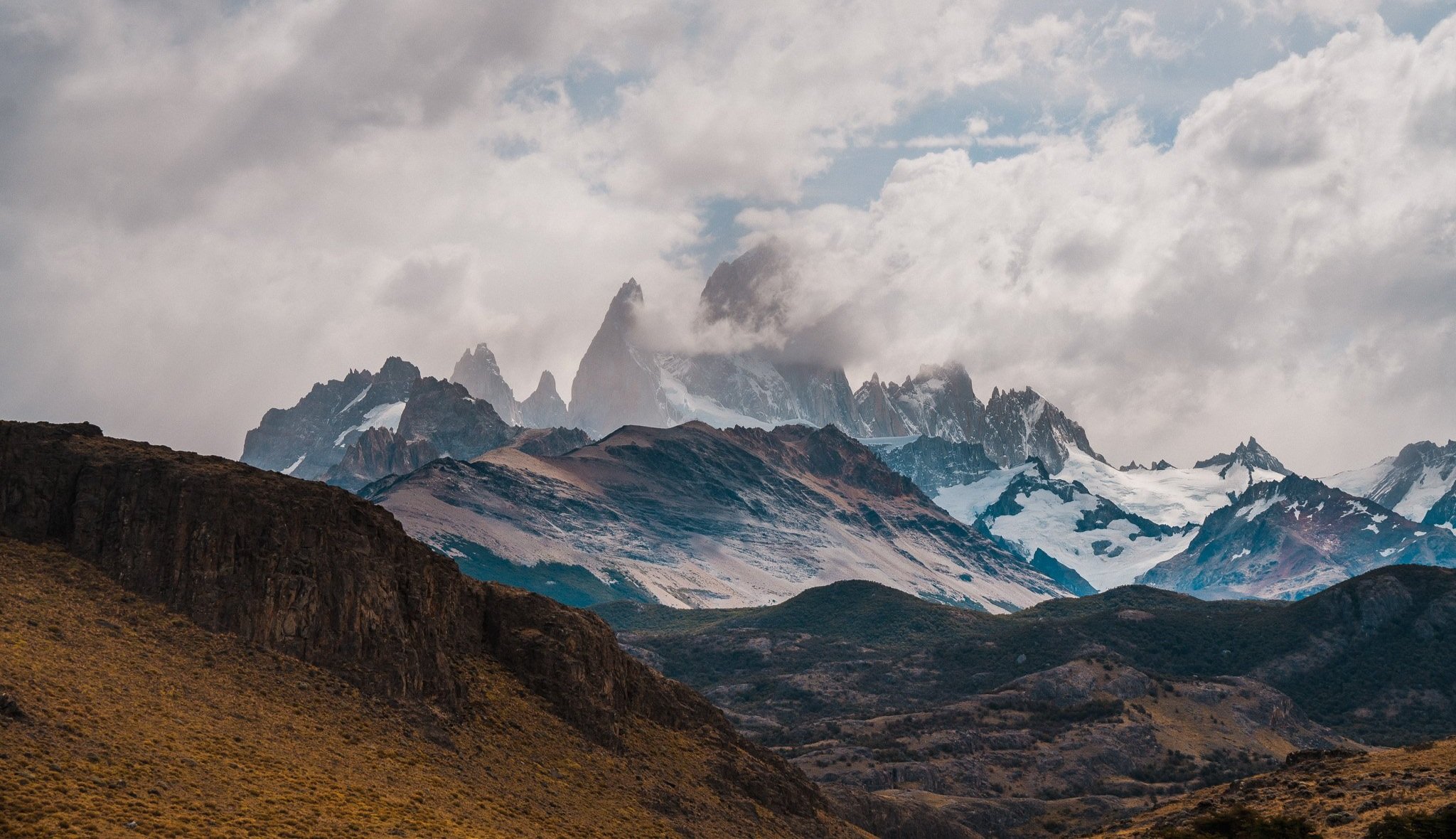
Fitz Roy as seen from the Mirador Las Águilas trail
Money & Exchange Rates in Argentina (2025 Edition)
When we visited El Chaltén in 2023, the exchange rate was heavily in favor of foreign travelers exchanging their USD or Euros. The story of staying on budget in Argentina has changed, but it’s still worth knowing the lay of the land.
What’s Changed?
The so-called “Dólar Blue” (unofficial/parallel cash rate) used to offer huge advantages over the official rate. That gap has narrowed significantly.
As of late 2025, the Blue Dollar rate hovers around ARS 1,300 to ARS 1,450 per USD, with the official rate not far behind.
For many tourists, paying by credit/debit card (which often uses the “MEP” or regulated electronic rate) may now get you nearly the same deal, with less hassle or risk of carrying large amounts of cash. Check to make sure your travel card supports this exchange setup. We love traveling with our Capital One Venture Card
What this Means for Your Trip
You’ll still get very good value in Argentina, but you likely won’t double the value on your USD as in previous years.
Bringing a moderate amount of physical USD can help (especially for remote areas or small local shops), but don’t rely solely on cash.
Make sure your credit or debit card is set up to work abroad, and check whether your issuer uses the favorable electronic (MEP) rate.
Always check the latest rates just before you travel (use sites that show Blue Dollar, MEP, and official rates) so you know what’s “normal” that day.
Must Do Hiking Trails in El Chaltén
Lago de los Tres: The most popular hiking destination in El Chaltén that is best done for sunrise. It is an alpine lake with iconic views of Fitz Roy.
Laguna Sucia: A stunning lake with views of Fitz Roy that includes some route finding and scrambling.
Laguna Piedras Blancas: A sometimes hard to follow trail after you leave the Poincenot campground, it takes you to a secluded alpine lake with a hanging glacier. We had this lake to ourselves after hiking from camp.
Laguna Torre: A beautiful and moody lake below Cerro Torre with amazing glacier views and icebergs floating in the lake.
Loma de las Pizarras: A difficult ridge line hike with a hard to follow trail that ends with a scramble and amazing views of Fitz Roy, Cerro Torre, and the lakes below.
Mirador Las Águilas: A viewpoint on a trail that heads up from the ranger station at the edge of town. This is a short hike and great for a rest day.
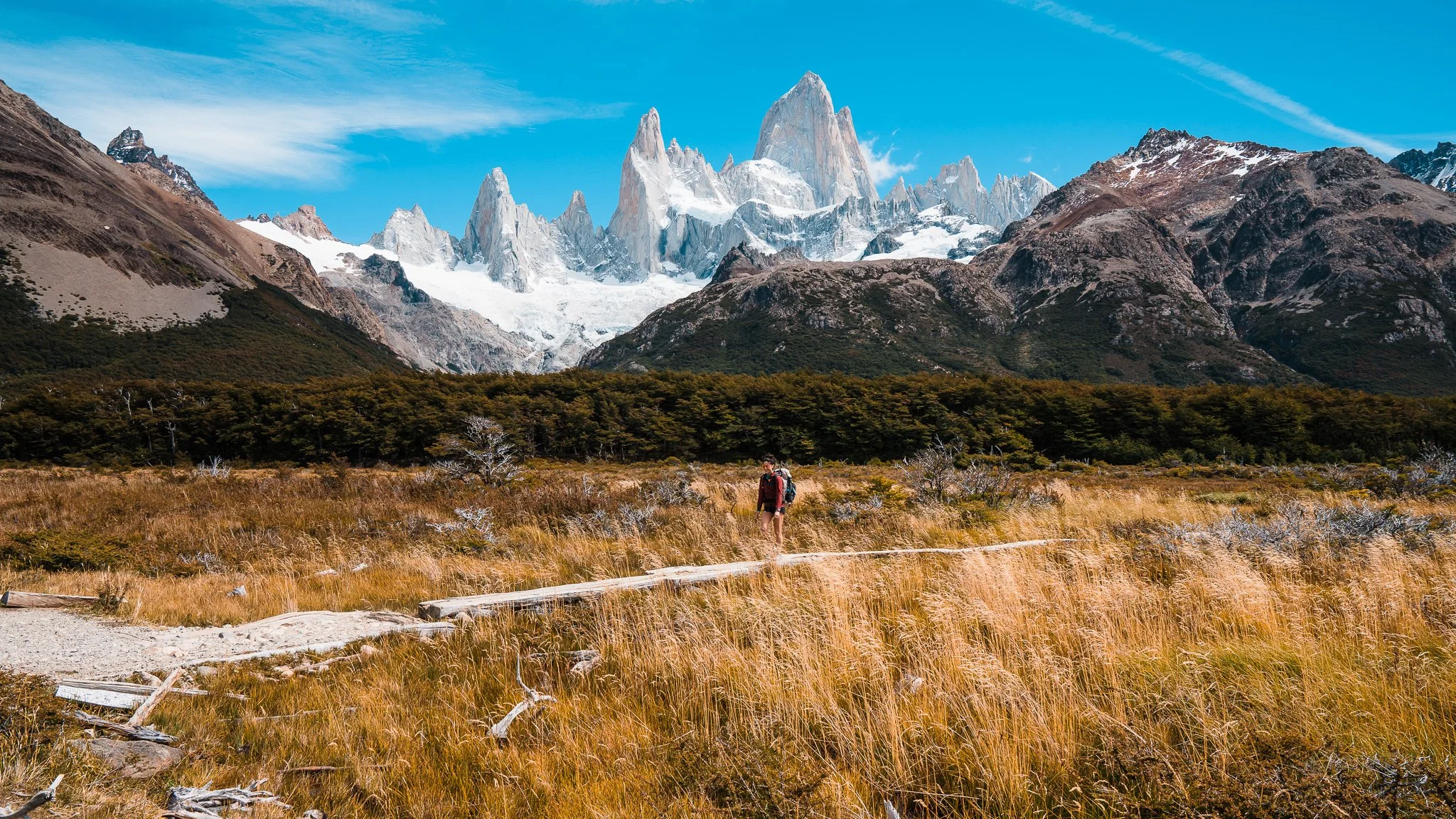
Backpacking back to town from the Poincenot campground
Backpacking in El Chaltén
The best part about visiting El Chaltén is the backpacking. You don’t need permits to stay at the established backcountry campgrounds, and camping is free but you do need to purchase a permit for entry into the park (more on that below). I highly recommend backpacking the Fitz Roy & Cerro Torre Circuit. This can be done by hiking into the Poincenot campground on the Sendero al Fitz Roy trail to spend a night or two and then hiking over to Laguna Torre and the C.B. D'Agostini campground and out on the Laguna Torre trail back to town. There are a lot of other side hikes you can do from both of those campgrounds as well and this makes for a nice two to three night trip. I brought all of my own backpacking gear since the focus of the trip was specifically to backpack and camp. It’s possible to rent backpacking equipment in El Chaltén but I didn’t have direct experience with the process to recommend anything.
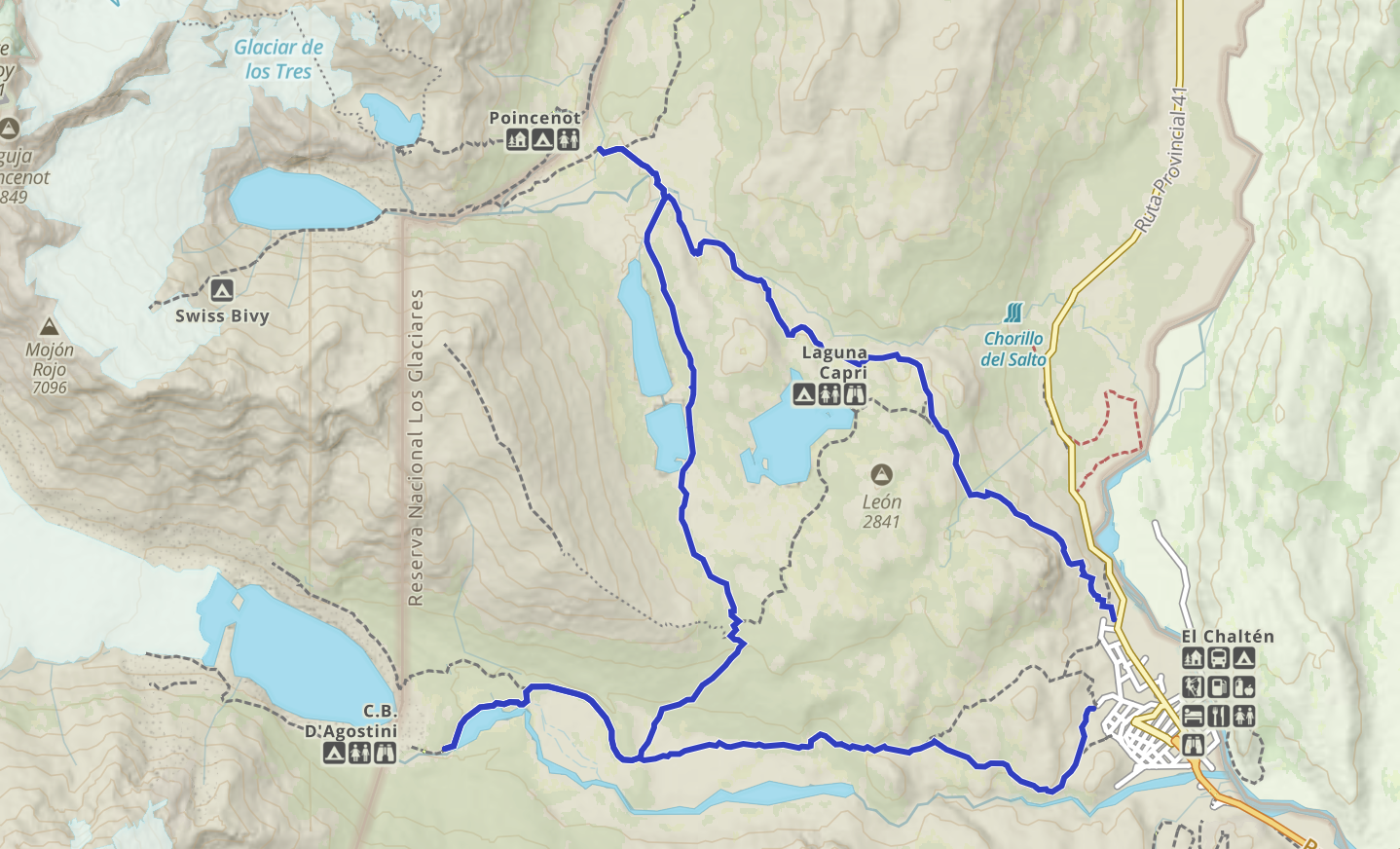
We opted to do two separate backpacking trips because of the weather window. Our first was to camp Poincenot for two nights. From there we hiked to Laguna Piedras Blancas the day we set up camp, and then did a sunrise hike the next day up to Lago de los Tres. We also day hiked into Laguna Sucia as well which was more secluded and beautiful. Unfortunately, the Poincenot campground is often crowded and noisy. There were tents within a few feet of ours the second night. It was also loud at night with groups staying up late drinking and playing music. That said, the camp is a great location to set you up to have a short hike in the morning if you do Lago de los Tres at sunrise. Reservations or permits were not required for the campground. It was all first-come-first serve. There are pit toilets but they were in serious disrepair. Plan to bring your own toilet paper. There is also the option to go #2 in the nearby forest, but please practice Leave No Trace ethics if you choose to do so.
The second backpack we did was one night to C.B. D'Agostini to see Laguna Torre. This was a great overnight and the campground was less crowded than Poincenot. Similar bathroom situation as Poincenot and no permits are required here either. We did get a mouse in our tent in the middle of the night, so make sure to secure food by either hanging a bear bag or keeping it outside of your tent in a bear bin.
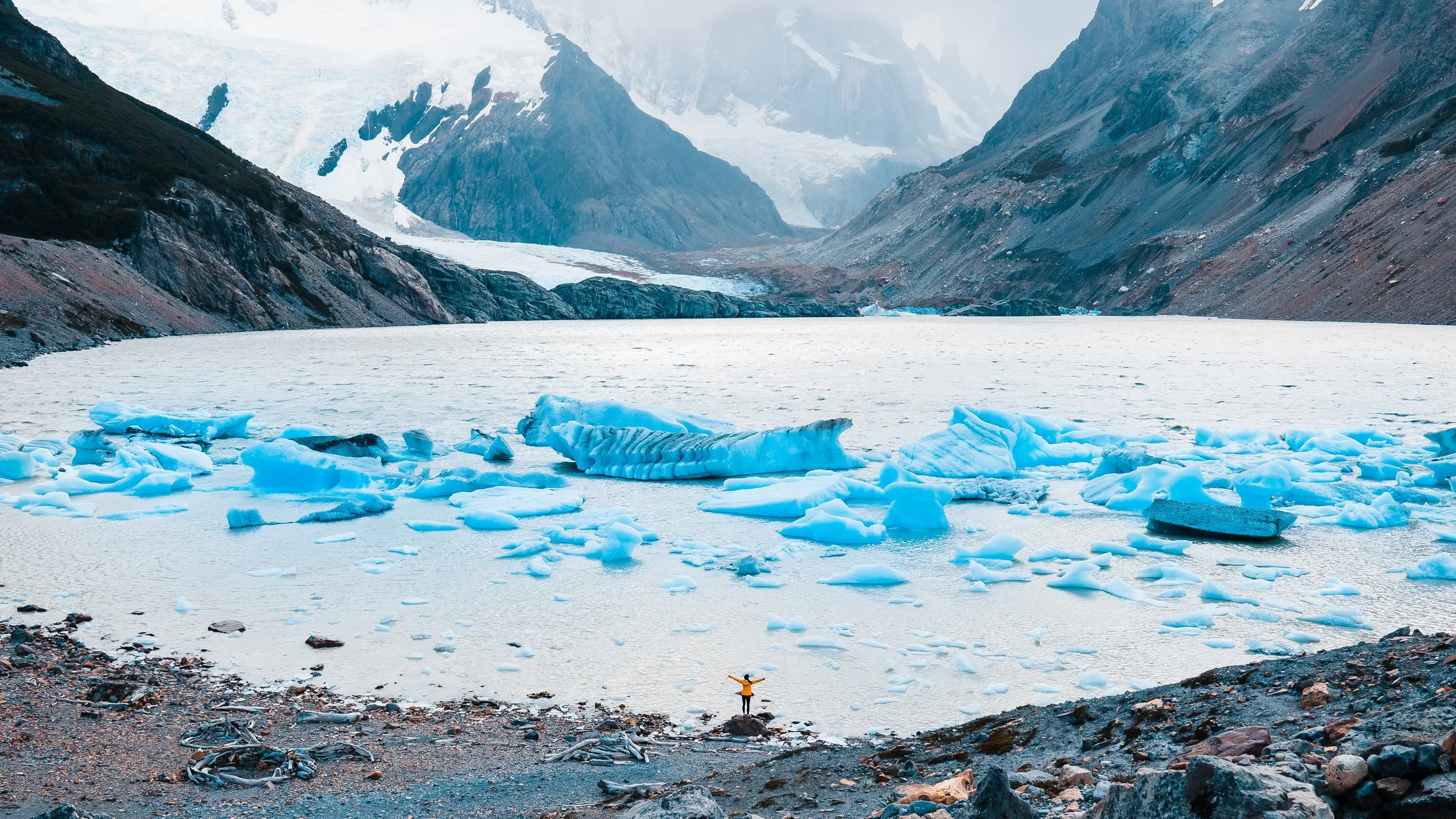
Laguna Torre
Storing Gear in Lockers
We needed a place to store our duffle bag with non-backpacking gear while we were spending a couple of nights in the backcountry and finding lockers in town was difficult. We ended up asking at the bus station and they recommended BajoZero (one of the local gear shops). They had large lockers that we ended up storing gear in for about a week. It was ~500 pesos per day with unlimited access during business hours. You do need to have your own lock, they make you leave a form of ID as collateral, and pay the first day up front. I left my driver’s license so I could keep my passport with me at all times. This worked really well for us and I definitely recommend storing your gear there.
Some hostels also have lockers but will only let you use them if you are staying there before and after your backpacking trip. Since we were staying in hotels and pieced together various stays, this was not an option.
Permits and Registration
As of October 2025, the Argentinian Parks Service has begun charging entry permits for the northern parts of Los Glaciares NP and the areas around El Chaltén. At the time of this writing in October 2025, the current rate is 45,000 ARS ($31 USD) for the first day of entry and 50% off for a second day. The second day entry must be purchased at the time of the first day and used within 72 hours of the first day. You must select a specific entry date for entry upon the ticket purchase.
There is also the option to purchase a 3 or 7 day Flexpass for Los Glaciares NP. The pass allows visitors to choose between 3 or 7 days of access, depending on the pass category, to be used within 6 months of purchase. These days can be consecutive or non-consecutive and must be used within the same protected area. A three day pass is 90,000 ARS ($62 USD) and a 7 day pass is 157,500 ARS ($108 USD).
There are three entry portals that you have the option to select:
Los Cóndores Portal: located on the access route to the town of El Chaltén, where the park's Visitor Center is located, where the Los Cóndores, De las Águilas, Loma del Pliegue Tumbado, and Laguna Toro trails begin.
Fitz Roy Base Portal: At the end of Av. San Martín de El Chaltén, Puesto Amarillo sector. At that point the Torre, Fitz Roy and Chorrillo del Salto trails begin.
Río Eléctrico Portal: 16 kilometers from the town, by route 41. Before the Eléctrico river bridge. Access to the Piedra del Fraile trails, and alternative to Mirador del Piedras Blancas glacier, Poincenot, and Laguna de Los Tres.
Payment is via credit card online on the Argentina National Park Page here. You’ll find El Chaltén portals under the “Parque Nacional Los Glaciares” section.
Since the system is new, be sure to check for any updated information or the permitting terms. There has been a lot of frustration specifically around the need to pick a specific date when weather windows are fleeting and ever changing. Once you purchase your entry permit, you don't need a separate permit to camp at established camps like Poincenot and C.B. D'Agostini.
Everything is first come first serve and free but the campsites are large and people camp very close together, so you will be able to get a spot. Camping is only allowed in certain areas, so you do need to camp at a campground. If you want to camp farther in at a bivy site or climbers camp, you do need to obtain a climbing permit from the ranger station. Certain longer treks like the Huemul Circuit also need a special permit from the rangers that you can get the day of.
Tours and Things to Do in El Chaltén
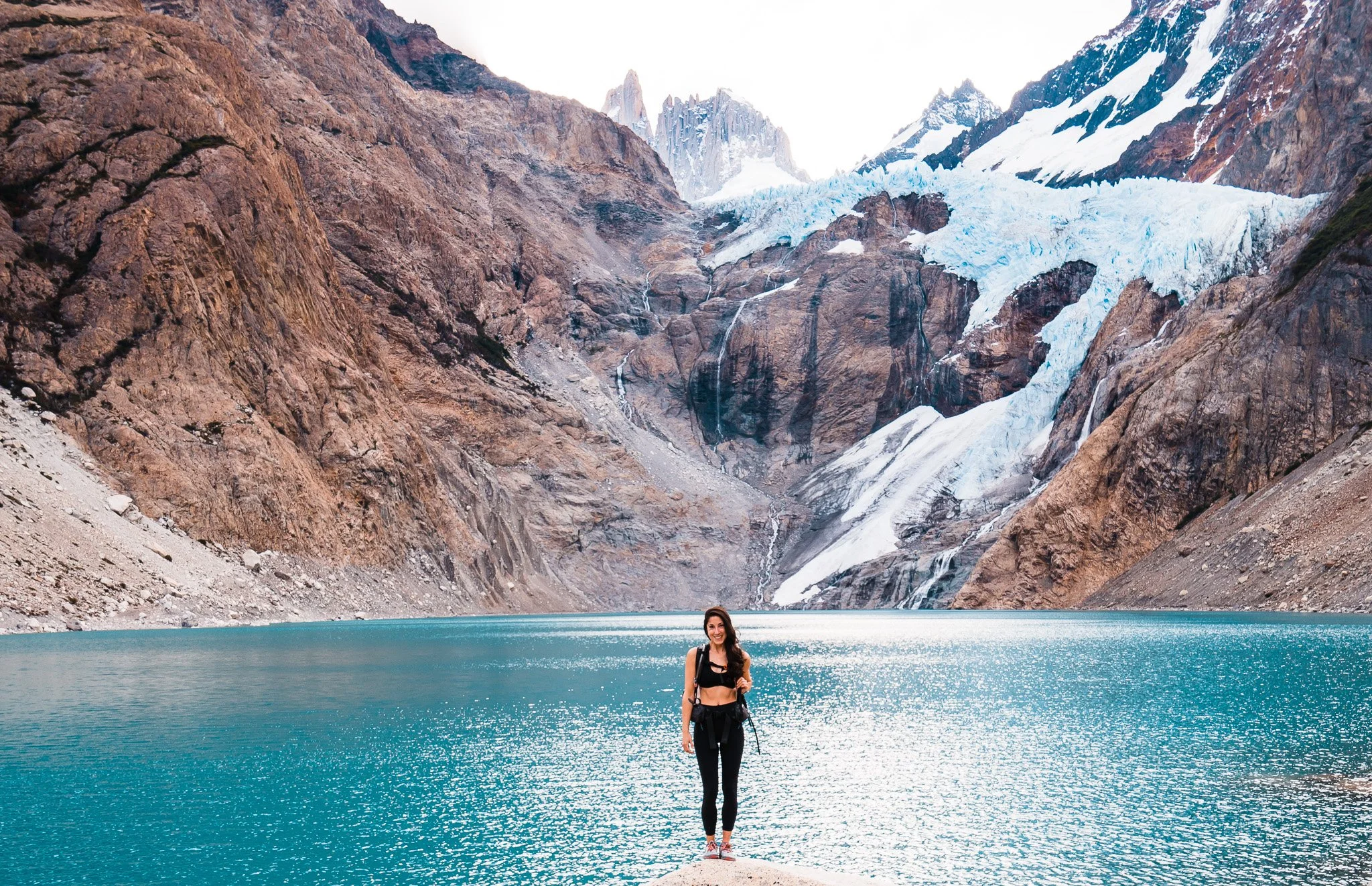
Laguna Piedras Blancas
FAQ – Hiking & Backpacking in El Chaltén
Do you need permits to camp in El Chaltén?
Camping at established campgrounds is free and first-come-first-served, but a park entry permit is now required. See the Permits section above for current fees.
Can you rent backpacking gear in El Chaltén?
Yes, several shops rent gear, though quality and availability vary. If possible, bring your own.
What’s the best hike in El Chaltén?
Lago de los Tres for the sunrise view of Fitz Roy. It’s the most famous and absolutely worth it.
Is El Chaltén safe for solo hikers?
Yes, the trails are well-marked and busy during peak season. Just follow standard backcountry precautions.
How many days should you spend in El Chaltén?
At least 3–5 days to cover the top hikes and allow for weather flexibility.
Final Thoughts on Visiting El Chaltén
El Chaltén truly lives up to its nickname as the trekking capital of Argentina. Whether you’re chasing that sunrise glow over Fitz Roy, wandering through lenga forests to hidden lakes, or camping beneath a sky full of southern stars, this little Patagonian town delivers adventure at every turn.
Looking for More Patagonia Travel Guides?
The Complete Atacama Desert Travel Guide: How to Explore Chile’s Wild, Otherworldly Desert
What to Pack for the O-Circuit in Torres del Paine: Essential Gear List for Chilean Patagonia
This image is copyrighted and owned by Skye Stoury Photography and skyestoury.com, if you would like to licence any images on this site, please email us at hello@skyestoury.com